{{ item.label }}
{{ item.value ? item.value : currencyFormat( item.amount ) }}
Subtotal
{{ currencyFormat( pricing_summary.total_amount ) }}
The Bhutan Snowman Trek is one of the most challenging and rewarding high-altitude adventures in the world — a journey that takes you deep into the remote northern valleys of Bhutan, across some of the highest and most breathtaking Himalayan passes. At GetLostForever.com, we bring you an in-depth look into this ultimate trekking experience, where pristine wilderness, timeless Buddhist culture, and unmatched mountain grandeur come together to create a truly once-in-a-lifetime expedition.
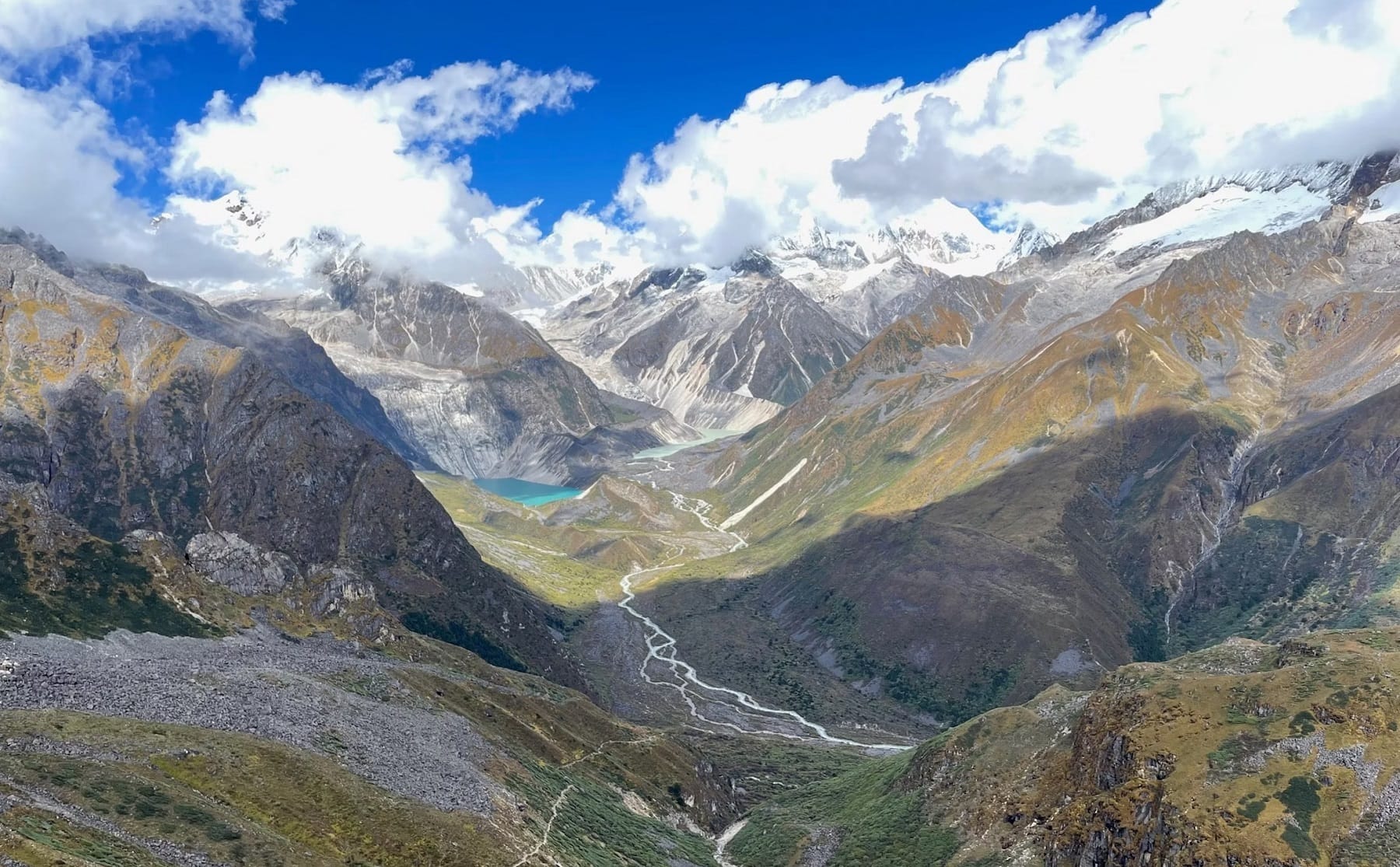
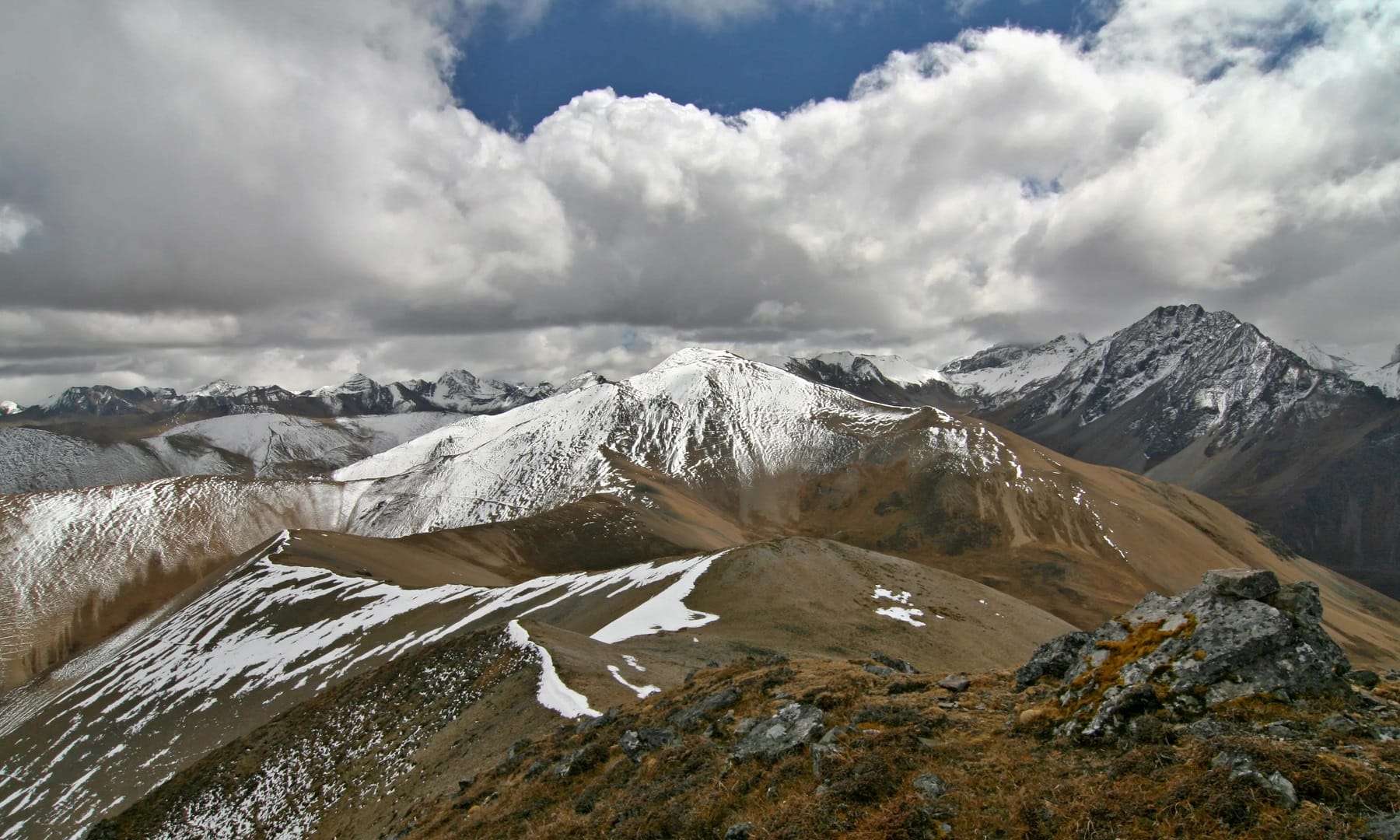
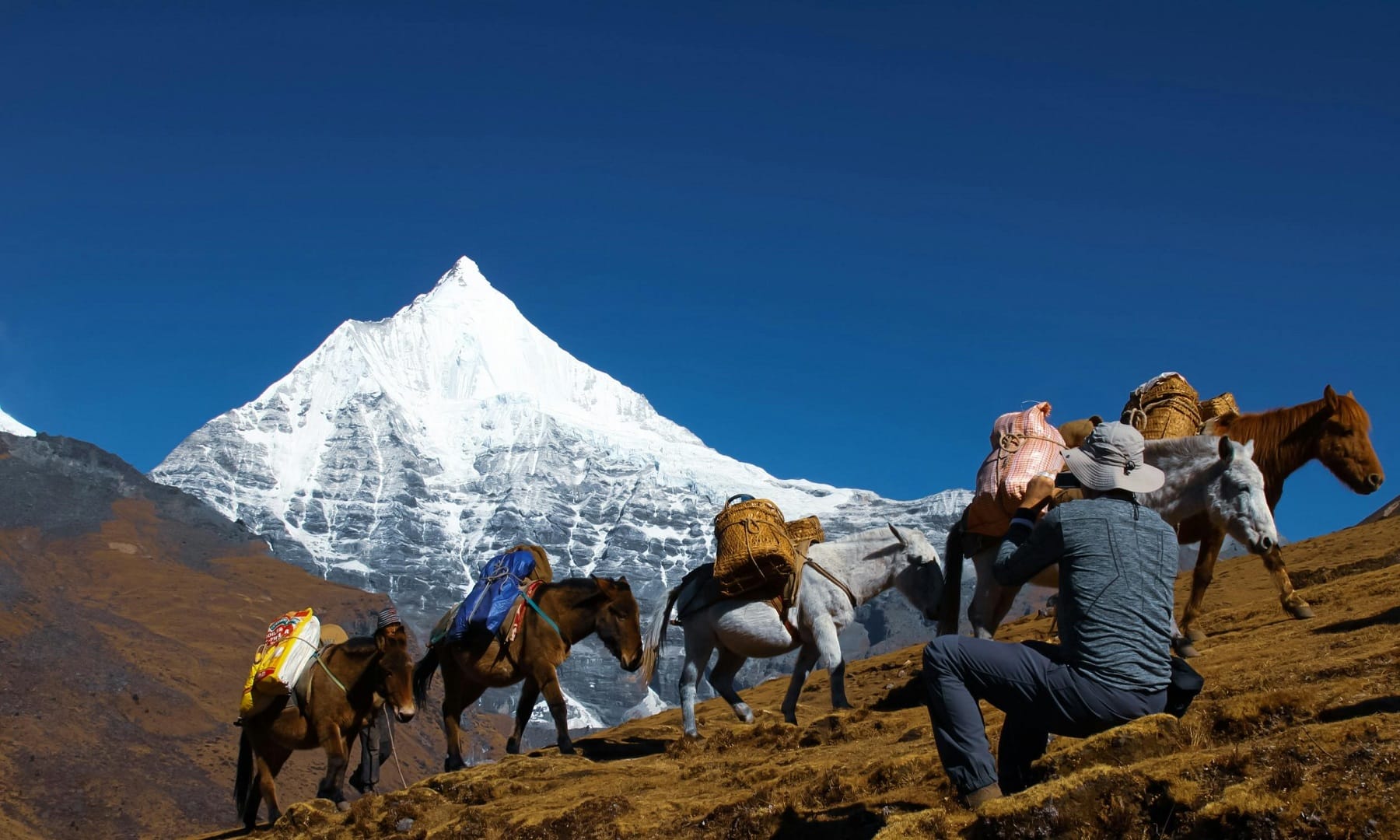
Regarded as the toughest trek in the world, the Bhutan Snowman Trek spans over 25 days and crosses eleven high passes, many soaring above 5,000 meters. It links the beautiful Laya and Lunana regions, taking trekkers through unspoiled alpine meadows, glacial lakes, and isolated mountain settlements untouched by modern civilization. Along the way, trekkers are rewarded with majestic views of peaks like Jichu Drake, Gangchhenta (the Great Tiger Mountain), and Mount Gangkar Puensum — the highest unclimbed mountain on Earth.
What makes the Bhutan Snowman Trek so exceptional is its raw remoteness and cultural authenticity. The route weaves through traditional Himalayan villages where yak herders still live as they did centuries ago. You’ll witness the unique customs, traditional attire, and deep spiritual devotion that define Bhutanese mountain life. Passing ancient monasteries and fluttering prayer flags against snow-clad summits, every step feels like a spiritual and physical journey through time.
Unlike many treks in the Himalayas, the Bhutan Snowman Trek requires significant endurance, acclimatization, and preparation. The terrain is rugged, the weather unpredictable, and the remoteness means trekkers must be fully self-sufficient with camping gear and supplies carried by pack animals. But for those who embrace the challenge, the reward is unparalleled — a sense of achievement that few in the world can claim.
At GetLostForever.com, we help you prepare for the Bhutan Snowman Trek with comprehensive guides on route details, altitude management, required permits, fitness training, and essential gear lists. Our goal is to ensure that every adventurer who dares to take on this epic trail is well-informed, safe, and inspired.
Whether you’re an experienced mountaineer or an avid trekker seeking the ultimate test of endurance, the Bhutan Snowman Trek stands as a true frontier of exploration — a wild, untamed odyssey through the “Last Shangri-La” that remains one of the rarest and most beautiful trekking experiences on Earth.
For more details, explore our full Bhutan Snowman Trek guide on GetLostForever.com, where we cover itinerary options, best seasons to trek, preparation tips, and expert insights to help you conquer this Himalayan masterpiece with confidence.
Arrive at Paro International Airport, where you’ll be greeted by your Bhutanese guide. Explore Paro Dzong and the National Museum before resting overnight in a comfortable hotel.
A warm-up day! Hike to the iconic Taktsang (Tiger’s Nest Monastery) perched on a cliff at 3,120m. Return to Paro for final trek preparations.
Drive to the trailhead at Shana and begin trekking through pine and rhododendron forests alongside the Paro Chhu River. Overnight in tents.
The trail gradually ascends through dense forests with glimpses of Mount Jomolhari. Camp below the snow peaks.
Trek to the base camp of Mount Jomolhari, surrounded by stunning alpine scenery. Spend the afternoon exploring or resting.
Spend a full day acclimatizing. Optional hikes to Tshophu Lake or Jichu Drake viewpoint.
Cross Nyile La Pass (4,870m) for panoramic views of Jichu Drake and Tsherimgang. Descend to Lingshi Valley and camp near the fortress-like Lingshi Dzong.
A shorter and scenic day. Pass small villages and yak pastures to reach the charming Chebisa settlement.
Climb over Gogu La Pass (4,440m), then descend through rhododendron forests. Camp beside a stream.
Ascend Jhari La Pass (4,780m), catching views of Kang Bum and Tiger Mountain. Camp in a high-altitude meadow.
A challenging day crossing Shingela Pass (5,005m). Descend to the lush Limithang Valley with views of Gangchhenta (Great Tiger Mountain).
A short and beautiful trek through forests and pastures to reach the Laya village, known for its unique culture and traditional dress.
Spend the day interacting with locals, exploring the village, and enjoying views of Masagang and other peaks.
Climb through alpine meadows filled with grazing yaks and medicinal plants. Camp at Rhodophu.
A steady ascent through open valleys leading to Narethang, offering magnificent views of Gangla Karchung.
Cross Karchung La Pass (5,240m) — one of the highest points of the trek — and descend into the Tarina Valley.
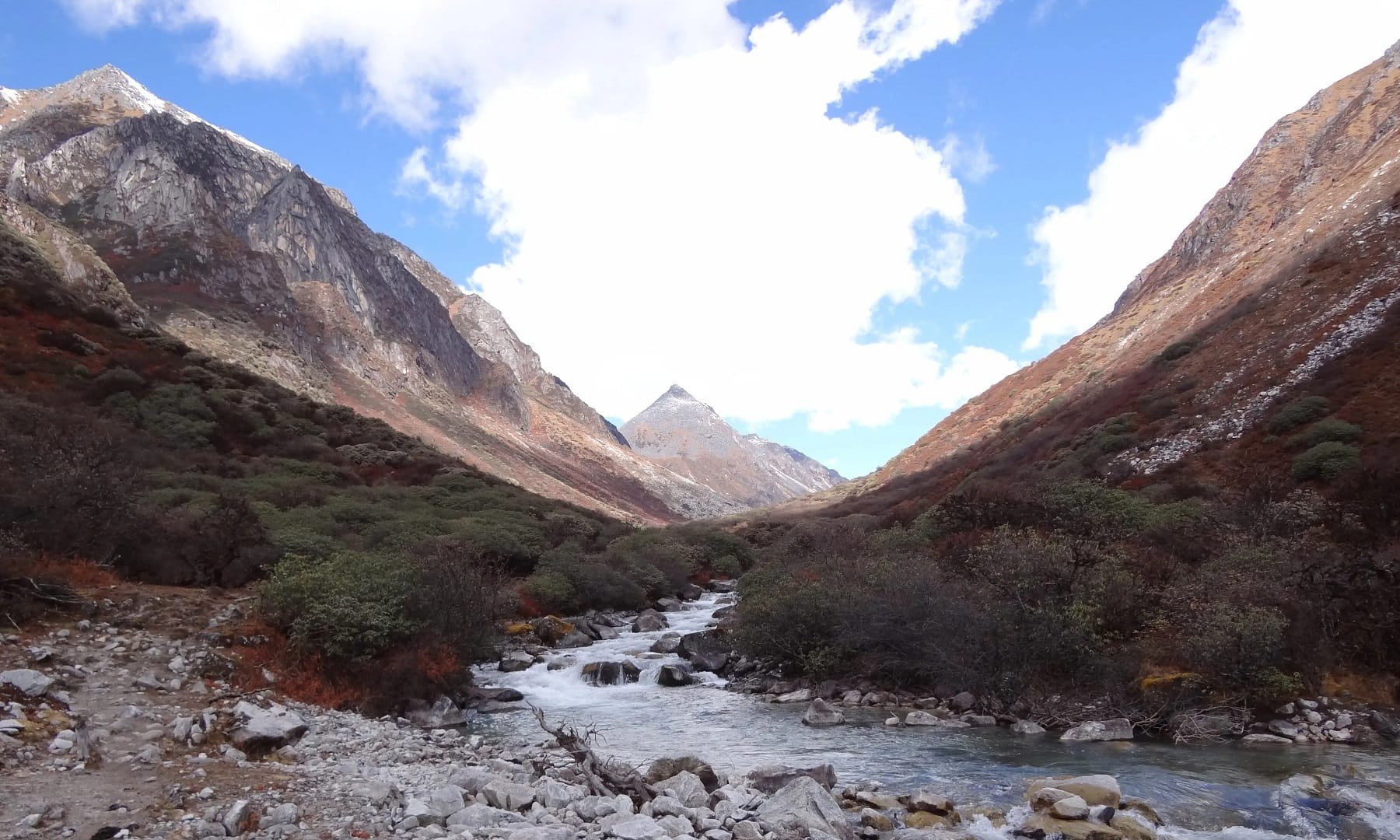
Follow glacial streams and pass through remote yak herder settlements to reach Woche.
Trek over Keche La Pass (4,658m) with great views of Table Mountain. Continue to Lhedi village in Lunana.
Walk along the Pho Chhu River with spectacular views of Table Mountain and Thanza Peak. Overnight in Thanza village.
A well-deserved rest and exploration day. Visit local homes and enjoy views of the surrounding mountains.
Begin the trek’s final ascent phase with a long climb toward the Tshorim campsite.
Cross Gupho La Pass (5,230m) to reach the base of Gangkar Puensum, Bhutan’s highest unclimbed peak.
Descend through alpine meadows and yak herder camps with magnificent views of the Bhutanese Himalayas.
The final trekking day! Descend into the valley, meet your vehicle, and drive to Punakha for a warm shower and hotel stay.
Return to Paro for your flight home, carrying memories of completing one of the world’s most incredible treks.
We’ve shared this information to make your travel planning a little easier. Some details can change with the season or the way you like to travel. If you’re unsure about anything, just reach out — we’ll happily share tips and advice that fit your plans perfectly.
The Bhutan Snowman Trek is one of the most remote and demanding journeys on Earth, crossing 11 high Himalayan passes while connecting the mystical valleys of Laya and Lunana. It’s not just a trek — it’s an exploration of Bhutan’s untouched beauty, ancient culture, and spiritual essence hidden deep within the Himalayas.
Typically, the trek lasts 25 to 30 days, depending on the itinerary and weather. The length and altitude require careful acclimatization, making it a true endurance challenge for even the most seasoned adventurers.
The best seasons are late September to mid-October and April to early June. These months offer stable weather, clear mountain views, and more manageable temperatures compared to the harsh winter season.
The Bhutan Snowman Trek is rated extremely difficult due to its high altitude (over 5,000 meters), long duration, and rugged trails. Physical fitness, trekking experience, and strong mental endurance are essential.
Yes. Trekkers require a Bhutan tourist visa, trekking permit, and restricted area access. These are only issued through licensed Bhutanese tour operators and cannot be obtained independently.
Unlike teahouse treks, the Bhutan Snowman Trek is a fully camping-based expedition. You’ll stay in high-quality tents set up by support staff, complete with dining and kitchen tents for comfort and safety in remote terrain.
Train at least three months in advance, focusing on cardio, strength, and endurance. Include long hikes with elevation gain, stair climbing, and loaded backpack walks to simulate real trekking conditions.
Meals are freshly prepared by a cook team and include a mix of Bhutanese, Indian, and Western-style dishes. Expect warm soups, rice, vegetables, noodles, eggs, and tea to keep your energy levels up throughout the journey.
Yes. Since the trek reaches altitudes above 5,000 meters, proper acclimatization is critical. The itinerary includes rest days to adjust gradually, and guides are trained to monitor trekkers for symptoms. Carrying Diamox or other prescribed medication is recommended.
The Bhutan Snowman Trek is designed for experienced trekkers and mountaineers seeking a rare challenge. It’s not ideal for beginners but perfect for those who crave an authentic, rugged, and spiritual Himalayan expedition away from crowds.
{{ item.label }}
{{ item.value ? item.value : currencyFormat( item.amount ) }}
Subtotal
{{ currencyFormat( pricing_summary.total_amount ) }}
{{ item.label }}
{{ item.value ? item.value : currencyFormat( item.amount ) }}
Subtotal
{{ currencyFormat( pricing_summary.total_amount ) }}