
Before travelling to Nepal, you need a tourist visa (available on arrival for UK, US, EU and Australian passport holders), a passport valid for six months, travel insurance that covers trekking altitude, and a realistic plan for slow roads and weather-dependent flights. Nepal is generally safe and welcoming, but it rewards travellers who prepare for altitude, cash-based travel and local customs.
This guide covers everything a first-time visitor needs: visa fees and the online form, money and ATMs, SIM cards, getting around, current UK Foreign Office advice, health, permits, etiquette, tipping and daily budgets. Facts were checked in October 2026.
Nepal travel essentials: key facts
| Topic | What to know |
|---|---|
| Visa | On arrival or in advance: US$30 (15 days), US$50 (30 days), US$125 (90 days) |
| Passport | Valid for at least 6 months from arrival |
| Currency | Nepali rupee (NPR); about NPR 200 = £1. Pegged to the Indian rupee at 1.6 NPR = 1 INR |
| Cash declaration | Declare more than US$5,000 in banknotes on arrival |
| Time zone | UTC+5:45 (5 h 45 min ahead of the UK in winter, 4 h 45 min in British Summer Time) |
| Plugs and voltage | Types C, D and M; 230 V, 50 Hz |
| Mobile networks | Nepal Telecom (NTC) and Ncell; tourist SIMs at Kathmandu airport |
| Language | Nepali; English widely spoken in tourist areas |
| Emergency numbers | Police 100; Tourist Police 1144; Fire 101; Ambulance 102 |
| Driving side | Left |
| Best time to visit | October to November; March to May |
| Weekly holiday | Saturday (Sunday is a normal working day) |
1. Nepal visa on arrival: fees and the online form
Most nationalities, including British, Irish, EU, US, Canadian, Australian and New Zealand citizens, can get a tourist visa on arrival at Tribhuvan International Airport in Kathmandu and at the main land borders with India. You can also apply in advance at a Nepali embassy, including the Embassy of Nepal in London.
| Visa type | Fee | Approx. GBP |
|---|---|---|
| 15-day multiple entry | US$30 | £23 |
| 30-day multiple entry | US$50 | £38 |
| 90-day multiple entry | US$125 | £94 |
| Extension (first 15 days) | US$45, then US$3 per extra day | £34, then £2.25 per day |
These fees have applied since July 2019 and were still listed by Nepali embassies in 2026. Check the Department of Immigration website (immigration.gov.np) before you fly, as fees can change.
How to get your visa on arrival, step by step
- Fill in the online form on the Department of Immigration website up to 15 days before arrival. Upload a passport-style photo and print or save the barcode receipt. You can also use the kiosks in the arrivals hall, but queues can be long.
- Pay the fee at the visa payment counter. Cards are often accepted, but carry the exact amount in clean US dollar notes as a backup, as the UK Foreign Office recommends.
- Take your receipt to the immigration desk with your passport. The officer adds the visa sticker and entry stamp.
Who gets a free visa
Children under 10 (except US citizens), Chinese nationals and first-time visitors from SAARC countries other than Afghanistan (up to 30 days per visa year) receive gratis visas. Indian citizens do not need a visa.
Extensions and limits
Tourist visas can be extended at the Department of Immigration in Kathmandu or its Pokhara office, up to a total of 150 days in a calendar year. Overstaying is treated as a serious offence, with daily fines and possible detention.
2. Passport and entry requirements
- Your passport must be valid for at least six months from the date you enter Nepal.
- Leave at least one blank page for the visa sticker.
- Declare more than US$5,000 in foreign banknotes (or US$10,000 including travellers’ cheques) on a customs form, and keep the stamped form.
- Gold and silver jewellery are limited (50 g of gold and 100 g of silver ornaments). Undeclared gold carries heavy penalties.
- Drones need government permission; do not fly one without it, especially near airports and heritage sites.
3. Getting to Nepal
Almost all long-haul visitors arrive at Tribhuvan International Airport (KTM) in Kathmandu. There are no direct flights from the UK, so most British travellers connect through the Gulf, Turkey, India or Southeast Asia. Nepal also has two newer international airports, Gautam Buddha International near Bhairahawa and Pokhara International, but they have few international routes.
Overland, the most used border crossings from India are Sunauli–Bhairahawa (for Lumbini, Pokhara and Kathmandu), Raxaul–Birgunj and Kakarbhitta in the east. Visas on arrival are issued at these crossings.
The UK Foreign Office currently warns that conflict in the Middle East has disrupted some transit flights, so check your routing and connections before booking.
4. Money: currency, ATMs, cards and cash
Nepal is still largely a cash economy outside hotels and larger restaurants. Plan to carry rupees for taxis, small shops, temples and every night on trek.
- ATMs: widespread in Kathmandu, Pokhara and other towns, but rare on trekking routes. Namche Bazaar has ATMs, but they are unreliable. Withdrawal limits for foreign cards are typically NPR 10,000–35,000 (about £50–£175) per transaction, and local banks usually charge about NPR 500–800 (£2.50–£4) per withdrawal on top of your own bank’s fees.
- Cards: Visa and Mastercard are accepted in many hotels, trekking agencies and upmarket shops, often with a 3–4% surcharge. Bring two cards on different networks.
- Exchange: licensed money changers in Thamel and Lakeside Pokhara usually offer better rates than the airport. Bring clean, undamaged notes; worn notes are often refused. Keep receipts if you want to change rupees back.
- Currency conversion: when an ATM or card machine offers to charge you in pounds, choose rupees. Dynamic currency conversion can add 3–7%.
- Before a trek: withdraw enough cash in Kathmandu or Pokhara for the whole trek plus a buffer for extra nights, hot showers, charging and Wi-Fi.
5. SIM cards and staying connected
Buying a local SIM is cheap and makes life easier. Nepal has two networks: Ncell and the state-owned Nepal Telecom (NTC, sold as Namaste). Both have counters in the arrivals hall at Kathmandu airport and shops in Thamel.
- What you need: your passport with the Nepal visa, and a passport photo (counters can usually take one).
- Cost: a SIM costs around NPR 100–150, and tourist data packs start at about NPR 500 (£2.50) for a week or so of data.
- Which network: Ncell is strong in cities; NTC generally has better coverage in the hills and on trekking routes. Many trekkers carry both.
- eSIM: both networks and international eSIM providers offer options for compatible phones.
- Wi-Fi: most hotels and teahouses offer Wi-Fi. On the Everest trek, paid Everest Link Wi-Fi cards are sold in lodges.
6. Getting around Nepal
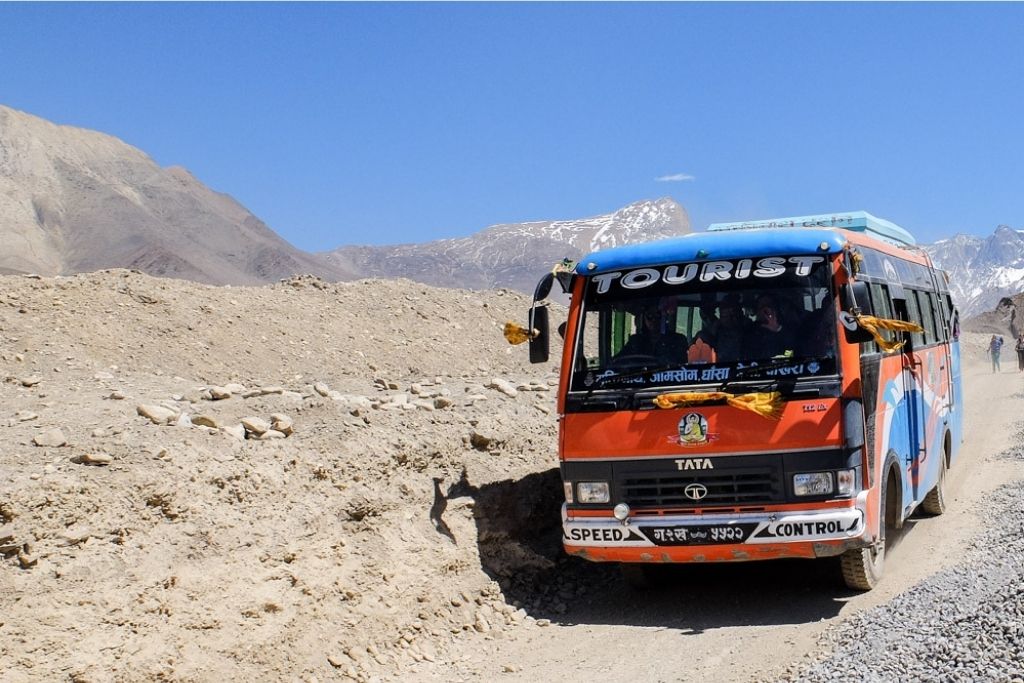
Distances look short on the map, but mountain roads are slow, winding and often under repair. The roughly 200 km from Kathmandu to Pokhara can take seven to nine hours by road.
| Transport | Best for | Approximate cost | Notes |
|---|---|---|---|
| Tourist bus | Kathmandu to Pokhara or Chitwan | From about NPR 1,500–3,000 (£7.50–£15) | Safer and more comfortable than local buses; daytime only |
| Local bus or microbus | Short hops, budget travel | Very cheap | Often overcrowded; the FCDO advises avoiding night buses |
| Private car or jeep | Groups, trailheads, flexibility | Varies by route | Most comfortable on long road days |
| Domestic flights | Pokhara, Bharatpur (Chitwan), Bhairahawa, Lukla, Jomsom | Lukla about US$236 (£177) one way | Weather delays are common; build in spare days |
| Taxis and ride-hailing | Within Kathmandu and Pokhara | Short city rides from a few hundred rupees | Agree the fare before you get in, or use apps such as Pathao or inDrive |
Flying to Lukla
Lukla’s Tenzing-Hillary Airport is the gateway to the Everest region. In the peak spring and autumn seasons, many Lukla flights are moved to Manthali Airport in Ramechhap to ease congestion at Kathmandu. That means a 4–7 hour drive from Kathmandu, often leaving in the early hours. Baggage is usually limited to 10 kg checked plus 5 kg hand luggage. Fog and cloud regularly ground flights, so allow at least one or two buffer days before your international flight home.
Domestic air safety
The UK Foreign Office notes that no Nepali airline currently meets international safety standards, and all are on the UK Air Safety List. Many travellers still fly domestically because the alternatives are long road journeys; choose established airlines and avoid flying in poor weather where you can.
7. Is Nepal safe? Current UK travel advice
Nepal is generally a safe country for tourists, with a low rate of serious crime. The UK Foreign Office (FCDO) advice was last updated on 1 October 2026 and does not advise against travel to any part of Nepal. Its main warnings cover:
- Protests and strikes: demonstrations and strikes (bandhs) are fairly common and can turn violent, as during the youth-led protests in Kathmandu in September 2025. Avoid gatherings and follow local news.
- Flooding and landslides: the FCDO warns of major flood damage in Rasuwa district and the Nepal–China border area, with further risk in Gorkha, Nuwakot and Dhading. Roads can be cut for days in the monsoon.
- Petty crime: pickpocketing and bag-snatching occur at the airport, on buses and in Thamel. Women travellers should take care at night in poorly lit areas.
- Trekking: the FCDO advises against trekking alone and warns about helicopter rescue scams, including unnecessary evacuations arranged for commission.
- Earthquakes: tremors are common. Know the safety procedures in your hotel.
Check the FCDO Nepal travel advice shortly before you travel, and read our safety tips for trekking in Nepal.
8. Health: vaccines, altitude and water
Vaccinations
See your GP or a travel clinic six to eight weeks before you go, and check NHS Fit for Travel or TravelHealthPro. Typical recommendations for Nepal include being up to date with routine vaccines and tetanus, plus hepatitis A and typhoid. Depending on your trip, hepatitis B, rabies, Japanese encephalitis and cholera may be advised. Malaria risk is low and confined to parts of the Terai; dengue occurs in the monsoon, including in Kathmandu, so use insect repellent.
Altitude sickness
Altitude sickness can affect anyone above about 2,500 m, regardless of fitness. The key rules are to ascend slowly, sleep no more than 300–500 m higher each night above 3,000 m, take rest days, and descend if symptoms get worse. Read our altitude sickness guide before any high trek.
Water and food
- Do not drink tap water. Use a filter bottle, purification tablets or refill stations rather than buying plastic bottles.
- Eat freshly cooked hot food; be cautious with salads and peeled fruit in budget places.
- Carry oral rehydration salts and basic stomach medicines.
- Kathmandu’s air quality is often poor in winter and spring; a mask helps on dusty roads.
Travel insurance
Your policy must cover the maximum altitude you will reach and helicopter evacuation; standard policies often stop at 2,000–3,000 m. Medical care outside Kathmandu and Pokhara is limited. See do I need travel insurance for trekking.
9. Trekking permits and the guide rule
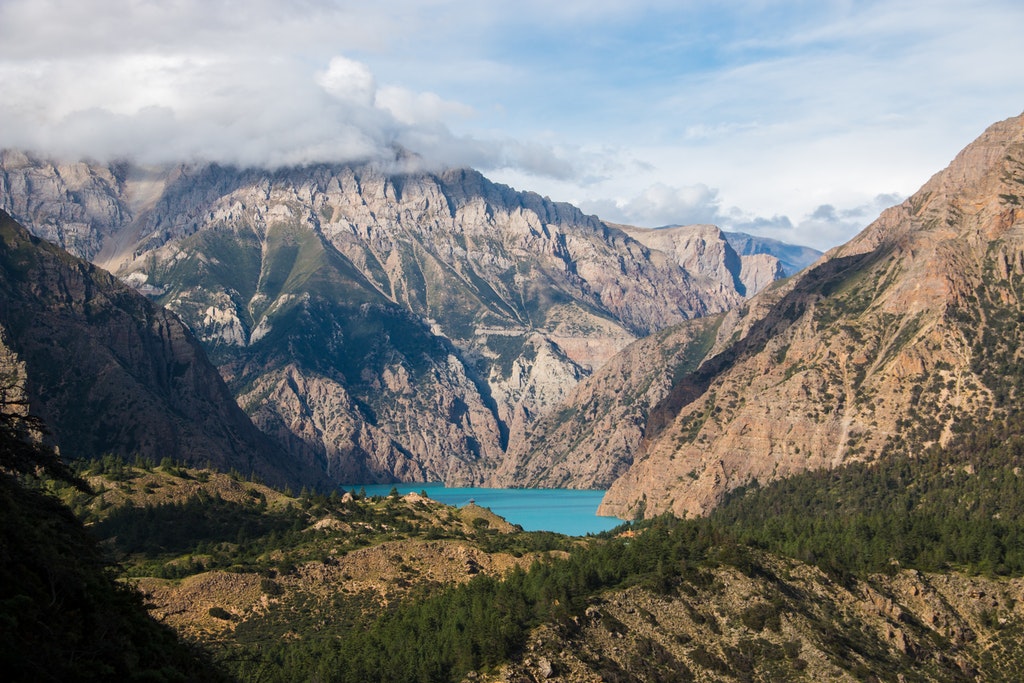
Since 1 April 2023, Nepal requires foreign trekkers to hire a licensed guide in national parks and conservation areas. Enforcement has varied on open routes, but you should plan on using one. The Everest (Khumbu) region is the main exception: the local Khumbu Pasang Lhamu Rural Municipality did not adopt the rule, so independent trekking remains possible there. Restricted areas always need a licensed agency and a guide.
| Region | Permits needed | Approx. cost |
|---|---|---|
| Everest Base Camp | Sagarmatha National Park entry; Khumbu Pasang Lhamu Rural Municipality fee | NPR 3,000 (£15) plus VAT; NPR 3,000 (£15) |
| Annapurna (ABC, Poon Hill, Circuit) | Annapurna Conservation Area Permit; TIMS card | NPR 3,000 (£15); NPR 1,000–2,000 (£5–£10) |
| Langtang | Langtang National Park entry; TIMS card | NPR 3,000 (£15); NPR 1,000–2,000 |
| Manaslu | Restricted Area Permit plus MCAP and ACAP | From US$100 (£75) for the first week in autumn |
| Upper Mustang | Restricted Area Permit plus ACAP | US$500 (£375) for 10 days, then US$50 (£38) per day |
A good guide also makes the trip safer and more interesting. Hiring a porter for heavier loads is common and supports local jobs. New to trekking? Start with our trekking in Nepal guide and trekking for beginners.
10. Etiquette and cultural dos and don’ts
- Greet people with “Namaste”, palms together.
- Remove your shoes before entering homes, temples and monasteries.
- Walk clockwise around stupas and prayer wheels.
- Use your right hand to eat, give and receive.
- Never touch someone’s head or point your feet at people or shrines.
- Do not share food you have bitten or drink from someone else’s bottle (this is jutho).
- Dress modestly, covering shoulders and knees, especially at religious sites.
- Ask before taking photos of people, rituals and cremations at Pashupatinath.
- Only Hindus may enter the main Pashupatinath temple and some others; respect the signs.
- Avoid public displays of affection.
Our full guide to Nepal’s culture and traditions explains festivals, religion and customs in more depth.
11. Tipping in Nepal
Tipping is not traditional in Nepali culture but is now expected in tourism. Many restaurants add a 10% service charge plus 13% VAT to the bill, so check before tipping extra.
| Who | Typical tip |
|---|---|
| Restaurants without service charge | 5–10% |
| Taxi drivers | Round up the fare |
| City tour guide (day) | NPR 1,000–1,500 (£5–£7.50) |
| Trekking guide | Roughly US$10–15 (£7.50–£11) per day of the trek |
| Porter | Roughly US$7–10 (£5–£7.50) per day of the trek |
On treks, tips are usually given as a lump sum at the end, ideally in rupees and handed to each person directly. Many trekkers use 10–15% of the trek cost as a guide.
12. Budget: how much does Nepal cost per day?
Nepal is good value, but costs rise sharply with flights, permits and comfortable lodges. These daily figures exclude international flights, visas and trek packages.
| Style | Daily budget per person | What it buys |
|---|---|---|
| Budget | NPR 5,000–8,000 (£25–£40) | Guesthouse or hostel, dal bhat and local food, local transport |
| Mid-range | NPR 8,000–20,000 (£40–£100) | Comfortable hotel, restaurant meals, tourist buses, occasional private car |
| Comfort | NPR 20,000+ (£100+) | Boutique or luxury hotels, private transport, guided touring, domestic flights |
| Teahouse trek (with guide and porter) | About £60–£110 per day | Varies by route, group size and season |
Prices on trekking routes rise with altitude because everything is carried in by porter or yak. A plate of dal bhat that costs NPR 300–500 in Kathmandu can cost NPR 1,000 or more near Everest Base Camp. Our Everest Base Camp trek cost guide breaks this down.
13. Plugs, power and time zone
- Plugs: Nepal uses Type C, D and M sockets, with 230 V at 50 Hz. UK plugs need an adaptor; many sockets accept the two round pins of Type C.
- Power: scheduled power cuts largely ended in 2018, but outages still happen in rural areas. On treks, charging costs extra at higher lodges, so bring a power bank.
- Time zone: Nepal is UTC+5:45, one of the few time zones offset by 45 minutes. Nepal does not use daylight saving time.
- Calendar: Nepal uses the Bikram Sambat calendar, which is about 56–57 years ahead of the Gregorian calendar. The year 2083 began in April 2026.
14. Emergency numbers and useful contacts
| Service | Number |
|---|---|
| Police | 100 |
| Tourist Police hotline | 1144 |
| Fire | 101 |
| Ambulance | 102 |
| British Embassy Kathmandu (24/7 consular help) | +977 (0)1 4237100 |
| FCDO London (24/7) | +44 (0)20 7008 5000 |
| Nepal country code | +977 |
Tourist Police have offices in Kathmandu (Bhrikutimandap and Thamel), Pokhara and other tourist hubs. Save these numbers in your phone before you go.
15. What to pack
- A headtorch, power bank and universal adaptor.
- Earplugs and an eye mask for thin-walled guesthouses.
- Reusable water bottle with a filter or purification tablets.
- Sunscreen, lip balm and sunglasses; UV is strong at altitude.
- A dust mask or buff for Kathmandu traffic.
- Hand sanitiser and toilet paper, which is not always provided.
- Modest clothing for temples, plus a light rain jacket.
- Small padlock for bags and lockers.
For trekking kit, use our free trek packing checklist and essential items for trekking.
16. When to go
October and November bring the clearest weather and the busiest trails; March to May is the second trekking season. December to February is cold but clear, and the June to September monsoon suits rain-shadow regions such as Upper Mustang. Our guide to the best time to visit Nepal covers each month in detail.
Conclusion
A first trip to Nepal goes smoothly when you sort the basics early: an online visa form, enough cash, a local SIM, insurance that covers trekking altitude, a licensed guide and spare days for weather. Get those right and you can focus on the mountains, temples and people that make the country special.
Ready to start planning? Explore our Nepal travel guide or plan your trip with us for a tailor-made itinerary with licensed local partners.
Further reading: our Nepal visa guide, how much a trip to Nepal costs, how to get from Kathmandu to Pokhara and 25 best things to do in Nepal.
Frequently asked questions
Do UK citizens need a visa for Nepal?
Yes. British citizens need a tourist visa, but it is available on arrival at Kathmandu airport and main land borders. It costs US$30 for 15 days, US$50 for 30 days or US$125 for 90 days. You can fill in the online form up to 15 days before arrival, or apply in advance at the Embassy of Nepal in London.
How much is the Nepal visa on arrival?
US$30 (about £23) for 15 days, US$50 (about £38) for 30 days and US$125 (about £94) for 90 days, all multiple entry. Carry the fee in clean US dollar notes in case card payment is unavailable.
Is it safe to travel to Nepal right now?
The UK Foreign Office does not advise against travel to any part of Nepal as of its 1 October 2026 update. Its main warnings cover protests and strikes, flooding and landslides (especially in Rasuwa district), petty crime in tourist areas and trekking hazards. Check the FCDO page shortly before you travel.
Can I use my debit card in Nepal?
Yes, in ATMs and in many hotels and larger shops, though card payments often carry a 3–4% surcharge. ATM withdrawals are usually limited to NPR 10,000–35,000 per transaction with a local fee of about NPR 500–800. Carry cash for treks and rural areas.
Do I need a guide to trek in Nepal?
Since April 2023, foreign trekkers are required to hire a licensed guide in national parks and conservation areas such as Annapurna and Langtang, and always in restricted areas such as Upper Mustang and Manaslu. The Everest (Khumbu) region did not adopt the rule, so independent trekking remains possible there, though the FCDO advises against trekking alone.
What vaccinations do I need for Nepal?
Commonly recommended vaccines are hepatitis A, typhoid and tetanus, with hepatitis B, rabies, Japanese encephalitis and cholera considered for some travellers. Check NHS Fit for Travel or TravelHealthPro and see a travel nurse six to eight weeks before departure.
Can you drink tap water in Nepal?
No. Use a filter bottle, purification tablets or refill stations offering treated water. Many teahouses on trekking routes sell safe drinking water by the litre, which reduces plastic waste.
What plug do I need for Nepal?
Nepal uses Type C, D and M sockets at 230 V and 50 Hz. Bring a universal travel adaptor; UK appliances work on the same voltage.