

The best time to visit Nepal is October and November, when the monsoon has cleared, skies are sharp and trekking temperatures are comfortable. March to May is the second-best window, with warmer weather and rhododendrons in bloom but hazier views. December to February suits lower treks, Kathmandu and Chitwan, while the June to September monsoon is best for rain-shadow treks such as Upper Mustang.
This guide breaks it down month by month, by activity and by region, with Kathmandu climate data and realistic temperatures for the high trails.
Quick answer: when to go to Nepal
| If you want… | Go in | Why |
|---|---|---|
| Classic trekking (Everest, Annapurna) | Mid-September to November; March to May | Stable, mostly dry weather and good visibility |
| The clearest mountain views | October to December | Rain has washed the air clean; little haze |
| Rhododendrons and warmer nights | March and April | Forests flower between about 1,500 m and 3,500 m |
| Fewer crowds and lower prices | December to February, or June to August | Off-season for most trekkers |
| Wildlife in Chitwan | February to April | Grass is cut back and animals gather near water |
| Rafting | October to December; March to May | Good flows without monsoon floods |
| Paragliding in Pokhara | October to November; February to April | Reliable thermals and clear skies |
| Monsoon-season trekking | June to September | Upper Mustang, Nar Phu and Dolpo sit in the rain shadow |
| Festivals | October and November | Dashain and Tihar, plus Mani Rimdu in the Everest region |
Nepal’s seasons at a glance
Nepal has four broad seasons, but altitude matters more than the calendar. In one trip you can sweat in Chitwan at 150 m and face sub-zero nights above 5,000 m. The monsoon, driven by the South Asian summer monsoon, normally reaches eastern Nepal around 13 June and withdraws around 2 October, according to Nepal’s Department of Hydrology and Meteorology. In recent years it has often lingered into October.
| Season | Months | Weather | Best for |
|---|---|---|---|
| Autumn | September to November | Dry, clear and mild after the rains | Trekking, views, festivals |
| Winter | December to February | Dry and clear; cold mornings and nights | Lower treks, Kathmandu, Chitwan, Lumbini |
| Spring | March to May | Warming, hazier; afternoon storms build in May | Trekking, rhododendrons, Everest expeditions, wildlife |
| Summer monsoon | June to September | Hot, humid and wet, mostly as afternoon and overnight rain | Rain-shadow treks, culture, green landscapes |
Nepal weather by month
Kathmandu figures are 1991–2020 averages for Tribhuvan Airport (1,337 m). High-trail figures are typical ranges at about 4,000–5,000 m, for example between Dingboche and Everest Base Camp, and vary with wind and weather. Treat them as a guide for packing, not a forecast.
| Month | Kathmandu high / low | Kathmandu rain | High trails (day / night, approx.) | Crowds | Mountain views | Festivals |
|---|---|---|---|---|---|---|
| January | 19°C / 3°C | 15 mm | −5 to 5°C / −15 to −25°C | Very low | Excellent but short days | Maghe Sankranti, Sonam Lhosar |
| February | 22°C / 5°C | 24 mm | −3 to 6°C / −12 to −20°C | Low | Very good | Gyalpo Lhosar, Maha Shivaratri |
| March | 26°C / 9°C | 38 mm | 0 to 10°C / −10 to −15°C | Rising | Good, some haze | Holi |
| April | 29°C / 12°C | 63 mm | 5 to 15°C / −5 to −10°C | High | Good mornings, hazy afternoons | Nepali New Year, Bisket Jatra |
| May | 29°C / 16°C | 129 mm | 8 to 17°C / −3 to −8°C | High (Everest expedition season) | Fair; cloud builds | Buddha Jayanti, Tiji (Mustang) |
| June | 30°C / 19°C | 241 mm | 8 to 15°C / around 0°C | Low | Poor; occasional clear mornings | Ropain (rice planting) |
| July | 29°C / 20°C | 384 mm | 8 to 15°C / around 0°C | Very low | Poor | Mostly local festivals |
| August | 29°C / 20°C | 343 mm | 8 to 15°C / around 0°C | Very low | Poor | Janai Purnima, Gai Jatra |
| September | 29°C / 19°C | 208 mm | 5 to 15°C / −3 to −8°C | Rising from mid-month | Improving late in the month | Teej, Indra Jatra |
| October | 27°C / 14°C | 43 mm | 3 to 12°C / −8 to −12°C | Peak | Excellent | Dashain, sometimes Tihar |
| November | 24°C / 8°C | 6 mm | 0 to 10°C / −12 to −15°C | High | Excellent | Tihar, Chhath, Mani Rimdu |
| December | 20°C / 4°C | 8 mm | −3 to 7°C / −15 to −20°C | Low | Excellent | Tamu Lhosar, Pokhara Street Festival |
In 2026, Holi was on 2–3 March, Buddha Jayanti on 1 May and the main days of Dashain on 11–21 October, and Tihar’s Laxmi Puja falls on 8 November. Festival dates follow the lunar calendar and shift each year; see our guide to Nepal’s culture and festivals for what each one involves.
Autumn (September to November): the best time to visit Nepal

Autumn is Nepal’s main season for good reason. Once the monsoon withdraws, usually in late September or early October, the air is clean, the hills are still green and daytime temperatures on the trail are pleasant. October is the busiest month; November is a little colder but just as clear, and often quieter.
Pros
- The most reliable trekking weather and the best visibility of the year.
- Dashain and Tihar, Nepal’s two biggest festivals, fall in this season.
- All major treks, including high passes such as Thorong La and Cho La, are normally open.
- Good conditions for rafting, paragliding, mountain flights and safaris.
Cons
- Popular trails, lodges and Lukla flights are at their busiest; book early.
- Prices for flights and good lodges are highest.
- Early September is still wet; late monsoon storms can extend into October.
- Transport and offices are disrupted during the main days of Dashain.
Where to go: almost anywhere. Classic choices are the Everest Base Camp trek, Annapurna Base Camp, the Annapurna Circuit and the Manaslu Circuit. For fewer people, consider the Tsum Valley or Gokyo Lakes.
Winter (December to February): clear, quiet and cold

Winter is dry and often crystal clear, and it is the most underrated time to visit Nepal. Kathmandu has mild sunny days around 19–22°C but near-freezing mornings, and many buildings are unheated. In the high mountains, nights fall well below −15°C and heavy snowfalls can close passes.
Pros
- Few trekkers and lower prices; lodges are rarely full.
- Excellent visibility on most days, especially in December.
- Comfortable temperatures in Chitwan, Bardia and Lumbini.
- Good for lower-altitude treks such as Poon Hill and Ghandruk.
Cons
- Very cold nights on high treks; you need a four-season sleeping bag and a down jacket.
- High passes such as Thorong La (5,416 m) and Larkya La (5,106 m) can be closed by snow.
- Some high lodges close from about December to February.
- Dense fog in the Terai can delay flights and roads in December and January.
Where to go: Poon Hill, Ghandruk, Mardi Himal (with care), the Kathmandu Valley rim (Nagarkot, Chisapani), Bandipur, Chitwan, Bardia and Lumbini. Everest Base Camp is possible with a strong team and the right kit. Read our guide to the best time to trek Everest Base Camp for winter specifics.
Spring (March to May): rhododendrons and long days

Spring is the second peak season. Days are longer and warmer than in autumn, and the rhododendron forests below about 3,500 m flower red, pink and white from March into April. The trade-off is haze: dust and smoke from crop burning and forest fires can soften views, especially in the hills and lower valleys. By May, cloud builds by late morning and pre-monsoon storms arrive.
Pros
- Warmer nights at altitude than in autumn.
- Rhododendron forests in full flower in March and April, notably on Poon Hill and in the lower Everest region.
- Everest climbing season: Base Camp is busy with expeditions in April and May.
- Good wildlife viewing in Chitwan and Bardia.
Cons
- Haze can hide distant peaks, particularly in April and May.
- Very hot in the Terai from April (often above 35°C by May).
- Popular routes are busy, and EBC is crowded in April and May.
- Afternoon thunderstorms become common in May.
Monsoon (June to September): green, wet and empty

Most of Nepal’s annual rainfall, commonly put at around 80%, falls in the monsoon. In Kathmandu, July alone averages about 384 mm of rain, and Pokhara is one of the wettest places in the country. Rain often falls in the afternoon and overnight, leaving clear spells in the morning, but some days are wet throughout.
The main risks are practical: landslides blocking roads, flight delays (Lukla flights are frequently grounded by cloud), leeches on forest trails and swollen rivers. Serious floods do happen; heavy rain in late September 2024 and early October 2025 caused deadly floods and landslides, and the UK Foreign Office continues to warn about flood damage in Rasuwa and neighbouring districts. Always build spare days into a monsoon itinerary.
Pros
- Very few tourists and discounted hotels in Kathmandu and Pokhara.
- Green terraces, waterfalls and flowering high meadows.
- Ideal for rain-shadow regions north of the main Himalaya.
- Rich time for local festivals in the Kathmandu Valley.
Cons
- Cloud hides the peaks for days at a time.
- Landslides, road closures and flight cancellations.
- Leeches below about 3,000 m; see how to protect yourself from leeches.
- Chitwan is hot and humid, and some jungle activities are restricted.
Where to go: Upper Mustang, Nar Phu, Upper Dolpo and Limi Valley, all in the rain shadow; Phoksundo Lake in Shey Phoksundo National Park; and cultural trips in Kathmandu and Bhaktapur.
Best time to visit Nepal by activity
| Activity | Best months | Good | Avoid | Notes |
|---|---|---|---|---|
| Teahouse trekking (EBC, ABC, Annapurna Circuit) | October to November | March to May; late September; December | July and August | High passes may close in January and February |
| Low and short treks (Poon Hill, Ghandruk) | October to April | September, May | June to August | Rhododendrons peak in March and April |
| Rain-shadow treks (Upper Mustang, Nar Phu, Dolpo) | May to October | April, November | December to February | Tiji festival in Lo Manthang is usually in May |
| Jungle safari (Chitwan, Bardia) | February to April | October to January | June to September | Thinner grass after cutting in January and February improves sightings |
| White-water rafting | October to December | March to May | June to August | Rivers run high and fast just after the monsoon |
| Paragliding (Pokhara) | October to November | December to April | June to August | Flights depend on daily weather; mornings are smoother |
| Mountain flights and views | October to December | January to March | June to September | Book an early-morning flight for the clearest skies |
| Everest expeditions | April and May | Autumn (fewer) | Monsoon and winter | Base Camp is busiest in late April and May |
| Kathmandu and culture | October to March | All year | None | Dashain and Tihar in autumn; Holi in March |
| Lumbini and the Terai | October to March | Buddha Jayanti (April or May) | May to September (heat and rain) | Fog can disrupt travel in December and January |
Trekking
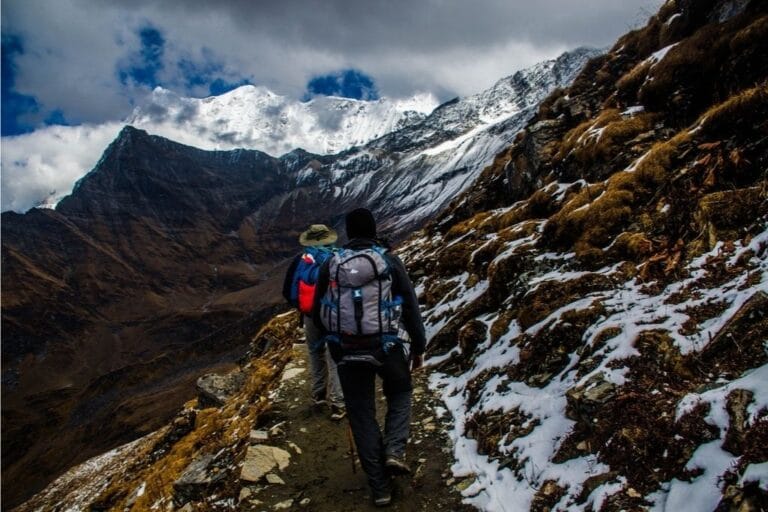
For most first-timers, mid-October to mid-November is the best time to trek in Nepal. Visibility is excellent, daytime temperatures are comfortable and trails are dry. If you prefer warmer nights and flowers, choose late March to April. Our trekking in Nepal guide compares routes, and the trekking for beginners guide helps if this is your first multi-day walk.
Whatever the season, the altitude risks are the same. Read our altitude sickness guide and allow acclimatisation days.
Jungle safari in Chitwan
Chitwan National Park is open all year, but the best wildlife viewing is February to April. Local people are permitted to cut the tall elephant grass in January and February, which opens up sightlines, and in the dry months rhinos and other animals stay closer to rivers and waterholes. October to January is cooler and pleasant for walking. From May the heat builds, and during the monsoon heavy rain, leeches and high water limit activities. See our Chitwan guide.
White-water rafting
The best rafting is from October to December, when rivers are high and exciting after the monsoon but no longer in flood, and from March to May, when lower flows suit families and beginners. Most commercial operators stop running the bigger rivers in the monsoon. Our rafting in Nepal guide covers the Trishuli, Seti, Bhote Koshi and multi-day rivers.
Paragliding in Pokhara
Pokhara is one of the world’s best-known paragliding spots. The most reliable season is October and November, with clear views of the Annapurna range and steady thermals. December to April is also good, although spring haze can reduce views. In the monsoon, flights run only on suitable days. See paragliding in Nepal.
Upper Mustang and monsoon treks
The Annapurna and Dhaulagiri massifs block most monsoon cloud from reaching Mustang, so Upper Mustang gets relatively little rain in summer. That makes it one of the few treks that work well in June to August. It is a restricted area: you need a special permit (long quoted at US$500, about £375, for the first 10 days; confirm the current fee with your agency) arranged through a licensed agency, plus a guide. Winter is harsh, and many residents move south. See our Mustang guide.
Best time to visit Nepal by region
| Region | Best time | Why |
|---|---|---|
| Kathmandu Valley | October to April | Dry, sunny days; autumn festivals; spring is warm but hazier |
| Pokhara and the Annapurna foothills | October to April | Lake and mountain views; very wet June to September |
| Everest region | October to November; April to May | Stable weather; Lukla flights most reliable |
| Langtang | October to November; March to April | Close to Kathmandu; good autumn views |
| Manaslu and Tsum | October to November; March to May | Larkya La pass is snowbound in mid-winter |
| Mustang and Dolpo | May to October | Rain shadow; very cold in winter |
| Chitwan and Bardia | October to April | Comfortable temperatures and good wildlife; avoid monsoon |
| Lumbini | October to March | Mild weather; very hot from April |
| Far east (Kanchenjunga, Ilam) | October to November; March to April | The east gets the monsoon first and hardest |
Which month is best for you?
- First trip, classic trek: October or early November.
- Flowers and warmer nights: late March or April.
- Quiet trails and lower costs: December, or late February to early March.
- School summer holidays: July and August work for Upper Mustang, Kathmandu culture or a Pokhara stay, but not for Everest or Annapurna views.
- Festival travel: October to November for Dashain and Tihar; March for Holi.
- Combining Nepal with India or Bhutan: October to November, or March to April, works well for all three.
Packing by season
- Autumn and spring treks: layers, a warm down jacket, a sleeping bag rated to about −10°C, sun protection and a light rain shell.
- Winter treks: add a bag rated to −20°C, insulated trousers, warm gloves and microspikes for icy sections.
- Monsoon: a waterproof jacket, pack liner, quick-dry clothes, leech socks and an umbrella.
Our free trek packing checklist and Everest Base Camp packing list cover the details. Whenever you go, make sure your policy covers trekking altitude and helicopter rescue; see do I need travel insurance for trekking.
Conclusion
For most travellers, the best time to visit Nepal is October to November, with March to April a close second. Winter rewards those who can handle the cold with clear views and empty trails, and the monsoon opens up Nepal’s rain-shadow valleys and a greener, quieter country. Choose your season by what you want to do, then choose your route.
Not sure which season fits your trek? Plan your trip with us and we will match dates, route and pace, or read our things to know before travelling to Nepal.
Planning a trip? Use our Nepal itinerary guide to build your route, check the Nepal trip cost guide for budgets, and read the Nepal visa guide before you fly. For ideas, see the best things to do in Nepal.
Frequently asked questions
What is the best month to visit Nepal?
October is the best single month for most visitors: the monsoon has usually cleared, mountain views are excellent and trekking temperatures are comfortable. November is almost as good, slightly colder and often quieter. April is the best spring month.
What is the worst time to visit Nepal?
July and August are the hardest months for trekking and mountain views, with heavy rain, cloud, leeches, landslides and frequent flight delays. They are still good for rain-shadow treks such as Upper Mustang and for cultural visits to Kathmandu.
When is monsoon season in Nepal?
The monsoon normally reaches eastern Nepal around 13 June and withdraws around 2 October, according to Nepal’s Department of Hydrology and Meteorology. Dates vary year to year, and in recent years rain has often continued into early October.
Is December a good time to visit Nepal?
Yes. December is dry, clear and quiet, with daytime highs around 20°C in Kathmandu. It is a good month for Poon Hill, Ghandruk, Chitwan and sightseeing. High treks are possible but cold, with nights below −15°C above 4,000 m.
Can you trek in Nepal during the monsoon?
Yes, with the right route. Rain-shadow areas such as Upper Mustang, Nar Phu and Dolpo stay relatively dry. On classic routes such as Everest and Annapurna you should expect rain, cloud, leeches and delayed flights, and build in spare days.
What is the best time to visit Chitwan National Park?
February to April for the best wildlife sightings, and October to January for cooler, comfortable weather. Avoid June to September, when heat, heavy rain and high rivers limit activities.
How cold is Nepal in winter?
Kathmandu averages about 19°C by day and 3°C at night in January. Pokhara is a little milder. Above 4,000 m, daytime temperatures hover around freezing and nights can drop to −20°C or lower.
When is the best time to see Everest?
October to December gives the clearest, most reliable views of Everest, either on a trek or a mountain flight. Spring views are also good early in the day, but haze and afternoon cloud are more common from April.