
To stay hydrated when hiking, start the day well hydrated, sip roughly 0.5 litres an hour in mild conditions (more in heat, on steep climbs and at altitude), let thirst guide you rather than forcing water down, and replace salt on long or sweaty days. Just as important is a plan for where your next litre is coming from and how you will make it safe to drink.
This guide covers how much to drink, how to recognise both dehydration and its less-known opposite, overhydration (hyponatraemia), electrolytes, bottles versus bladders, water treatment, and how refills actually work on Nepal’s teahouse treks.

Quick answer: hiking hydration at a glance
| Situation | Rough guide | Notes |
|---|---|---|
| Mild weather, moderate pace | About 0.5 litres per hour | A starting point, not a target to force down |
| Hot weather or steep climbing | 0.75–1 litre per hour may be needed | Sweat rates vary hugely between people |
| High altitude (above about 2,500 m) | Often 3–4 litres across the day, including tea and soup | Dry air and heavy breathing raise losses; cold blunts thirst |
| Before you set off | A glass or two of water with breakfast | Check your urine is pale |
| Long or sweaty days (4+ hours) | Add salt: salty snacks, soup or electrolyte drink | Water alone over many hours can dilute blood sodium |
| Best quick check | Pale straw-coloured urine, passed regularly | Dark, strong-smelling or infrequent urine means drink more |
Why hydration matters on the trail
When you walk uphill with a pack, your muscles produce heat and you sweat to shed it. You also lose water every time you breathe out, and that loss rises sharply in cold, dry mountain air. If you do not replace what you lose, your blood volume drops, your heart works harder and your performance falls away.
Dehydration rarely announces itself dramatically. More often it shows up as a nagging headache, heavy legs on the last climb of the day, poor concentration on tricky ground or a bad night’s sleep. On a multi-day trek, being slightly behind on fluids every day adds up.
Hydration also matters for comfort and safety in ways people overlook: it helps you regulate temperature in heat and cold, it affects how clearly you think when navigating or judging footing, and it makes it easier to tell genuine altitude symptoms apart from simple dehydration.
How much water should you drink when hiking?
There is no single correct number, because fluid needs depend on temperature, humidity, pace, gradient, pack weight, body size and how much you personally sweat. Two people walking side by side can lose very different amounts.
A widely used rule of thumb is about half a litre per hour of moderate hiking in mild conditions. Hiking publications commonly suggest adding roughly 150–200 ml an hour as it gets hotter, so on a warm, steep day you may need 0.75–1 litre an hour. Treat these figures as a planning tool for how much to carry, not a quota you must drink.
Drink to thirst, but plan for thirst
The Wilderness Medical Society’s guidelines on exercise-associated hyponatraemia recommend drinking in response to thirst rather than to a fixed schedule, because no set volume has been shown to prevent problems and forcing fluids raises the risk of overhydration. In practice that means:
- Keep water within easy reach so you actually drink when you feel thirsty.
- Take small sips regularly rather than large gulps at long intervals.
- Carry enough for the hottest, longest section between refills, plus a margin.
- In the cold and at altitude, be a little more deliberate, because thirst can lag behind your losses.
How much water to carry
Work out the time to your next reliable refill, multiply by your expected hourly intake and add a reserve. For a three-hour stretch in mild weather, that is roughly 1.5 litres plus a safety margin, so 2 litres is sensible. Water weighs 1 kg per litre, so carrying far more than you need is its own burden; knowing your refill points is the real skill.
Before and after the hike
- Start hydrated. Drink a glass or two of water with breakfast and check your urine is pale before you leave.
- Front-load in the cool of the morning. It is easier to drink before the heat of the day and the steepest climbs.
- Rehydrate afterwards. Drink steadily with your evening meal; soup, tea and salty food all help you rebalance.
Signs of dehydration
The NHS lists these common signs of dehydration in adults:
- Feeling thirsty
- Dark yellow, strong-smelling urine, or passing urine less often than usual
- Headache, light-headedness or dizziness
- Tiredness
- Dry mouth, lips and tongue
- Sunken eyes
On the trail, also watch for unusual fatigue, muscle cramps, irritability and a sudden drop in pace. If you notice these, stop in the shade, sip water steadily and eat something salty. If you are vomiting or have diarrhoea, use oral rehydration salts, which replace sugar and salts as well as water.
Seek urgent help if someone becomes confused, very drowsy or difficult to wake, has cold or blotchy skin, fast breathing or a racing heart, or cannot keep fluids down. These can signal a serious problem. In the mountains, that means stopping, getting help from your guide and being prepared to descend or evacuate.
Overhydration and hyponatraemia: the other risk
It is possible to drink too much. Exercise-associated hyponatraemia happens when blood sodium becomes diluted, usually because someone drinks large amounts of plain water or low-salt drinks over many hours of exertion. It is most often reported in long events in hot weather, but hikers who follow a “drink as much as possible” approach can be affected too.
According to the Wilderness Medical Society guidance, early symptoms include:
- Nausea or vomiting
- Headache
- Bloating, puffy hands or weight gain
- Weakness, fatigue and dizziness
- Irritability
Severe cases cause confusion, seizures and collapse, and need emergency care. The tricky part is that these symptoms overlap with dehydration, heat illness and altitude sickness. A useful clue is fluid intake: if someone has been drinking heavily, is not thirsty, and is still passing large amounts of clear urine yet feels unwell, do not push more water on them. Get medical advice.
The prevention is simple: drink to thirst, do not force fluids, and make sure salty food or drinks are available on long, hot days.
Electrolytes: do you need them?
Sweat contains sodium and smaller amounts of potassium and other minerals. On a short walk, normal meals replace these easily. On long days, in heat, or when you are sweating heavily for several hours, replacing salt becomes more important.
| Option | Best for | Pros | Cons |
|---|---|---|---|
| Salty snacks (nuts, crisps, crackers) | Everyday hiking | Cheap, adds energy too | Hard to eat when nauseous |
| Electrolyte tablets or powders | Long, hot or sweaty days | Light, easy to dose | Some are low in sodium; check the label |
| Oral rehydration salts | Diarrhoea, vomiting, serious fluid loss | Designed for medical rehydration | Salty taste; not needed for routine use |
| Soup, noodle broth, salted tea | Evenings on teahouse treks | Warm, hydrating and salty | Only available at lodges |
Electrolytes do not stop you overhydrating if you drink far more than you need, so they are a complement to drinking to thirst, not a licence to drink unlimited amounts. If you have high blood pressure, heart or kidney conditions, or take medicines that affect fluid or salt balance, speak to your doctor before using electrolyte products regularly.
What about tea, coffee and alcohol?
Tea and coffee in normal amounts still count towards your fluid intake for most people, and hot drinks are often the easiest way to keep drinking in the cold. Alcohol is different: it adds to fluid loss, disturbs sleep and is best avoided while you are gaining altitude.
Carrying water: bottles vs bladders
The best system is the one that makes you drink regularly without fuss. Many trekkers use both: a bladder for sipping on the move and a bottle for treating and refilling water.
| Feature | Water bottles | Hydration bladder |
|---|---|---|
| Ease of drinking on the move | Need to stop or reach a side pocket | Hands-free sipping via hose |
| Monitoring how much you drink | Easy to see | Hard to judge until it runs dry |
| Refilling at taps and teahouses | Quick and simple | Need to unpack it from your bag |
| Cold weather | Wide-mouth bottles freeze less readily; can hold hot water | Hose and bite valve can freeze |
| Water treatment | Easy to dose tablets or use a UV pen | Treating water inside is awkward |
| Durability | Very robust | Can puncture or leak |
| Cleaning | Simple | Needs more care to avoid mould |
For high-altitude treks, we recommend at least two one-litre bottles, with or without a bladder. A hard bottle filled with hot water doubles as a hot water bottle in your sleeping bag. If you use a bladder in the cold, blow water back into the reservoir after each sip and use an insulated hose cover.
Whatever you carry, keep it clean: our guide to cleaning water bottles, flasks and bladders explains how to stop taste and mould building up.
How to treat water on the trail
Streams in the mountains can look perfectly clear and still carry bacteria, viruses or parasites such as Giardia and Cryptosporidium, especially where people, yaks or livestock live upstream. Unless water comes from a source you know is treated, assume it needs treating. The CDC’s water disinfection guidance for travellers is the most useful reference.
| Method | Bacteria | Viruses | Protozoa (Giardia, Crypto) | Pros | Cons |
|---|---|---|---|---|---|
| Boiling | Yes | Yes | Yes | Most reliable | Needs fuel and time; water must cool |
| Microfilter (around 0.1–0.2 micron) | Yes | Not reliably | Yes | Instant, no taste | Can clog; ceramic and hollow-fibre filters can be damaged by freezing |
| Purifier-rated filter | Yes | Yes | Yes | Covers all three groups | Heavier, slower, more expensive |
| Chlorine or iodine tablets | Yes | Yes | Giardia with longer contact time; Crypto poorly | Light and cheap | Taste; waiting time; slower in cold water |
| Chlorine dioxide tablets or drops | Yes | Yes | Yes, including Crypto with long contact time | Light, broad coverage | Crypto needs several hours’ contact |
| UV pen | Yes | Yes | Yes | Fast, no taste | Needs clear water and batteries; no protection after treatment |
Boiling at altitude
The CDC recommends bringing water to a rolling boil for one minute. Water boils at a lower temperature as you climb, at roughly 83°C at 4,900 m, but this is still hot enough to kill the organisms that cause gut infections. Some guidance suggests boiling for three minutes above about 2,000 m as an extra margin. Boiled water from a teahouse is safe once it has been properly boiled, so you can refill straight from the kettle.
Combining methods
If water is cloudy, let sediment settle or pre-filter it through a cloth before using chemicals or UV, which both work poorly in murky water. For the broadest protection without boiling, use a filter followed by chlorine or chlorine dioxide. Iodine is not suitable for people with thyroid conditions, iodine allergy or during pregnancy, so check with your doctor if that applies to you.
Water on Nepal’s teahouse treks
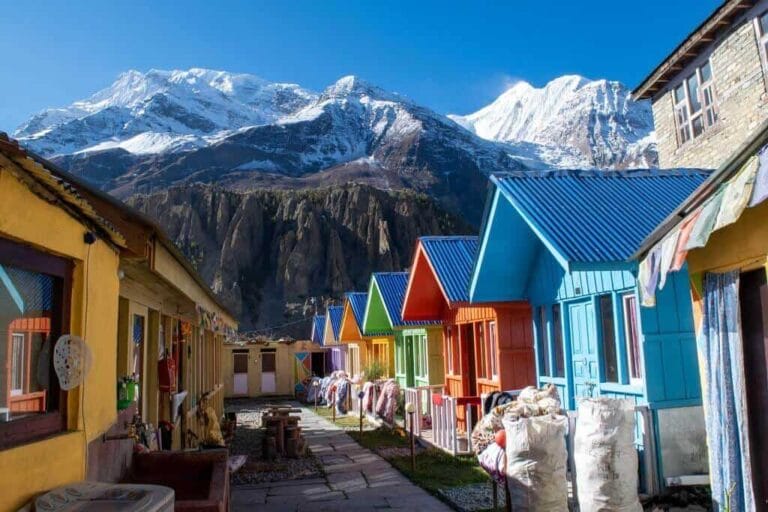
On the classic routes in Nepal you are rarely more than a few hours from a lodge or village, so you do not need to carry huge volumes. You do need a plan for safe water, and you should expect fewer plastic bottles than you might assume. Our guide to trekking in Nepal covers the wider picture of routes and logistics.
Plastic bottle restrictions
In the Everest region, Khumbu Pasang Lhamu Rural Municipality announced a ban on single-use plastics, including drinks in plastic bottles, which took effect in January 2020. Enforcement has been mixed and you may still see bottled water for sale in places, but the expectation is that trekkers bring reusable bottles and refill them. In the Annapurna Sanctuary, sales of bottled water have long been restricted on the upper part of the route from around Chhomrong, with lodges offering treated or boiled water instead.
Plastic waste is a genuine problem in the high valleys, where there is no easy way to carry it out. Bringing a reusable system is the responsible choice anyway, and it saves money.
Your refill options
- Boiled water from teahouses. Available almost everywhere and safe when properly boiled. Filling bottles with hot water at night is also a good way to warm your sleeping bag.
- Treated water stations. Some villages on popular routes have filtered or treated drinking water points where you can refill for a small fee.
- Taps and streams with your own treatment. The cheapest option if you carry a filter, tablets or UV pen, but always treat it.
What water costs on the trail
Prices rise with altitude, because everything above the roadhead is carried in by porters or animals and lodge fuel is expensive. Boiled water can cost a few hundred rupees per litre at lower villages (NPR 200 is about £1) and noticeably more higher up; a 2026 price round-up for the Everest region quoted prices for boiled water at Gorak Shep several times higher than at Lukla. Prices change season to season, so treat any figure as approximate. Carrying your own treatment saves money as well as plastic over a two-week trek. For more on lodge life, see our guide to Everest Base Camp teahouses.
Hydration at high altitude
Above about 2,500 m, you lose more water through breathing because the air is cold and dry and you breathe faster and deeper. Many people also find their appetite and thirst drop, and some find they need to urinate more as their body adjusts. Together these make it easy to fall behind.
Two points are worth being clear about:
- Drinking extra water does not prevent altitude sickness. The Wilderness Medical Society’s altitude guidelines state that forced overhydration has not been shown to prevent acute mountain sickness and raises the risk of hyponatraemia. Prevention comes from ascending gradually, taking acclimatisation days and, where appropriate, medication your doctor prescribes.
- Dehydration can mimic altitude sickness. Headache, fatigue and nausea are common to both. Staying adequately hydrated makes it easier to tell what is really going on, but never assume a headache at altitude is “just dehydration”. Our guide to altitude sickness on the Everest trek explains the warning signs and when to descend.
Practical altitude hydration tips
- Drink a hot drink at every teahouse stop: tea, hot lemon, ginger tea or garlic soup all count.
- Sleep with your water bottles inside your sleeping bag so they do not freeze overnight.
- Keep a bottle in an insulated sleeve or inside your jacket during cold mornings.
- Eat soup with dinner; it adds fluid and salt when appetite is poor.
- Check urine colour each morning and adjust.
- Tell your guide early if you have headache, nausea or unusual fatigue, whatever you think the cause is.
If you have a medical condition, take regular medication, or are considering acetazolamide for altitude, discuss your plans with your doctor or a travel clinic before you go.
Food that helps you stay hydrated
Fluid comes from food as well as drinks. Soups, porridge, noodles, dal bhat with its lentil soup, and fresh fruit at lower altitudes all add water. Salty foods help you hold on to fluid on long days. Potassium-rich foods such as bananas, potatoes and dried fruit are useful too, though normal meals usually cover your needs.
A simple daily hydration routine for trekking
- Morning: drink a glass of water and a hot drink with breakfast; fill two litres of treated or boiled water.
- On the trail: sip every 15–20 minutes, more on climbs and in sun. Drink when thirsty; do not force it.
- Lunch stop: refill, have a hot drink and eat something salty.
- Afternoon: keep sipping, even when it gets cold or cloudy.
- Evening: soup and tea with dinner; fill a bottle with hot water for your sleeping bag.
- Check: pale urine, passed regularly, means you are on track.
Packing for hydration on a Nepal trek
- Two one-litre bottles (at least one hard, wide-mouth bottle that can take boiling water)
- Optional 1.5–2 litre hydration bladder with an insulated hose
- Water treatment: filter, UV pen or chlorine dioxide tablets, plus a backup method
- Electrolyte tablets or oral rehydration salts
- Insulated bottle sleeve for cold mornings
See our full Everest Base Camp packing list or the Annapurna Base Camp packing list for everything else, and our safety tips for trekking in Nepal for the bigger picture.
Ready to put it into practice?
Good hydration is mostly a habit: start the day well, sip when you are thirsty, add salt on long days, and always know where your next safe litre will come from. On our Everest Base Camp Trek and Annapurna Base Camp Trek, your licensed guide will help you find safe refill points along the way. If you have another route in mind, plan your trip with us.
Frequently asked questions
How much water should I drink per hour when hiking?
About 0.5 litres an hour is a sensible starting point in mild conditions. In heat or on steep climbs you may need 0.75–1 litre an hour. Let thirst guide you rather than forcing a fixed amount, and use urine colour as a check.
How much water should I carry on a day hike?
Estimate the hours until your next reliable refill, multiply by roughly 0.5–1 litre per hour depending on heat and effort, and add a reserve. For most day hikes with no refills, 2–3 litres is typical; on Nepal teahouse treks, 2 litres between villages is usually enough.
Can you drink too much water while hiking?
Yes. Drinking large volumes of plain water over many hours can dilute blood sodium, causing exercise-associated hyponatraemia. Symptoms include nausea, headache, bloating and confusion. Drink to thirst, avoid forcing fluids and eat salty food on long days.
Does drinking more water prevent altitude sickness?
No. Wilderness Medical Society guidelines say forced overhydration does not prevent acute mountain sickness and increases the risk of hyponatraemia. Gradual ascent and acclimatisation days are what help. Staying adequately hydrated still matters, because dehydration symptoms can look like altitude sickness.
Is it safe to drink stream water when trekking in Nepal?
Not without treatment. Even clear mountain streams can carry bacteria, viruses and parasites from villages and livestock upstream. Boil it, or use a purifier-rated filter, chlorine dioxide or a UV pen on clear water.
Can I buy bottled water on the Everest Base Camp trek?
The local municipality banned single-use plastic drinks bottles from January 2020, so you should plan to use reusable bottles. Enforcement varies, but boiled or treated water from teahouses and refill stations is the expected option, and it is cheaper and less wasteful.
Are electrolyte tablets necessary for trekking?
Not for every walk, but they help on long, hot or very sweaty days, and oral rehydration salts are useful if you have diarrhoea or vomiting. Salty snacks and soup do a similar job. If you have heart, kidney or blood pressure conditions, ask your doctor first.
Should I use a water bottle or a hydration bladder?
Bladders make it easy to sip on the move, while bottles are easier to refill, treat and monitor, and they cope better with freezing temperatures. For high-altitude treks, carry at least two one-litre bottles, with a bladder as an optional extra.