
The essential items for trekking are the gear that keeps you warm, dry, fed, hydrated, found and able to deal with a problem: good boots, a layering system, a waterproof jacket, a comfortable backpack, water and a way to treat it, food, a first aid kit, a headtorch, sun protection and a means of navigation. On multi-day treks you add a sleeping bag, spare clothes, toiletries, power and your documents.
Below is a complete hiking essentials checklist, split into what you need for a day hike, a teahouse trek and a camping trek, with Nepal-specific advice and the mistakes that most often catch people out.
Quick answer: the 10 hiking essentials
Outdoor organisations have long used a “ten essentials” list as a minimum for any hike beyond a short stroll. Adapted for trekking, it looks like this:
- Navigation: map, compass or GPS app with offline maps, and the skills to use them.
- Headtorch: with spare batteries or a charged power bank.
- Sun protection: sunglasses, high-SPF sun cream, lip balm and a sun hat.
- First aid kit: including blister care and personal medication.
- Knife or multi-tool: plus a small repair kit.
- Fire or heat source: lighter or matches; a stove if you are camping.
- Emergency shelter: a foil blanket or lightweight bivvy bag.
- Extra food: more than you plan to eat.
- Extra water: and a way to purify more.
- Extra clothing: an insulating layer, hat and gloves beyond what you expect to need.

What you need depends on the type of trek
| Item group | Day hike | Teahouse trek (e.g. Nepal) | Camping trek |
|---|---|---|---|
| Backpack | 20 to 30 litre daypack | 25 to 35 litre daypack (porter carries main bag) or 40 to 50 litre if self-carrying | 55 to 70 litre pack |
| Sleeping | Not needed | Sleeping bag; teahouses provide a bed and usually blankets | Tent, sleeping bag, sleeping mat |
| Food | Lunch and snacks | Snacks; meals bought in teahouses | All meals, stove, fuel, cookware |
| Water | 1.5 to 2 litres | 2 to 3 litres capacity plus treatment | 2 to 3 litres plus treatment |
| Clothing | Layers and waterproofs | Full layering system, including a down jacket for altitude | Full layering system, plus spare dry camp clothes |
| Power | Charged phone | Power bank; charging often costs extra | Power bank, possibly a solar panel |
| Documents and money | Phone, card, a little cash | Passport, permits, insurance details, plenty of cash | As for a teahouse trek |
Most treks in Nepal are teahouse treks, where you sleep and eat in lodges along the trail. That makes your load much lighter than on a camping trek. For the full Everest list, see our Everest Base Camp packing list.
Clothing: the layering system
Mountain weather changes quickly and temperatures swing widely between a sunny afternoon and a frosty dawn. Rather than one heavy coat, wear thin layers you can add or remove as you warm up and cool down.
| Layer | What it does | What to look for |
|---|---|---|
| Base layer | Moves sweat away from your skin | Merino wool or synthetic; never cotton |
| Mid layer | Traps warmth | Fleece or light synthetic insulated jacket |
| Insulation layer | Warmth at rest, in camp and at altitude | Down or synthetic puffy jacket, warm enough for sub-zero evenings at altitude |
| Outer shell | Keeps out rain and wind | Waterproof, breathable jacket with a hood; waterproof overtrousers |
Clothing checklist
- 2 to 3 wicking T-shirts or base layer tops
- 1 long-sleeved base layer top and leggings for cold nights
- 1 fleece or mid layer
- 1 insulated down or synthetic jacket (essential above about 3,500 m in Nepal)
- Waterproof jacket and overtrousers
- 2 pairs of trekking trousers (zip-off legs are useful at lower altitude)
- Sun hat and warm hat
- Thin liner gloves and warm insulated gloves or mittens
- Neck gaiter or buff for dust, sun and cold
- 3 to 4 pairs of trekking socks (merino or synthetic blend) and liner socks if you blister easily
- Underwear that dries quickly; a sports bra if needed
- Comfortable clothes to change into in the evening
Footwear
Your boots are the most important item you will buy. Choose boots or trekking shoes that fit well with your trekking socks on, give ankle support on rough ground and have a grippy sole. Break them in over several long walks before you go. Our guide on how to choose trekking shoes covers fit, waterproofing and stiffness, and our guide to insoles for trekking shoes explains when an upgraded insole helps.
- Broken-in trekking boots or shoes
- Lightweight camp shoes or sandals for evenings and lodge rooms
- Gaiters if you expect mud, snow or scree
- Microspikes for icy sections on some winter or high-pass treks (ask your operator)
Packs and trekking gear
- Backpack: sized for your trek (see the table above), with a padded hip belt that carries most of the weight. Read how to choose a backpack for trekking.
- Rain cover or pack liner: backpacks are not waterproof. A liner or dry bags keep spare clothes and your sleeping bag dry.
- Duffel bag: if a porter is carrying your main load. Operators often set a weight limit for porter loads; check yours.
- Trekking poles: reduce strain on knees during descents and help balance. See how to pick trekking poles.
- Headtorch: for early starts, power cuts and night-time toilet trips.
- Sunglasses: with high UV protection; glacier-style wraparound glasses are best at high altitude and on snow.
Sleeping gear
On a teahouse trek you need only a sleeping bag, because lodges provide beds and usually blankets. Rooms are unheated, and at high altitude nights regularly drop well below freezing, so a bag with a comfort rating suitable for sub-zero temperatures is wise on high treks in Nepal. A sleeping bag liner adds warmth and keeps the bag clean.
On a camping trek you also need a tent, a sleeping mat with good insulation from the ground, and optionally an inflatable pillow and groundsheet. On organised camping treks, the crew often provides tents and mats; confirm what is included before you pack.
Food and water
Water
Dehydration makes everything harder and may make altitude symptoms worse. Carry 2 to 3 litres of capacity, in bottles or a hydration bladder. In freezing conditions a bladder tube can freeze, so many trekkers carry an insulated bottle as well.
Do not drink untreated water from taps or streams. Options include:
- Purification tablets or drops: light and cheap, but they take time to work.
- Filter bottles or squeeze filters: fast, but most do not remove viruses on their own.
- UV purifier pens: quick and effective in clear water, but battery-dependent.
- Boiled water from teahouses: widely available on popular routes, usually for a fee.
Treating your own water also cuts plastic waste. The Everest region’s local authority announced a ban on single-use plastic drinks bottles in 2019, so plan to refill rather than buy bottled water there.
Food
On a day hike or camping trek, plan high-energy food you will actually want to eat: a packed lunch plus snacks such as nuts, dried fruit, cereal bars, chocolate and oatcakes. On long camping treks, calorie needs are high, often well above your usual daily intake. On a teahouse trek, you buy meals at lodges, so carry snacks for between meals and a few treats from home for the higher, more expensive stretches.
First aid kit and medication
Carry a compact first aid kit and know how to use it. A good trekking kit includes:
- Blister plasters, zinc oxide tape and a small pair of scissors
- Plasters, sterile dressings and a crêpe bandage
- Antiseptic wipes or cream
- Painkillers such as paracetamol and ibuprofen
- Oral rehydration sachets
- Anti-diarrhoea tablets
- Antihistamines
- Throat lozenges (dry, cold air causes sore throats)
- Tweezers and a few safety pins
- Your personal prescription medicines, with a copy of the prescription
For high-altitude treks, talk to your GP or a travel clinic about acetazolamide (often sold as Diamox), which is used to help prevent and treat altitude sickness. In the UK it is a prescription-only medicine. It does not replace a sensible ascent rate; read our altitude sickness guide for the symptoms and rules.
If you trek in the lower hills during or just after the monsoon, add leech protection: see how to protect yourself from leeches while trekking.
Navigation
Even on well-marked trails, carry a way to check where you are. A paper map and compass never run out of battery; a phone app with downloaded offline maps is a good backup. Mobile signal is patchy or absent on long stretches of many Himalayan routes, so do not rely on live data. If you trek with a licensed guide, they navigate, but it still helps to know the day’s route and the nearest villages.
Electronics and power
- Phone: with offline maps and emergency contacts saved.
- Power bank: 10,000 to 20,000 mAh is a sensible range for a multi-day trek. Teahouses often charge a fee for charging, and the price rises with altitude.
- Charging cables and a universal adaptor: Nepal uses 230 V, 50 Hz power with plug types C, D and M.
- Spare batteries for your headtorch and camera.
- Keep batteries warm: cold drains them fast, so sleep with your phone and power bank in your sleeping bag on cold nights.
- Optional: a small solar panel for camping treks, a camera, and a satellite messenger or personal locator beacon for remote routes.
Hygiene and toiletries
- Toilet paper (often not provided) and a small bag to carry used paper out
- Hand sanitiser and biodegradable wet wipes
- Toothbrush, small toothpaste and biodegradable soap
- Quick-dry travel towel
- Sun cream (SPF 50) and lip balm with SPF
- Moisturiser for wind-chapped skin
- Menstrual products, or a menstrual cup
- Earplugs, because teahouse walls are thin
Tools and repair kit
- Small knife or multi-tool (pack it in hold luggage when flying)
- Duct tape wrapped around a trekking pole
- A few cable ties, a sewing kit and spare boot laces
- Lighter or waterproof matches
- Emergency whistle (many backpacks have one on the chest strap)
- Foil blanket or bivvy bag
Documents, money and personal items
- Passport and visa, plus photocopies and digital copies
- Trekking permits and any local area permits
- Travel insurance policy number and the 24-hour emergency assistance phone number. Make sure your policy covers trekking at the altitudes you will reach and helicopter rescue: see do I need travel insurance for trekking?
- Enough cash in local currency for the whole trek. In Nepal, ATMs and card payments are rare or unavailable beyond the main hubs, and the UK Foreign Office advises carrying enough cash to cover delays.
- Bank cards and a small amount of US dollars or pounds for emergencies
- Emergency contact details written on paper
Trekking extras worth packing
- Lightweight binoculars for wildlife and views
- A notebook and pen
- A book, cards or downloaded films for long evenings
- Electrolyte tablets
- A small daypack-sized dry bag for valuables
- A reusable shopping bag or stuff sacks to organise your duffel
Packing by season
| Season (Nepal) | Add or prioritise |
|---|---|
| Autumn (Sept to Nov) | Warm jacket and gloves for cold nights high up; sun protection for clear days |
| Winter (Dec to Feb) | Warmer sleeping bag, heavier gloves, warm hat, microspikes for icy paths, insulated bottle |
| Spring (Mar to May) | Lighter layers for warm valleys; sun hat; waterproofs for afternoon showers |
| Monsoon (Jun to Aug) | Reliable waterproofs, pack liner, quick-dry clothes, leech socks, spare dry socks |
For month-by-month weather, see our guide to the best season to travel in Nepal.
Common packing mistakes
- Packing too much. Every extra kilo is carried up every climb, whether by you or a porter. Lay everything out and remove anything you are unsure about.
- Wearing new boots. Blisters on day two can ruin a two-week trek.
- Cotton clothing. It stays wet and cold once you sweat.
- No warm layer in the daypack. Your down jacket is no use in a porter’s duffel an hour behind you.
- Not enough cash. Running out of money high on the trail is a common and avoidable problem.
- Relying on your phone for everything. Cold and a lack of charging points drain it quickly.
Get the free checklist
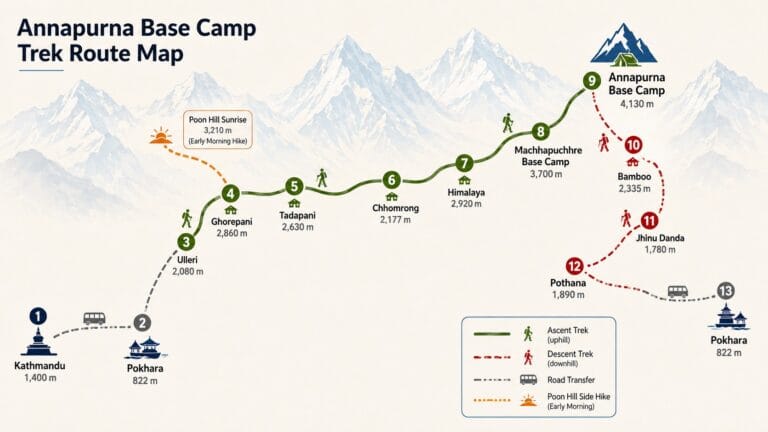
To tick items off as you pack, download our free Himalayan trek packing checklist. If you are still building fitness for your trip, our guide on how to get in shape for trekking has a week-by-week plan. And when you are ready to choose a route, browse trekking in Nepal or see what is included on our Everest Base Camp trek and Annapurna Base Camp trek.
Frequently asked questions
What are the 10 essentials for hiking?
The classic ten essentials are navigation, a headtorch, sun protection, a first aid kit, a knife or multi-tool, a fire source, emergency shelter, extra food, extra water and extra clothing. Together they help you cope if you are delayed, lost or hurt.
What should I carry on a day hike?
A 20 to 30 litre daypack with water, lunch and snacks, a waterproof jacket, a warm layer, hat and gloves, sun protection, a map or offline map app, a headtorch, a small first aid kit, a charged phone and a foil blanket.
How heavy should a trekking backpack be?
On a teahouse trek with a porter, aim for a daypack of about 5 to 8 kg. If you carry everything yourself on a teahouse trek, try to stay under about 10 to 12 kg. Camping treks are heavier because you carry shelter, food and cooking gear.
Do I need a sleeping bag for a teahouse trek in Nepal?
Yes. Teahouses provide a bed and usually blankets, but rooms are unheated and nights at high altitude are well below freezing. A warm sleeping bag, ideally with a liner, makes a big difference to how well you sleep.
Can I buy trekking gear in Nepal?
Yes. Kathmandu’s Thamel district and Pokhara’s Lakeside have many outdoor shops selling and renting gear such as down jackets and sleeping bags. Quality varies, and many products sold as branded are copies, so bring critical items such as boots from home.
What should I not bring on a trek?
Cotton clothing, new boots, heavy jeans, lots of spare clothes, full-size toiletries, valuable jewellery and anything you would be upset to lose. Leave spare items with your hotel in Kathmandu or Pokhara.
How much water should I carry when trekking?
Carry capacity for about 2 to 3 litres and refill along the way, treating all water before drinking it. Hot days, big climbs and high altitude all increase the amount you need.
Do I need trekking poles?
They are not essential, but most trekkers find them very helpful on long descents and stone staircases, where they reduce the load on your knees and help with balance.