
To choose the best hiking sandals, start with where you will wear them: open strap sandals for warm trails, water and camp use; closed-toe or hybrid sandals for rocky paths where you need toe protection. Then check four things in the shop: a grippy, lugged rubber outsole, a contoured footbed with arch support, at least three points of strap adjustment including a heel strap, and a fit with a little sole showing beyond your toes and heel.
This guide explains each choice in plain terms, when sandals make sense instead of boots, how to use them as camp and lodge shoes on a trek in Nepal, and how to keep them clean and odour-free.
Quick answer: what to look for in hiking sandals
| Feature | What to look for | Why it matters |
|---|---|---|
| Type | Open strap, closed-toe or hybrid, matched to terrain | Balances airflow against protection |
| Outsole | Sticky rubber with lugs of roughly 3 to 5 mm, siped for wet rock | Grip on dusty, wet and rocky ground |
| Midsole | EVA or polyurethane (PU) foam; PU for durability and heavier loads | Cushioning and long-term support |
| Footbed | Contoured arch, heel cup, textured surface | Stops the foot sliding when wet or sweaty |
| Straps | Three or more adjustment points, heel strap, soft or padded edges | Secure fit without rubbing |
| Fit | Toes and heel inside the sole edge, no overhang | Protects toes from stubbing and rocks |
| Weight | Light enough to clip to a pack if they are a second pair | Easy to carry as camp shoes |
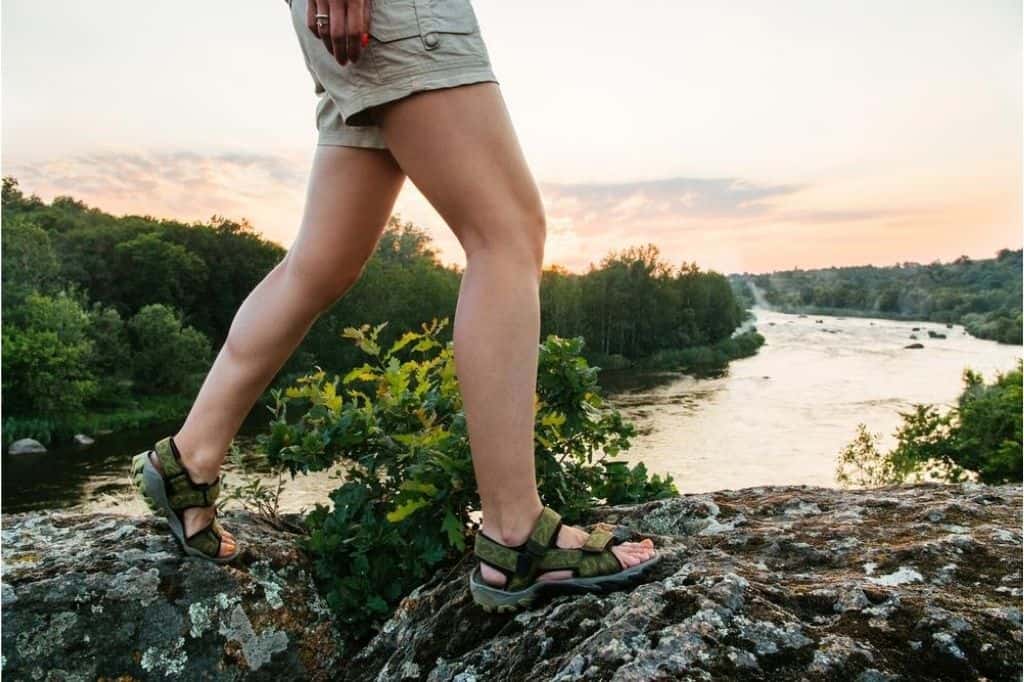
Are hiking sandals a good idea?
Yes, for the right trail and the right person. Hiking sandals are cool, quick-drying and comfortable, and many walkers use them for summer day hikes, coastal paths, canyon walks and anywhere you cross water often. They also make excellent second footwear on a multi-day trek.
They are not a full replacement for boots or trail shoes on every route. Open sandals leave your toes and the top of your foot exposed to rocks, thorns, insects and cold, and they give no ankle support. They also let grit and small stones in, which can cause rubbing on long days.
| Situation | Sandals | Trail shoes or boots |
|---|---|---|
| Hot weather, well-made paths | Good choice | Fine, but warmer |
| Frequent stream or river crossings | Very good (no wet socks) | Wet feet for hours |
| Loose scree, boulder fields | Poor (stones and stubbed toes) | Better |
| Heavy pack, multi-day | Only with experience and strong feet | Better support |
| Cold, snow, high altitude | No, except as indoor/camp shoes | Essential |
| Camp and lodge evenings | Ideal | Feet stay in damp boots |
If you are new to walking in sandals, build up gradually. Your feet and lower legs do more stabilising work without a stiff shoe around them.
Types of hiking sandals
Open strap sandals
The classic sport sandal: a thick sole held on with webbing or leather straps over the forefoot, across the instep and around the heel. Maximum airflow, very quick drying and easy to pack. Some designs use a toe loop or a single continuous adjustable strap that you can tension through the sole. Best for warm trails, water, travel and camp.
Closed-toe sandals
These add a rubber toe cap or bumper and often a more enclosed front. You lose a little ventilation but gain real protection against stubbing your toes on rocks and roots, which is the commonest complaint from people hiking in open sandals. A good choice for river walks with rocky beds and for uneven trails.
Hybrid sandals and water shoes
Hybrids sit between a sandal and a trail shoe: a mesh or open upper, a protected toe, a lace or toggle closure, and drainage ports. They suit canyoning-style trips, rafting days and wet, technical paths, and keep out more grit than an open sandal. They are usually bulkier and dry a little more slowly.
Flip-flops and slides
Fine for showers and lounging, but not for hiking. With no heel strap, your toes have to grip to keep them on, which tires your feet and makes slips more likely.
| Type | Protection | Ventilation | Drying | Best for |
|---|---|---|---|---|
| Open strap | Low | Excellent | Fast | Warm trails, camp, travel |
| Closed-toe | Medium | Good | Fast | Rocky paths, river beds |
| Hybrid / water shoe | Medium to high | Good | Medium | Wet, technical routes, rafting |
| Flip-flop / slide | None | Excellent | Fast | Showers, lodges only |
The sole: outsole and midsole
Outsole grip
The outsole is the part that touches the ground, and it matters more on a sandal than on a boot because there is less else holding you upright. Look for sticky rubber rather than hard plastic or foam-only soles. Deeper, multi-directional lugs grip better on dirt and loose ground. Fine slits (siping) and softer rubber compounds help on wet rock, while flatter, smoother soles are better suited to pavements and towns.
Midsole cushioning
Most hiking sandals use either EVA foam or polyurethane (PU). EVA is lighter and softer, so it feels comfortable immediately, but it compresses over time. PU is denser and heavier but holds its shape longer, which matters for heavier walkers and long distances. Some sandals use a single-piece rubber and foam sole; these are durable but can feel firm at first.
Thickness and stiffness
A thicker, firmer sole protects against sharp stones and gives more support with a pack. A thinner, flexible sole feels closer to the ground and packs smaller. For trekking or long hikes, choose the more protective option; for river days and camp, a thinner, lighter sole is fine.
Footbed and arch support
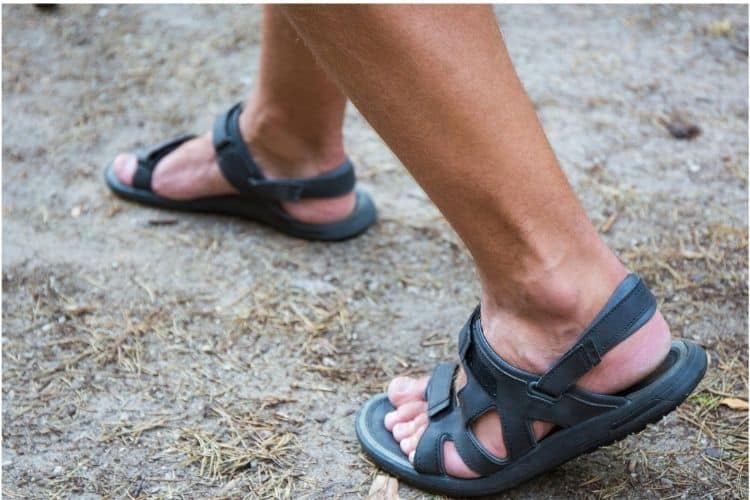
A flat, featureless footbed is the main reason sandals feel tiring after a few hours. A good hiking sandal has:
- A contoured arch that supports the inside of your foot. If you usually use supportive insoles in your shoes, look for a sandal with a pronounced arch.
- A heel cup that cradles the heel and stops it rolling off the edge.
- A raised toe bar or toe ridge on some models, which gives your toes something to grip.
- A textured or microbial-treated surface that stays grippy when wet and resists odour.
Footbed material makes a difference too. Leather and suede feel lovely when dry but take a long time to dry and can harden if soaked repeatedly. Rubber, textured EVA and synthetic footbeds are better for water and sweaty days. Cork-based footbeds mould to your foot but are not designed for prolonged soaking.
If you have flat feet, plantar fasciitis or another foot condition, ask a podiatrist or your doctor whether hiking in sandals suits you before relying on them for long distances.
Straps and closures
Straps hold the sole to your foot. Poorly adjusted straps let your foot slide, and narrow or hard-edged straps rub, especially when wet.
- Number of adjustment points: three is a good minimum (forefoot, instep and heel). More points mean a more precise fit, especially for narrow or wide feet.
- Heel strap: essential for hiking. It stops the sandal slipping off on descents and in water.
- Closure type: hook-and-loop (Velcro-style) is quick and easy but can clog with sand and lose grip; buckles are secure and durable; toggles and bungee laces are fast to adjust on hybrids.
- Materials: polyester or nylon webbing dries quickly; padded or neoprene-lined straps are gentler on bare skin. Leather straps look smart but are slow to dry.
- Strap position: straps should not sit across a bony prominence or press into the front of the ankle.
How to get the right fit
- Shop late in the day, when your feet are at their largest, and bring the socks you might wear with them.
- Loosen every strap before trying them on, then tighten from the heel strap forward.
- Check the overhang. Your toes and heel should sit inside the edge of the sole, with a few millimetres of sole beyond your longest toe. Toes over the front edge get stubbed on every rock.
- Stand and walk, including on a slope or step if the shop has one. Your foot should not slide forward or sideways on the footbed.
- Check for pressure points where straps cross the foot. Anything that feels slightly irritating in a shop will rub badly when wet and sandy.
- Between sizes? Many sandals come only in whole sizes. Usually go up rather than down so your toes stay on the sole, and use the straps to take up the extra.
Women’s and men’s versions of the same sandal often differ in width, heel shape and strap volume, not just length. Try both if you have particularly narrow or wide feet; fit matters more than the label.
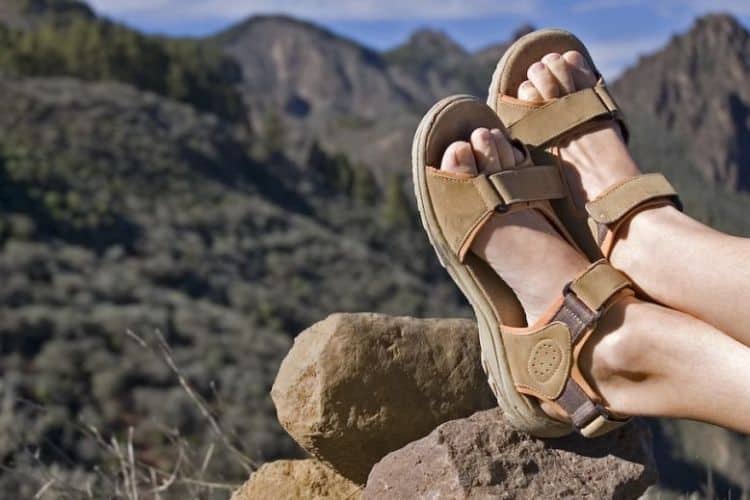
Waterproof and water-friendly sandals
No sandal keeps your feet dry. What you want is a “water-friendly” sandal: one that drains quickly, dries fast and keeps its grip when wet.
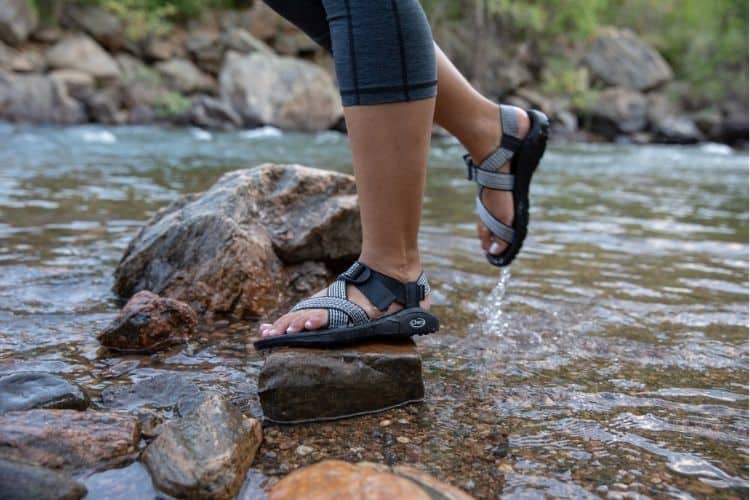
- Choose synthetic webbing straps and a rubber or textured footbed.
- Avoid leather and cork if you will be wading often.
- Look for an outsole designed for wet surfaces.
- For rocky river beds, a closed toe helps.
How to cross a river or stream in sandals
- Pick the widest, shallowest and slowest section. Never cross fast water above knee depth without a guide’s judgement.
- Change into sandals and tighten every strap, especially the heel strap.
- Unclip your pack’s hip belt and sternum strap so you can shed it if you fall.
- Face upstream, use trekking poles for support, and shuffle your feet rather than stepping high.
- Dry your feet before putting socks and boots back on.
Weight, packability and durability
If sandals are your second pair on a trek, weight and bulk matter. Lightweight strap sandals typically pack flat and can be clipped to the outside of a pack. Heavier, more supportive sandals are better if they are your main footwear for warm-weather walking.
Durability depends mostly on the sole construction and how straps are attached. Straps that pass through the midsole, or are stitched and bonded, usually last longer than straps glued to the top surface. Some manufacturers offer resoling or repair services, which can extend the life of a good pair considerably.
Price varies widely. Basic sport sandals can cost under US$40 (about £30), while well-known outdoor models with durable PU soles commonly cost roughly US$80 to $150 (about £60 to £110). The most expensive pair is not automatically the best for your feet, but very cheap sandals often have hard, slippery soles and straps that rub.
Sandals on a Nepal trek: camp, lodge and river shoes
On teahouse treks in Nepal, sandals are one of the most useful things in your bag, even though you will not hike in them on most days.
- Lodge shoes: after six or seven hours on the trail, taking your boots off lets them air and your feet recover. Teahouse floors, toilets and shower areas are often wet, so a pair with a grippy sole is safer than slippers.
- With socks at altitude: on the Everest Base Camp trek, evenings above Namche Bazaar get cold, and many trekkers wear sandals with thick socks around the lodge. A sandal with an adjustable instep strap fits over socks more easily. Some trekkers prefer insulated booties or light trainers for the coldest lodges such as Gorak Shep.
- Water and wet weather: main trekking trails in Nepal generally cross rivers on bridges, but in the monsoon you may meet streams over the path, waterfalls and flooded sections. Sandals save your boots on short wet stretches and side trips.
- Lower, warmer days: on lower routes such as Poon Hill or the first days towards Annapurna Base Camp in warm months, experienced sandal walkers sometimes use them on short sections, but the stone staircases are long and steep, so most people stay in trail shoes or boots.
- Leeches: in the monsoon, open sandals leave your feet exposed. See our guide to protecting yourself from leeches.
- Rafting and canyoning: if you add a rafting trip, secure sandals with a heel strap, or water shoes, are usually what operators ask for.
Sandals appear on both our Everest Base Camp packing list and Annapurna Base Camp packing list. For your main trail footwear, read how to choose trekking shoes.
How to care for hiking sandals
Sandals tend to smell because bare skin, sweat and bacteria meet a foam footbed. Regular cleaning keeps them fresh and extends their life. Always check the manufacturer’s care instructions first, as some allow gentle machine washing and others do not.
- Rinse after use, especially after salt water, chlorinated water or mud.
- Scrub the footbed with a soft brush, lukewarm water and a little mild soap or gear wash. Pay attention to the toe and heel areas.
- Clean the straps, working soap into the webbing and clearing grit out of hook-and-loop closures.
- Deal with odour by sprinkling the dry footbed with bicarbonate of soda, leaving it overnight and brushing it off, or by using a gear deodoriser.
- Air dry in the shade or a ventilated room. Avoid radiators, fires, tumble dryers and strong direct sun, which can warp foam, weaken glues and crack leather.
- Store them dry and out of sunlight between trips.
Inspect them before each trip: check for worn tread, compressed footbeds, fraying straps and splitting where straps join the sole. For the rest of your footwear, see how to clean trekking boots.
Next step
Choose your sandals for their main job: trail sandals for warm-weather hiking, or a lighter pair for camp, lodges and water. Then make sure your main footwear is right for the trek you have in mind. If you are planning a trek in Nepal, compare the Annapurna Base Camp trek and the Everest Base Camp trek, or tell us what you would like to do.
Frequently asked questions
Can you hike in sandals?
Yes, on well-made trails in warm weather, if the sandals have a grippy outsole, arch support and a heel strap. Avoid open sandals on loose scree, boulder fields, snow or cold ground, and build up gradually if you are not used to them.
Should hiking sandals be tight or loose?
Snug but not tight. Your foot should not slide on the footbed when you walk downhill, and the straps should not dig in. Tighten from the heel strap forward and recheck after the first few minutes, especially after the straps get wet.
Should your toes hang over the end of sandals?
No. Your toes and heel should sit inside the edge of the sole, ideally with a few millimetres of sole in front of your longest toe. Overhanging toes get stubbed on rocks and roots.
Are closed-toe sandals better for hiking?
For rocky trails and river beds, usually yes, because the toe bumper protects against stubbing. Open sandals are cooler, lighter and dry faster, so they suit easier paths, water and camp use.
Do I need sandals for the Everest Base Camp trek?
They are not essential, but most trekkers bring sandals or light camp shoes to wear in the teahouses in the evening so their boots can air and their feet can recover. At higher, colder lodges, many people wear them with thick socks.
Can you wear socks with hiking sandals?
Yes. Many trekkers wear sandals with socks around camp or in cold lodges. Choose sandals with an adjustable instep strap so they fit over thicker socks.
How do you stop hiking sandals from smelling?
Rinse them after each use, scrub the footbed with mild soap, let them dry fully in the shade and use bicarbonate of soda overnight on the dry footbed for persistent odour. Avoid drying them on radiators or in strong sun.
How long do hiking sandals last?
It depends on use, weight and construction. Sandals with durable rubber outsoles and polyurethane midsoles generally last longer than lightweight EVA-only models. Replace them when the tread is worn smooth, the footbed has flattened or the straps start to fray.