
To clean trekking boots, take out the laces and insoles, brush off dry mud, scrub the uppers with lukewarm water and a soft brush (plus a dedicated footwear cleaner if needed), then let them air-dry slowly at room temperature, never next to a heater or in direct sun. Once they are clean, re-proof fabric and Gore-Tex boots with a water-based spray and condition leather boots with the wax or cream your boot maker recommends.
This guide covers leather, suede/nubuck and fabric/Gore-Tex boots, how to dry them properly, how to deal with smelly insoles, how to store boots between trips, and the biosecurity rules that mean you must arrive in countries such as Australia and New Zealand with spotless soles.
Quick answer: how to clean trekking boots by type
| Boot type | Clean with | Dry | Then treat with | Avoid |
|---|---|---|---|---|
| Full-grain (smooth) leather | Water, soft brush, leather-specific footwear cleaner | Room temperature, stuffed with paper | Leather wax or conditioner recommended by the maker | Heaters, household soap, detergents with bleach |
| Nubuck or suede | Water, soft brush, footwear cleaning gel | Room temperature, away from sun | Spray or liquid proofer made for nubuck/suede (may darken slightly) | Heavy waxes, which flatten the nap |
| Fabric / synthetic | Lukewarm water, small amount of mild liquid detergent or footwear cleaner | Room temperature or low-heat convection dryer | Water-based DWR spray | Washing machine, tumble dryer, bleach |
| Gore-Tex (any outer) | Lukewarm water, soft brush, footwear cleaner; rinse linings with clean water | Air-dry at moderate temperature | Water-based DWR spray (leather parts: maker’s product) | Greases and heavy waxes on fabric, direct heat, stain removers |
What you need
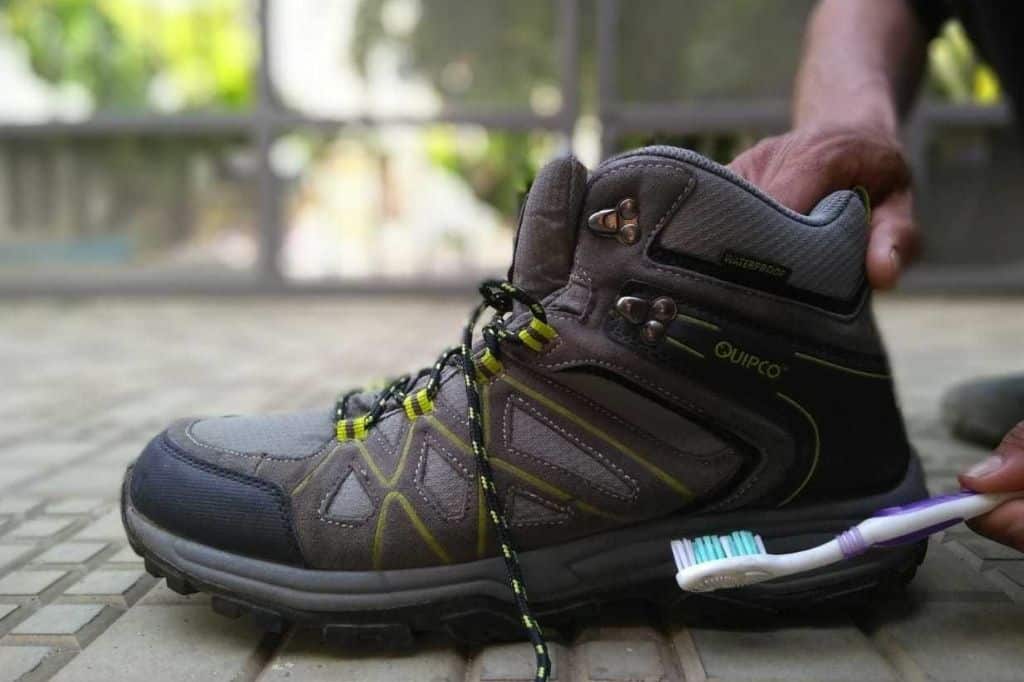
- Two brushes: a stiff one for soles and dried mud, a soft one (or a sponge) for uppers. An old toothbrush is ideal for eyelets, stitching and welts.
- Lukewarm water: hot water can weaken adhesives and harm leather.
- A footwear cleaner: a gel or foam made for outdoor boots. A small amount of mild liquid detergent is acceptable on fabric boots; some makers, such as Hanwag, advise against ordinary soap on leather because it can strip oils and affect waterproofing.
- Proofing product: a water-based spray for fabric and membranes, or a wax/cream for smooth leather.
- Paper: kitchen roll or plain paper for stuffing wet boots.
- Old towel and a clean cloth for applying conditioner.
Before you start, check the care label or the manufacturer’s website. Boot makers sometimes disagree on details, and following their instructions also protects your warranty.
How to clean trekking boots step by step
1. Remove laces and insoles
Pull out the laces and the removable footbeds. Both are cleaned separately, and taking them out lets you rinse the inside of the boot and dry it far faster. While the laces are out, check them for fraying; a trek is a bad time for one to snap.

2. Knock off loose dirt
Bang the boots together outside, then brush the soles and uppers while the dirt is dry. Pick stones out of the lugs with a stick or blunt tool. Getting the bulk off dry means less muddy water soaking into seams and stitching.
3. Wash the uppers
Wet the boot with lukewarm water and scrub gently with the soft brush, working into the seams and around the tongue gusset. For stubborn grime, apply a footwear cleaning gel or foam to the wet surface, work it in, then rinse it off. On fabric boots you can use a very small amount of mild liquid detergent instead.
Do not put boots in a washing machine. Gore-Tex and boot makers such as Mammut all warn against it: the tumbling, heat and detergent can break down glues, distort the shape and damage the membrane.
4. Rinse the inside
Sweat leaves salts in the lining that stiffen leather and feed odour. Rinse the inside with clean, cool to lukewarm water and a sponge, then tip the boot upside down to drain. Meindl recommends washing leather and Gore-Tex linings periodically in this way. If the inside smells, a little sports-wash detergent can help, as long as you rinse it all out.

5. Clean the soles and midsoles
Scrub the outsole lugs and the midsole with the stiff brush. Check for separation between sole and upper, cracks in the midsole and worn lugs. If the rand or sole is lifting, a cobbler or the manufacturer’s resoling service can often fix it far more cheaply than a new pair.
6. Wash the laces and insoles
Hand-wash insoles in lukewarm water with a little mild soap and a soft brush, rinse well and air-dry flat. Mammut notes laces and insoles can go in the washing machine, but check the insole maker’s instructions first, especially for moulded or heat-formed footbeds. More on odour below.
How to dry trekking boots properly
Drying is where most boots are ruined. Every major maker gives the same instruction: dry them slowly, away from direct heat. Meindl warns that leather “burns” very easily near a heat source, becoming cracked and brittle, and Hanwag adds that heat can distort the boot’s shape and weaken adhesives.
- Open the boots fully, with the tongue pulled forward.
- Stuff them loosely with absorbent paper. Hanwag suggests kitchen or toilet paper for Gore-Tex boots and changing it frequently; replace it whenever it feels damp.
- Leave them in a dry, ventilated room at normal temperature, out of direct sunlight.
- Allow time. Thoroughly soaked boots can take up to two days.
- Remove the paper once dry, as left in place it can hold moisture.
A low-heat convection boot dryer, which moves room-temperature or gently warmed air through the boot, is acceptable; Gore-Tex says convection-style dryers work well. Radiators, wood burners, hair dryers, ovens and car dashboards are not.
Drying boots on a trek
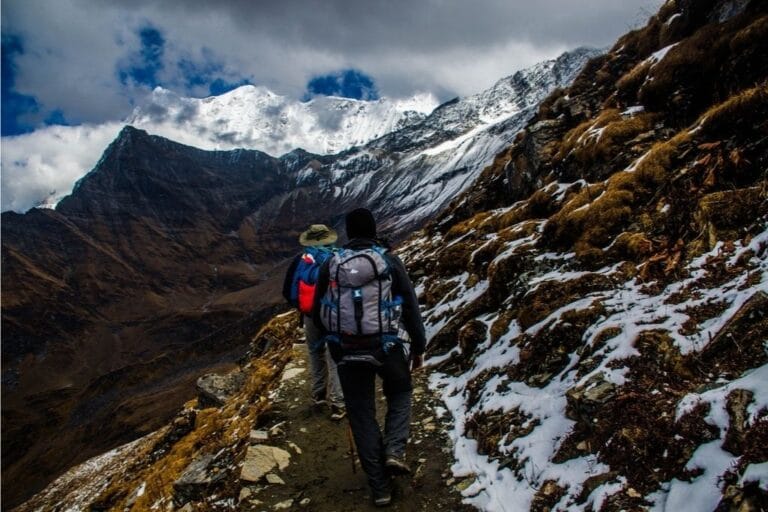
On a teahouse trek in Nepal the warmest place is usually the dining room stove, and it is tempting to put soaked boots right next to it. Keep them at a sensible distance where the air is warm but you can comfortably hold your hand on the leather. Stuff them with paper or a spare buff overnight, wear dry socks, and use gaiters on wet days to keep water out in the first place. During the monsoon on routes such as the Annapurna Base Camp trek, expect boots to stay damp for days; good drying habits and spare socks matter more than any product.
Re-proofing: DWR and waterproofing
A waterproof boot has two layers of defence. The outer material carries a water-repellent treatment (DWR on fabric, wax or oils in leather) that makes water bead and roll off. Behind that, many boots have a waterproof, breathable membrane such as Gore-Tex. When the outer treatment wears off, the material “wets out”: it soaks up water, feels cold and heavy, and sweat can no longer escape through the membrane, so your feet feel wet even if no water has got in.
When to re-proof: when water stops beading and starts darkening or soaking into the outer material.
- Fabric and Gore-Tex boots: Gore-Tex recommends a water-based restorative in a pump spray and advises against waterproofing waxes or greases on its footwear because they can reduce breathability.
- Wet or dry? Many spray-on and wipe-on products (for example Nikwax’s footwear range and Meindl’s spray) are designed to be applied to clean, damp boots. Others need dry material. Read the product label and follow it.
- Spray evenly from the distance shown on the can, outdoors or in a well-ventilated space, paying extra attention to seams, the tongue gusset and the join between upper and sole.
- Wipe off excess and leave to dry naturally, ideally for 24 hours before use.

Conditioning leather boots
Leather needs its natural oils topped up or it dries, stiffens and cracks along the flex points. Meindl advises treating leather when it no longer feels soft and supple or starts to look slightly greyish, and not waiting until cracks appear.
- Start with clean boots. Many leather waxes go on best when the leather is slightly damp, so it absorbs the product.
- Apply a thin, even layer with a cloth or sponge, working it into seams and creases.
- Leave it to soak in, then wipe off the excess and buff with a soft brush.
- Use the right product for the leather: wax or cream for smooth full-grain leather, and a spray or liquid proofer for nubuck and suede, which heavy wax would flatten. Expect nubuck to darken slightly.
Avoid over-treating. Heavy oils and greases such as mink oil can over-soften leather and reduce the support of a stiff trekking boot, and on lined boots they can clog breathability. Little and often is better than a thick coating once a year.
Insoles and odour
Smell comes from bacteria feeding on sweat in the insole and lining. The fixes, in order of effort:
- Air them out daily: take insoles out at the end of each day so both dry fully.
- Wash insoles: lukewarm water, mild soap, soft brush, then air-dry flat.
- Bicarbonate of soda: sprinkle a little inside dry boots overnight and shake or vacuum it out thoroughly in the morning. It is a popular home remedy for absorbing odour, though not one boot makers formally endorse, so keep it off membranes when wet and remove it fully.
- Odour sprays and sachets: deodorising sprays used sparingly, or cedar sachets, help between washes.
- Replace insoles: if they are compressed, flattened or still smell after washing, a new pair restores both comfort and freshness. Our guide to insoles for trekking shoes explains the options.
- Merino socks: wool resists odour better than cotton and keeps feet drier.
Cleaning boots after a trek abroad: biosecurity rules
If you are flying home, or onward, after trekking, clean boots are not just about care. Soil can carry seeds, fungi, insects and animal diseases, and countries with strict biosecurity check footwear at the airport.
| Country | What the rules say | Penalty for getting it wrong |
|---|---|---|
| New Zealand | Used outdoor gear, including footwear and hiking equipment, is a biosecurity risk item. Every traveller completes the New Zealand Traveller Declaration, and dirty boots and soil must be declared. | Instant fine of NZ$400 for undeclared risk goods, even by accident; far higher penalties for smuggling or false declarations. |
| Australia | Footwear and gear should be free of soil, manure and plant matter. You must declare on your Incoming Passenger Card if you have visited a rural area or been near farm animals. Officers may inspect shoes; dirty items may be treated at your expense. | Penalties apply, and visa cancellation is possible for serious breaches. Declaring items carries no penalty. |
Practical routine before you fly:
- Clean boots in Kathmandu or wherever you finish, not at home.
- Scrape and scrub every lug of the sole until no soil is visible, plus the welt and laces.
- Dry them completely and pack them in a separate bag so they are easy to show an officer.
- Clean your trekking poles, gaiters and backpack too, especially the base.
- Always tick “yes” for hiking gear or rural visits where the declaration asks. Declaring is not a problem; failing to declare is.
Rules change, so check the official New Zealand MPI and Australian Department of Agriculture pages before you travel. Other countries, including the US, also ask arriving travellers about soil and farm visits.
How to store trekking boots
- Make sure they are completely dry inside, including the tongue and lining. Damp boots stored away grow mould.
- Store at room temperature, out of direct sunlight, somewhere dry. Avoid lofts, garages, car boots and basements, and never seal them in plastic bags.
- Use a breathable bag or open shelf, with boots loosely laced and stuffed with plain paper or fitted with shoe trees to hold their shape.
- Condition leather before long-term storage so it does not dry out.
- Midsoles made from PU or EVA foam can degrade with age even when unused, so if boots have sat for years, check the soles before relying on them for a long trek.
How often should you clean trekking boots?
| Task | How often |
|---|---|
| Brush off mud and dry properly | After every walk |
| Air insoles and boots | Every evening on a multi-day trek |
| Full wash, inside and out | After any very muddy or multi-day trip, and before storage |
| Re-proof fabric/Gore-Tex | When water stops beading |
| Condition leather | When leather looks dry or greyish, or feels stiff |
| Replace insoles | When flattened, worn or permanently smelly |
Common mistakes that shorten boot life
- Drying boots on radiators, beside stoves or in direct sun.
- Putting them in the washing machine or tumble dryer.
- Leaving mud to dry on them for weeks; it draws moisture and oils out of leather.
- Using household cleaners, bleach or stain removers.
- Using heavy grease on Gore-Tex or fabric boots.
- Storing them damp in a sealed bag.
Before your next trek
Good care starts with the right pair; our guide on how to choose trekking shoes covers fit and materials, and lacing techniques can prevent the hot spots that ruin a long descent. Re-proof a week or two before you travel so the treatment has time to cure, and break boots in properly.
If you are getting ready for the Himalaya, see our Everest Base Camp packing list and Annapurna Base Camp packing list, and when you are ready, look at our 16-day Everest Base Camp trek or 15-day Annapurna Base Camp trek.
Frequently asked questions
Can you put trekking boots in the washing machine?
No. Gore-Tex and boot makers such as Mammut advise against it, because the heat, tumbling and detergent can weaken glues, distort the shape and damage membranes. Wash boots by hand with lukewarm water and a brush. Laces, and some insoles, can be machine-washed if the maker allows it.
How do you dry hiking boots quickly?
Remove laces and insoles, open the boots wide, stuff them with absorbent paper and change it every 30 minutes to an hour at first. Put them in a warm, well-ventilated room or use a low-heat convection boot dryer. Avoid radiators, fires and hair dryers, which can crack leather and weaken adhesives.
Can I use soap to clean leather walking boots?
Makers differ. Some accept a little mild liquid detergent, while Hanwag advises against ordinary soap on leather because it can strip oils and affect waterproofing. The safest option is plain water and a brush, with a footwear-specific cleaner for stubborn dirt.
How often should I waterproof my hiking boots?
Re-proof when water stops beading and starts soaking into the outer material. For regular walkers that may be every few weeks; for occasional use it may be once or twice a season. Always clean boots before re-proofing, as treatment applied over dirt does not bond well.
Should you waterproof Gore-Tex boots?
Yes. The Gore-Tex membrane keeps water out, but the outer fabric needs a durable water repellent (DWR) so it does not soak up water and block breathability. Gore-Tex recommends a water-based spray and advises against waxes and greases on its footwear.
How do I stop my hiking boots from smelling?
Take insoles out every evening, wash them regularly, rinse the boot lining with clean water, and dry everything fully. Merino socks, a little bicarbonate of soda overnight (shaken out thoroughly) or a deodorising spray help. Replace insoles that still smell after washing.
Do I need to clean my boots before flying to New Zealand or Australia?
Yes. Both countries treat soil on footwear and outdoor gear as a biosecurity risk. New Zealand can issue an instant NZ$400 fine for undeclared risk goods, and Australia requires you to declare rural visits on your Incoming Passenger Card. Clean boots thoroughly and declare them.
How should I store hiking boots between trips?
Make sure they are completely dry, condition leather, then keep them at room temperature in a dry place out of sunlight, in a breathable bag or on an open shelf. Stuff them with plain paper or use shoe trees, and never seal them in plastic.