

Trekking for beginners comes down to three things: pick a first trek that matches your fitness and experience, train for eight to twelve weeks before you go, and walk slowly enough to enjoy it. You do not need to be an athlete or a climber. Millions of first-timers complete multi-day treks every year, including classic Himalayan routes in Nepal.
This guide covers everything a beginner needs to know: what trekking is, how to choose your first route (with Nepal options from two days to two weeks), fitness, gear, pacing, altitude, teahouse etiquette, guides and porters, Leave No Trace and budgeting.
Quick start: 10 essential tips for beginner trekkers
- Start shorter and lower than you think. A three to five-day trek below 3,500 m is an ideal first trip.
- Train for 8 to 12 weeks, with long walks on hills carrying a loaded pack.
- Break in your boots on at least 50 to 80 km of walking before the trek.
- Go in the right season. In Nepal that means October to November or March to May.
- Pack light. Aim for a day pack of 5 to 7 kg if a porter carries your bag, or under 10 to 12 kg if you carry everything.
- Walk at a pace where you can talk. If you cannot hold a conversation, slow down.
- Drink 3 to 4 litres a day of treated water at altitude.
- Respect altitude. Above 3,000 m, climb slowly and descend if symptoms get worse.
- Hire a licensed guide for your first Himalayan trek; in most of Nepal it is now required.
- Buy insurance that covers trekking and helicopter rescue to your maximum altitude.
What is trekking?
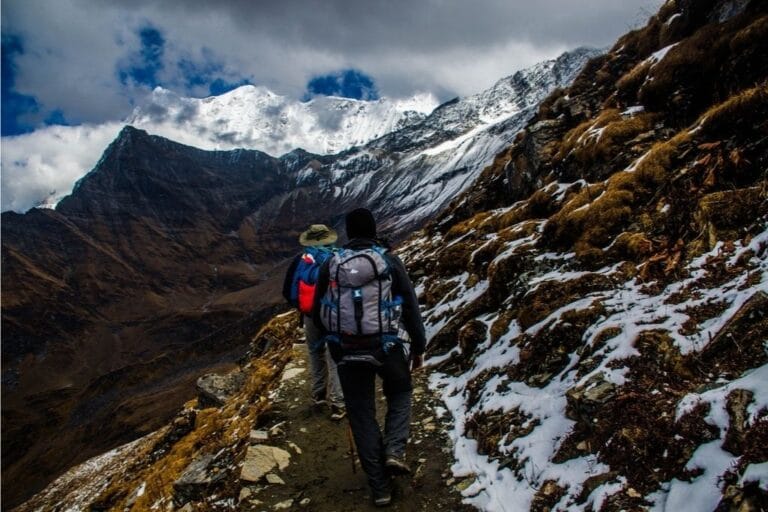
Trekking is walking for several days, usually through mountains or remote countryside, and sleeping somewhere new along the route each night. You might stay in tents, mountain huts or, in Nepal, family-run lodges called teahouses. Trekking needs no technical climbing skills: no ropes, harnesses or ice axes on standard routes.
Hiking vs trekking: what is the difference?
| Hiking | Trekking | |
|---|---|---|
| Length | A few hours to one day | Several days to several weeks |
| Overnight | Home or the same base each night | A new lodge, hut or camp most nights |
| Terrain | Usually marked paths | Mountain trails, passes, river crossings |
| Altitude | Usually low | Can go above 4,000 to 5,000 m |
| Kit | Day pack | Day pack plus a larger bag (carried by you or a porter) |
| Planning | Minimal | Permits, logistics, acclimatisation, insurance |
In short, a trek is a series of linked hiking days. If you can comfortably walk five to six hours with breaks today, you can build up to trekking.
How to choose your first trek
Ask yourself five questions before you commit to a route:
- How many days do you have? Include travel and spare days for weather and flight delays.
- How high does it go? For a first trek, below about 3,500 m removes most altitude risk. Treks to 4,000 to 5,500 m are achievable for beginners but need proper acclimatisation.
- How long are the walking days? Four to six hours is comfortable; seven to eight hours day after day is hard work.
- What is the accommodation? Teahouse treks mean you carry far less than camping treks.
- How remote is it? Busy routes have more lodges, phone signal and evacuation options.
The best treks in Nepal for beginners
Nepal is one of the best places in the world to start trekking, because its main routes have lodges every few hours, meals cooked for you and porters to carry your bag. These are the classic first treks, from easiest to hardest:
| Trek | Days (typical) | Highest point | Difficulty | Best for |
|---|---|---|---|---|
| Ghandruk loop | 2 to 3 from Pokhara | About 2,000 m | Easy | A short taste of trekking, Gurung village culture, Annapurna views |
| Ghorepani Poon Hill | 4 to 5 from Pokhara | 3,210 m | Easy to moderate | The classic first Himalayan trek; sunrise over Dhaulagiri and Annapurna |
| Mardi Himal | 5 to 7 from Pokhara | About 4,500 m (viewpoint) | Moderate | Quieter ridge walking with close mountain views |
| Langtang Valley | 7 to 8 from Kathmandu | 3,870 m (Kyanjin Gompa), optional higher viewpoints | Moderate | No flights needed; Tamang culture close to Kathmandu |
| Annapurna Base Camp | 7 to 11 | 4,130 m | Moderate | A big-mountain amphitheatre without extreme altitude |
| Everest Base Camp | 12 to 14 | 5,364 m (Kala Patthar 5,644 m) | Moderate to challenging | Fit beginners who want the world’s most famous trek |
Our advice: if you have never trekked before, Poon Hill or Ghandruk is the gentlest introduction, and both start from Pokhara. See more options in our guide to the best treks from Pokhara.
Can a beginner do Everest Base Camp or Annapurna Base Camp?
Yes, with preparation. Neither trek involves climbing, and many people do EBC as their first multi-day trek. The difficulty is the length, the cumulative ascent and, above all, the altitude. A beginner who trains well, books an itinerary with proper acclimatisation days and listens to their body has a good chance of success. Read our Everest Base Camp guide and guide to Annapurna Base Camp before choosing.
When to go
Seasons matter more than almost anything else on a first trek. In Nepal:
| Season | Months | Conditions | For beginners? |
|---|---|---|---|
| Autumn | Late September to November | Clear skies, stable weather, busy trails | Best choice |
| Winter | December to February | Cold nights, quiet trails; high passes can close with snow | Good for lower treks such as Poon Hill |
| Spring | March to May | Warmer, rhododendrons in bloom, some afternoon haze or cloud | Very good |
| Monsoon | June to early September | Rain, cloud, landslides, leeches, flight delays | Not ideal, except rain-shadow areas such as Upper Mustang |
For more detail see our best season to travel in Nepal and, for the Everest region, the best time to trek Everest Base Camp. If you do trek in the wet season, read how to avoid leeches while trekking.
How fit do you need to be?
You need good general fitness rather than athletic performance. As a benchmark, you should be able to walk 15 to 20 km over hilly ground with a light pack, and then do it again the next day, without being wrecked.
A simple 12-week plan
| Weeks | Focus | Example week |
|---|---|---|
| 1 to 4 | Base fitness | Three 45 to 60-minute brisk walks, cycles or swims; one 2 to 3-hour weekend walk |
| 5 to 8 | Hills and load | Add stairs or hill repeats twice a week; weekend walk of 4 to 5 hours with a 5 to 7 kg pack |
| 9 to 11 | Back-to-back days | Two consecutive long hill days at the weekend (5 to 7 hours each); leg and core strength twice a week |
| 12 | Taper | Shorter, easier walks; rest and pack |
In the UK, the Peak District, Lake District, Snowdonia (Eryri) and the Brecon Beacons are ideal for training days. For a full programme read how to get in shape for trekking or, for a high-altitude target, how to train for Everest Base Camp. If you have a heart, lung or other medical condition, talk to your GP before booking.
Beginner trekking gear: what you really need
Gear is where beginners waste the most money. You do not need the most expensive kit; you need comfortable, well-fitting essentials.
The big four
- Footwear. Mid-height waterproof trekking boots or sturdy trail shoes that you have broken in. This is the one item not to economise on. Read how to choose trekking shoes, and consider insoles for trekking shoes if you have foot problems.
- Backpack. A 25 to 35-litre day pack if a porter carries your main bag, or 40 to 55 litres if you carry everything. Fit matters more than features: see how to choose a backpack for trekking.
- Trekking poles. They reduce strain on knees on long descents and help balance on rough ground. See how to pick trekking poles.
- Sleeping bag. Teahouses provide blankets, but a bag rated to about -10°C (comfort) is wise above 4,000 m. You can rent one in Kathmandu or Pokhara.
Clothing: the layering system
- Base layer: merino or synthetic tops that wick sweat (avoid cotton).
- Mid layer: a fleece or light insulated jacket.
- Insulation: a down or synthetic puffer for evenings and high camps.
- Shell: a waterproof, breathable jacket and overtrousers.
- Extras: sun hat, warm hat, gloves, buff, sunglasses (category 3 or 4 at altitude), two or three pairs of good trekking socks.
For full lists, see our essential items for trekking and download our free trek packing checklist. Heading to Everest? Use the Everest Base Camp packing list.
Pacing: how to walk all day
The most common beginner mistake is setting off too fast. Nepali guides often say bistarai, bistarai: slowly, slowly.
- Use the talk test. If you cannot hold a conversation, slow down.
- Take short, steady steps uphill. On steep sections, try the “rest step”: lock your back leg straight for a moment on each step so your skeleton, not your muscles, holds your weight.
- Take small breaks often (five minutes every hour) rather than one long collapse.
- Go carefully downhill. Descents cause most knee pain and slips. Lengthen your poles slightly, bend your knees and take small steps.
- Eat and drink little and often. Snacks every hour or two keep energy steady.
- Start early. In Nepal, mornings are usually clearest and afternoons bring cloud and wind.
Altitude basics every beginner should know
Altitude sickness (acute mountain sickness, or AMS) can affect anyone above about 2,500 m, regardless of fitness. Being fit does not protect you; ascending slowly does.
The golden rules
- Above 3,000 m, increase the altitude you sleep at by no more than about 300 to 500 m a day.
- Take a rest (acclimatisation) day every three to four days, or every 1,000 m of height gained.
- “Climb high, sleep low”: walk higher in the afternoon, then sleep lower.
- Drink plenty of water and avoid alcohol until you are acclimatised.
- Never ascend with symptoms of AMS. If they worsen, go down.
Symptoms to watch for
| Condition | Signs | What to do |
|---|---|---|
| Mild AMS | Headache, nausea, tiredness, poor sleep, loss of appetite | Rest at the same altitude; do not go higher until symptoms clear |
| HACE (brain swelling) | Confusion, loss of coordination, severe headache, drowsiness | Descend immediately; medical emergency |
| HAPE (fluid on the lungs) | Breathlessness at rest, cough, gurgling chest, extreme tiredness | Descend immediately; medical emergency |
Some trekkers take acetazolamide (Diamox) to help prevent AMS; discuss it with your GP or a travel clinic before you go. Read our full guide to altitude sickness on Everest treks, which applies to any high trek.
Guides and porters
Do you need a guide in Nepal?
In most cases, yes. Since 1 April 2023, Nepal has required foreign trekkers in its national parks and conservation areas, including the Annapurna and Langtang regions, to trek with a licensed guide. Enforcement has been less strict in the Everest (Khumbu) region, where the local municipality has opposed the rule, so check the current position when you book. Restricted areas such as the Manaslu Circuit and Upper Mustang have long required a licensed guide and a permit arranged through an agency; since March 2026 solo trekkers can also get these permits, but still only with a guide.
Rules aside, a good guide is the best safety investment a beginner can make. They manage the route, lodges and permits, spot early signs of altitude sickness, translate, and know what to do in an emergency.
Porters
A porter carries your main bag, usually up to about 15 to 20 kg shared between two trekkers, so you walk with just a day pack. For a first trek this makes a huge difference. Treat porters well: make sure they have proper clothing, footwear and insurance for high routes, and do not overload them.
Tipping
Tipping guides and porters at the end of a trek is customary in Nepal and forms a meaningful part of their income. A common guideline is around 10 to 15% of the trek’s cost, shared between the team, but give what reflects the service.
Teahouse etiquette and trail culture
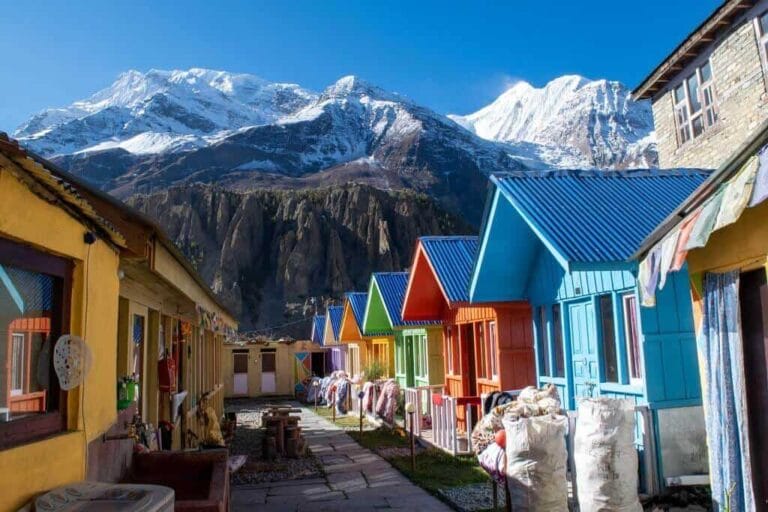
Most Nepal treks use teahouses: simple lodges with twin rooms, shared bathrooms and a warm dining room around a stove. They are central to the experience, and a few habits will make you a welcome guest.
- Eat where you sleep. Rooms are cheap because lodges make their money on food. Eating elsewhere is considered rude.
- Order dinner and breakfast together in the evening if asked, so the kitchen can plan.
- Try dal bhat. Rice, lentil soup and vegetable curry, usually with free refills; it is filling, freshly made and good value.
- Expect to pay extra for hot showers, device charging, Wi-Fi and boiled water, especially higher up.
- Walk clockwise around stupas, chortens and mani walls, and do not touch religious objects or people’s heads.
- Ask before photographing people, and dress modestly in villages.
- Greet people with “Namaste” and palms together.
- Do not give sweets or money to children; it encourages begging and damages teeth.
For a wider introduction, read about culture in Nepal and our list of things to know before travelling to Nepal.
Leave No Trace: trek responsibly
Mountain trails are fragile, and rubbish is a visible problem on popular routes. The seven Leave No Trace principles apply on any trek:
- Plan ahead and prepare.
- Travel and camp on durable surfaces: stay on the trail and do not cut corners on switchbacks.
- Dispose of waste properly: carry out all rubbish, including wrappers and used batteries.
- Leave what you find: plants, stones and religious objects stay where they are.
- Minimise campfire impacts: firewood is scarce in the high Himalaya.
- Respect wildlife: do not feed animals.
- Be considerate of others: give way to porters and pack animals, and step to the uphill side when yaks pass.
In Nepal, the biggest single thing you can do is avoid plastic water bottles. Carry a reusable bottle and use purification tablets, a filter or the safe drinking water stations found on some routes.
How much does a beginner trek cost?
Costs vary with the route, season and how much is arranged for you. These are typical 2026 figures for Nepal, given approximately in local currency and pounds:
| Item | Typical cost | Approx. GBP |
|---|---|---|
| Licensed trekking guide | US$30 to 40 per day | £23 to £30 |
| Porter | US$20 to 25 per day | £15 to £19 |
| Teahouse room | US$5 to 15 per night (higher at altitude) | £4 to £11 |
| Meals | US$5 to 12 per meal (higher at altitude) | £4 to £9 |
| Annapurna Conservation Area permit (ACAP) | NPR 3,000 | £15 |
| Sagarmatha (Everest) National Park permit | NPR 3,000 (plus VAT) | £15 to £17 |
| Khumbu Pasang Lhamu municipality fee | NPR 2,000 to 3,000 | £10 to £15 |
| Langtang National Park permit | NPR 3,000 | £15 |
| Kathmandu to Lukla flight (Everest) | US$180 to 220 one way | £135 to £165 |
Permit fees and rules change, so confirm them shortly before you travel. As a rough guide, a guided teahouse trek with a porter costs around £60 to £90 per person per day on the trail, before international flights and insurance. For a detailed breakdown on Nepal’s most popular route, see the Everest Base Camp trek cost.
Do not forget insurance
Standard travel insurance often excludes trekking at altitude. Check that your policy covers trekking to your maximum altitude (up to 6,000 m on Himalayan treks), medical treatment and helicopter evacuation. Read do I need travel insurance for trekking?
Staying safe on your first trek
- Share your itinerary with someone at home and check in when you have signal.
- Never trek alone on remote trails; stay with your guide or group.
- If you get lost, stop, stay calm, retrace your steps to the last point you recognised and wait rather than wandering.
- Treat all drinking water and wash your hands before meals; stomach bugs are the most common trek illness.
- Carry a small first-aid kit with blister plasters, painkillers, rehydration salts and any personal medication.
- Know the signs of hypothermia (shivering, slurred speech, clumsiness) and keep a dry warm layer in your pack.
Our safety tips for trekking in Nepal go into more detail.
Your next step
For most beginners, the ideal first Himalayan trek is a short, lower route such as Poon Hill in autumn or spring, with a licensed guide and a porter. If you are fit and have two weeks, Everest Base Camp or Annapurna Base Camp are realistic goals with good preparation. Explore all the options in our guide to trekking in Nepal, or plan your trip with us.
Frequently asked questions
What is the easiest trek in Nepal for beginners?
The Ghandruk loop and the Ghorepani Poon Hill trek are the easiest popular options. Both start near Pokhara, take two to five days and stay below about 3,200 m, so altitude is rarely a problem.
Can a complete beginner trek to Everest Base Camp?
Yes. EBC needs no climbing skills, and many people do it as their first multi-day trek. You need good fitness, 8 to 12 weeks of training, and an itinerary of 12 to 14 days with acclimatisation days to manage the altitude.
What is the difference between hiking and trekking?
Hiking usually means a walk of a few hours to a day. Trekking means walking for several days or weeks, sleeping somewhere new along the route each night, often in mountains and sometimes at high altitude.
How fit do I need to be to go trekking?
You should be able to walk five to seven hours over hilly ground with a light pack, and repeat it the next day. A 12-week plan of regular walks, hill work and back-to-back long days is enough for most beginner treks.
Do I need a guide to trek in Nepal?
In most cases, yes. Since April 2023, foreign trekkers in Nepal’s national parks and conservation areas must trek with a licensed guide. Enforcement in the Everest region has been less strict, and restricted areas always require a guide.
What should a beginner pack for a trek?
Broken-in trekking boots, a well-fitting backpack, a layering system (base layer, fleece, down jacket, waterproof shell), trekking poles, a sleeping bag for high treks, sun protection, water treatment and a basic first-aid kit.
How much does a beginner trek in Nepal cost?
A guided teahouse trek with a porter typically costs around £60 to £90 per person per day on the trail. A guide costs about US$30 to 40 a day and a porter about US$20 to 25, with permits from around NPR 3,000 (about £15) each.
What is the best month for a first trek in Nepal?
October and November offer the most stable weather and clearest views. March to May is the next best choice. Avoid the June to September monsoon for your first trek unless you choose a rain-shadow area.