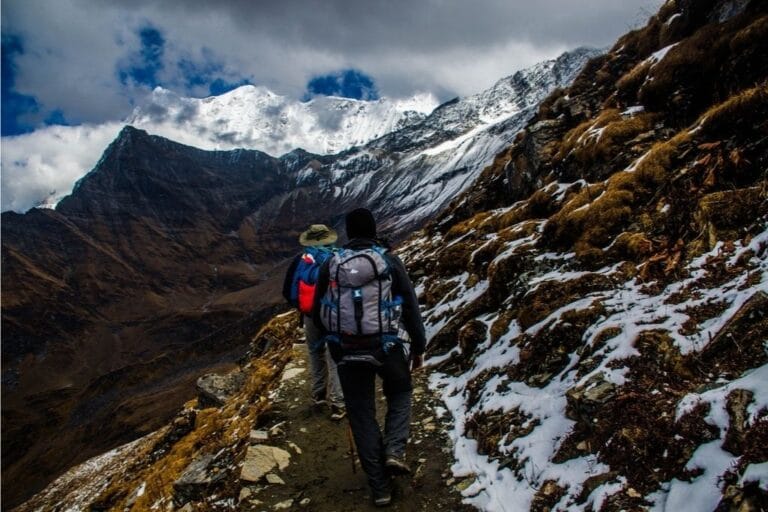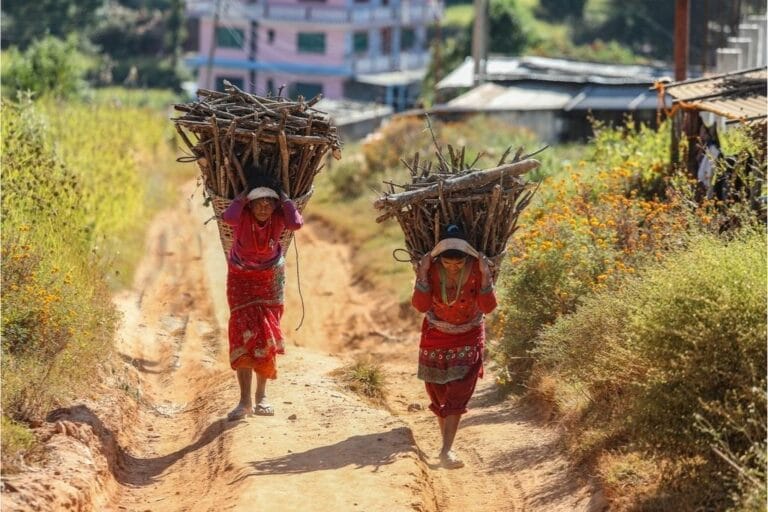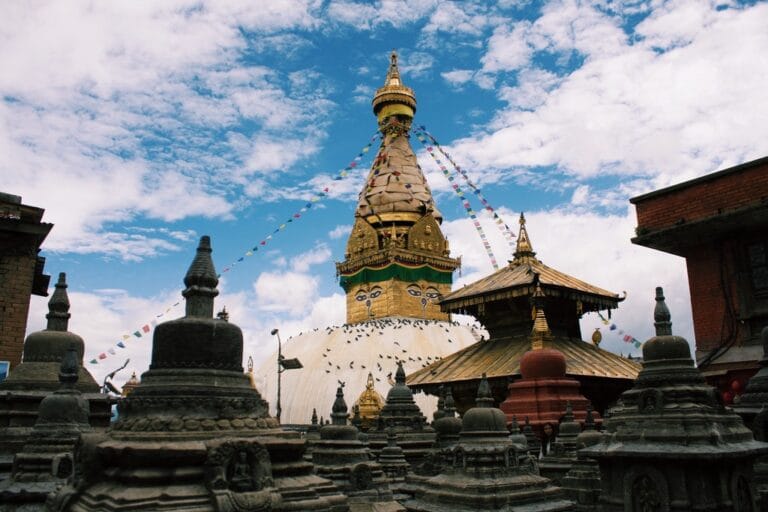


Pokhara is the best base in Nepal for trekking. Within one to four hours’ drive of Lakeside there are routes for every amount of time, from a half-day climb to Sarangkot to the three-week Annapurna Circuit. If you have one to three days, choose Sarangkot, Australian Camp or Dhampus. With four to five days, the classics are Poon Hill and Mardi Himal. With a week or more, go for Annapurna Base Camp, Khopra Danda or the Circuit.
Below are the 14 best treks from Pokhara, with a comparison table, updated 2026 permit and guide rules, how to reach each trailhead, and help choosing one by the time you have.
Treks from Pokhara compared
| Trek | Days | Max altitude | Difficulty | Permits | Best for |
|---|---|---|---|---|---|
| Sarangkot | Half to 1 day | c. 1,600 m | Easy | None | Sunrise views, paragliding |
| Naudanda | 1 day | c. 1,400-1,500 m | Easy | None | Quiet day walk, families |
| Begnas & Rupa Lakes | 1-2 days | Under 1,500 m | Easy | None | Lakes, villages, low altitude |
| Australian Camp | 1-2 days | 2,060 m | Easy | ACAP | Best short mountain view |
| Dhampus | 2-3 days | c. 1,650 m (2,060 m via Australian Camp) | Easy | ACAP | First-time trekkers |
| Ghandruk | 2-4 days | c. 1,940 m | Easy | ACAP | Gurung culture |
| Royal Trek | 3-4 days | Under 1,800 m | Easy | Usually none | Rural villages, older walkers |
| Panchase | 3-4 days | c. 2,500 m | Easy-moderate | Depends on route | Forests, birds, quiet trails |
| Ghorepani Poon Hill | 3-5 days | 3,210 m | Moderate | ACAP | Classic first teahouse trek |
| Sikles | 3-6 days | c. 2,450 m (Kapuche Lake) | Moderate | ACAP | Off-the-beaten-track village |
| Mardi Himal | 4-6 days | 4,500 m (base camp); High Camp c. 3,580 m | Moderate-strenuous | ACAP | Ridge walking, big views fast |
| Khopra Danda | 6-9 days | c. 3,660 m (Khayar Lake c. 4,500-4,660 m) | Moderate-strenuous | ACAP | Quieter alternative to Poon Hill |
| Annapurna Base Camp | 6-10 days | 4,130 m | Moderate-strenuous | ACAP | The mountain amphitheatre |
| Annapurna Circuit | 10-18 days | 5,416 m (Thorong La) | Strenuous | ACAP | Experienced trekkers, high pass |
Altitudes are rounded, and published figures vary slightly between sources. Day counts are walking days from a Pokhara trailhead and do not include travel from Kathmandu.
Permits and the guide rule in 2026
Most multi-day treks from Pokhara enter the Annapurna Conservation Area, so you will need:
- ACAP permit: NPR 3,000 (about £15) for foreign nationals. It is issued in Pokhara (Damside) and Kathmandu, or online, but not on the trail. Checkpoints can charge double if you turn up without one.
- TIMS card: since 2023, this has been issued only through registered trekking agencies. How strictly it is checked in Annapurna has varied, so your agency will advise whether it is needed for your route.
- A licensed guide: since 1 April 2023, foreign trekkers have officially been required to trek with a government-licensed guide booked through a registered agency in Nepal’s conservation areas and national parks. Enforcement around Pokhara has been inconsistent, but the rule stands, and some insurers expect you to follow it.
Short walks outside the conservation area, such as Sarangkot, Naudanda, the Begnas and Rupa lakes and most of the Royal Trek, do not need an ACAP permit. Panchase depends on the route you take. A guide is still useful on these walks for navigation and local knowledge, but it is not legally required. For more on staying safe and the current rules, see our guide to health and safety tips for trekking in Nepal.
Getting to the trailheads from Pokhara
Roads have pushed deep into the Annapurna foothills over the past decade. That has shortened most treks, because you can now drive to places that used to take a day or two to walk to. Expect rough, bumpy roads beyond the tarmac, especially after the monsoon.
| Trailhead | For | Approx. drive from Lakeside | How |
|---|---|---|---|
| Sarangkot / Lakeside | Sarangkot, Naudanda | 0-30 min | On foot or taxi |
| Phedi | Dhampus, Australian Camp | 30-45 min | Taxi or local bus |
| Kande | Australian Camp, Mardi Himal | About 1 hour | Taxi or bus from Baglung Bus Park |
| Begnas Lake | Begnas & Rupa, Royal Trek (finish) | About 45 min | Taxi or local bus |
| Nayapul / Birethanti | Poon Hill, Ghandruk, ABC | About 1.5 hours | Taxi, jeep or bus |
| Ulleri / Hile, Ghandruk, Jhinu area | Poon Hill, Ghandruk, ABC (shortcut) | 2.5-3 hours | Shared or private jeep |
| Siding / Lwang area | Mardi Himal (often the exit) | 2.5-3 hours | Jeep |
| Sikles | Sikles | About 4 hours | Jeep |
| Besisahar | Annapurna Circuit | 4-5 hours | Bus or jeep, then a shared jeep up the valley |
Private taxis and jeeps are the most flexible option, and your agency will usually arrange them. Local buses leave from Baglung Bus Park for the western trailheads, and are cheap but slow. For more on the city itself, see our Pokhara travel guide.
The 14 best treks from Pokhara
1. Sarangkot
Half to 1 day · c. 1,600 m · Easy · No permit
Sarangkot is the ridge directly above Phewa Lake and the quickest way to see the Annapurnas from Pokhara. You can walk up from Lakeside in about three hours on stepped trails through villages and forest, or take a taxi up and walk down. Go for sunrise, when Dhaulagiri, Annapurna South, Machhapuchhre (Fishtail) and Annapurna II catch the first light.
Sarangkot is also the launch site for Pokhara’s tandem paragliding flights, so many people walk up and fly down. See our guide to paragliding in Nepal. There is a small viewpoint entry fee at the top.
2. Naudanda
1 day · c. 1,400-1,500 m · Easy · No permit
Naudanda is a quiet ridge-top village west of Sarangkot, on the old road towards Baglung. A day walk from Pokhara via Sarangkot and Kaskikot follows farm tracks and village paths with views of Phewa Lake and the mountains, and you can catch a bus or taxi back from the highway. It is low, gentle and suitable for children and can be walked in any season, although clouds often hide the peaks during the monsoon.
3. Begnas and Rupa Lakes
1-2 days · Under 1,500 m · Easy · No permit
Begnas and Rupa are Pokhara’s quieter lakes, about 45 minutes east of Lakeside. A popular loop climbs the Panchabhaiya Danda ridge between the two lakes, passing fields, fish farms and small villages, with mountain views on clear mornings. Homestays and small guesthouses around Begnas make it easy to stretch into an overnight trip. At this low altitude, the walk is warm and green year-round, so it is a good option when higher trails are snowbound or cloudy.
4. Australian Camp
1-2 days · 2,060 m · Easy · ACAP
Australian Camp is the best short trek from Pokhara if mountain views are your priority. From Kande, about an hour’s drive away, a steep one- to two-hour climb through forest brings you to a grassy ridge with a wide panorama of Annapurna South, Hiunchuli, Machhapuchhre, Annapurna II and Lamjung Himal. Stay overnight in one of the lodges for sunset and sunrise, then walk down through Pothana and Dhampus to Phedi. It is also the first stage of the Mardi Himal trek.
5. Dhampus Village
2-3 days · c. 1,650 m · Easy · ACAP
Dhampus is a Gurung village on a sunny shelf above the Seti valley, with stone houses, terraced fields and a front-row view of Machhapuchhre. Walk up from Phedi in two to three hours, stay a night, then continue to Australian Camp and down to Kande. It is a gentle introduction to teahouse trekking and a good choice for families or anyone short of time.
6. Ghandruk Village
2-4 days · c. 1,940 m · Easy · ACAP
Ghandruk is one of the largest Gurung villages in the Annapurna region, with slate-roofed houses, a small museum and huge views of Annapurna South, Hiunchuli and Machhapuchhre. The traditional route walks up from Nayapul and Birethanti. Jeeps now reach the village, so you can drive in and walk out, or combine Ghandruk with Landruk, Tolka or the Poon Hill loop.
Ghandruk is also a gateway to Annapurna Base Camp. Read our full Ghandruk village guide for things to do and where to stay.

7. Royal Trek
3-4 days · Under 1,800 m · Easy · Usually no permit
The Royal Trek takes its name from the walk Prince Charles (now King Charles III) made in the area around 1980. It is a low, rural route east of Pokhara through Gurung and Brahmin-Chhetri villages such as Kalikasthan, Shaklung and Chisopani, finishing at Begnas Lake. You will see far fewer trekkers than on the Annapurna trails, and accommodation is often in simple lodges or homestays. It is well suited to older walkers, families, and anyone who prefers village life to altitude.
8. Panchase
3-4 days · c. 2,500 m · Easy-moderate · Permit depends on route
Panchase is a forested hill south-west of Pokhara, known for rhododendron, magnolia and orchid forests and a hilltop shrine at about 2,500 m. Routes usually start with a boat across Phewa Lake or a short drive, then climb through villages such as Bhumdi and Bhadaure to the summit for views stretching from Dhaulagiri to Manaslu. Daily walking is typically three to six hours. Birdwatchers love it, and it is quiet even in peak season.
9. Ghorepani Poon Hill
3-5 days · 3,210 m · Moderate · ACAP
Poon Hill is Nepal’s most popular short trek and the best first teahouse trek from Pokhara. From Ghorepani (about 2,860 m), a one-hour pre-dawn climb takes you to the Poon Hill viewpoint for sunrise over Dhaulagiri, Annapurna South and Machhapuchhre. The trail passes through some of Nepal’s finest rhododendron forest, at its best in March and April.
The classic route climbs from Nayapul via the long stone staircase to Ulleri. Many itineraries now drive to Ulleri or Hile, which saves a day, and return via Tadapani and Ghandruk. Read our Poon Hill trek guide for full itineraries.
10. Sikles
3-6 days · c. 2,450 m (Kapuche Lake) · Moderate · ACAP
Sikles, one of the largest Gurung villages in the Kaski district, sits at about 1,980 m in the eastern part of the Annapurna Conservation Area, under Annapurna II and Lamjung Himal. It is known as a cultural heritage village and sees few foreign trekkers. A jeep road from Pokhara (about four hours) now reaches the village. From there, the most popular extension walks to Kapuche Lake, often described as one of Nepal’s lowest glacial lakes, at about 2,450 m. Expect basic lodges and homestays, and go with a guide, because trails beyond the village are less well marked.
11. Mardi Himal
4-6 days · 4,500 m (base camp) · Moderate-strenuous · ACAP
Mardi Himal is the trek for anyone who wants high-mountain scenery without spending a week on the trail. From Kande or Phedi, the route climbs through Australian Camp and Forest Camp, then follows a narrow grassy ridge to High Camp (about 3,580 m), with Machhapuchhre seemingly close enough to touch. A long, steep day takes you to the viewpoint and, for the strong, on to Mardi Himal Base Camp at around 4,500 m. Most people descend to Siding or Lwang and drive back.
The ridge is exposed. In bad weather or snow it can be cold and slippery, and lodges above Forest Camp are small and fill up in peak season. This is the shortest trek on this list that reaches a height where altitude sickness becomes a real risk, so do not rush the ascent.
12. Khopra Danda
6-9 days · c. 3,660 m · Moderate-strenuous · ACAP
Khopra Danda (Khopra Ridge) branches off the Poon Hill route at Tadapani or Swanta and climbs to a high ridge facing Dhaulagiri, the Annapurnas and Nilgiri, with far fewer people than on Poon Hill. Accommodation on the upper section is mainly in community-run lodges. A tough optional side trip continues to Khayar Lake, a sacred lake at roughly 4,500-4,660 m (sources vary), which is only for well-acclimatised trekkers in good weather. You can return via Poon Hill to make a varied loop.
13. Annapurna Base Camp
6-10 days · 4,130 m · Moderate-strenuous · ACAP
The Annapurna Base Camp (ABC) trek leads into the Annapurna Sanctuary, a glacial amphitheatre ringed by Annapurna I (8,091 m, the world’s tenth-highest mountain), Annapurna South, Hiunchuli, Gangapurna and Machhapuchhre. Jeeps now run to near Jhinu Danda, cutting a day or more off the old walk-in from Nayapul. The trail then climbs through Chhomrong, Sinuwa, Deurali and Machhapuchhre Base Camp to ABC.
The stone staircases around Chhomrong are hard work, and the section between Deurali and Machhapuchhre Base Camp is exposed to avalanches after heavy snow, so follow local advice. Our complete guide to Annapurna Base Camp has full itineraries, and our Annapurna Base Camp trek runs with licensed guides and built-in acclimatisation.

14. Annapurna Circuit
10-18 days · 5,416 m (Thorong La) · Strenuous · ACAP
The Annapurna Circuit circles the Annapurna massif, climbing from subtropical rice terraces through the Manang valley to the Thorong La pass at 5,416 m, before descending to Muktinath and the Kali Gandaki gorge. From Pokhara you drive four to five hours to Besisahar. Because roads now run up the Marsyangdi valley, most trekkers take a shared jeep to Chame or beyond, then walk the high section.
It is the most demanding trek on this list. The pass day is long, cold and high, so acclimatise properly in Manang, and plan your crossing for the safest months (October-November or March-April). Snow can close the pass in winter. You can exit from Jomsom by road or flight back to Pokhara. Read our Annapurna Circuit guide for route options.
Which trek should you choose? By time available
| Time you have | Best options | Why |
|---|---|---|
| Half a day to 1 day | Sarangkot, Naudanda, Begnas & Rupa | No permits, walk from Lakeside or a short drive |
| 2-3 days | Australian Camp and Dhampus loop, Ghandruk | Big mountain views with almost no altitude risk |
| 3-4 days | Poon Hill (with a jeep to Ulleri or Hile), Royal Trek, Panchase | A proper teahouse trek or a quiet cultural walk |
| 4-6 days | Mardi Himal, Poon Hill and Ghandruk loop, Sikles | Higher scenery or more remote villages |
| 6-10 days | Annapurna Base Camp, Khopra Danda | Deep into the mountains, with altitude to respect |
| 2 weeks or more | Annapurna Circuit, ABC combined with Poon Hill | The classic long treks |
Some quick rules of thumb: first-timers should start with Poon Hill or the Australian Camp-Dhampus loop. Families with young children should stick to Sarangkot, Begnas or Dhampus. If you want solitude, try Panchase, Sikles, the Royal Trek or Khopra. If you want the most mountain for the fewest days, Mardi Himal is hard to beat.
Best time to trek from Pokhara
The best seasons are autumn (late September to November), which brings clear skies and stable weather, and spring (March to May), when it is warmer and the rhododendrons bloom, though May gets hazier. Winter (December to February) is good for low and mid-altitude treks such as Poon Hill and Ghandruk, with clear views but cold nights and snow at higher camps.
The monsoon (roughly June to mid-September) brings daily rain, leeches, cloud-covered peaks and landslides on the new jeep roads. Low walks such as Begnas and Naudanda are the most practical choice then. See our guide to the best season to travel in Nepal for month-by-month detail.
Practical tips for trekking from Pokhara
- Kit: Lakeside has shops for renting or buying sleeping bags, down jackets and poles, but bring your own broken-in boots. See our free trek packing checklist.
- Cash: ATMs are plentiful in Pokhara, but rare or unreliable on the trails. Carry enough Nepali rupees for the whole trek.
- Altitude: anything above about 3,000 m (Poon Hill, Mardi Himal, Khopra, ABC, the Circuit) needs a gradual ascent. Know the symptoms of altitude sickness, and never go higher with them.
- Insurance: make sure your policy covers trekking to your maximum altitude and helicopter rescue.
- Spare days: landslides and jeep breakdowns happen. Keep a buffer day before an international flight.
Conclusion
Few places in the world offer so much trekking so close to a comfortable lakeside town. Pick the trek that matches your time and fitness: a sunrise at Sarangkot, a night at Australian Camp, the classic Poon Hill loop or the full Annapurna Sanctuary. Then let Pokhara be your base before and after. For the bigger picture, explore our Annapurna region guide, or plan your trip with us and we will match you with a licensed guide and an itinerary that fits.
Looking for something quieter? The Mardi Himal trek is one of the best short treks from Pokhara. If you are travelling from Kathmandu, read how to get from Kathmandu to Pokhara, with an optional stop in Bandipur.
Frequently asked questions
What is the best short trek from Pokhara?
For one or two days, Australian Camp offers the best mountain views for the effort. For three to five days, Ghorepani Poon Hill is the classic choice. Mardi Himal suits fit trekkers who want high scenery in four to six days.
Can you do a day hike from Pokhara?
Yes. Sarangkot, Naudanda and the ridge between Begnas and Rupa lakes are all doable in a day without permits. Australian Camp can also be done as a long day from Kande, although staying overnight gives you sunrise views.
Do I need a permit to trek from Pokhara?
For treks into the Annapurna Conservation Area, including Poon Hill, Ghandruk, Mardi Himal, Australian Camp, ABC and the Annapurna Circuit, you need an ACAP permit (NPR 3,000, about £15). TIMS cards are issued through registered agencies. Short walks such as Sarangkot, Naudanda and Begnas need no permit.
Do I need a guide for treks from Pokhara?
Officially, foreign trekkers have needed a licensed guide booked through a registered agency in Nepal’s conservation areas since April 2023, although enforcement in the Annapurna region has been inconsistent. Day walks outside the conservation area do not legally need one. For Mardi Himal, ABC and the Annapurna Circuit, we strongly recommend a guide.
How many days do you need for Poon Hill from Pokhara?
Three to five days. With a jeep to Ulleri or Hile, you can reach Ghorepani on day one, see the Poon Hill sunrise on day two and be back in Pokhara on day three. Four or five days lets you return more gently via Tadapani and Ghandruk.
How long is the Annapurna Base Camp trek from Pokhara?
Usually six to ten days return. Jeeps now reach close to Jhinu Danda, so a fit trekker can go there and back in about six days. Adding Poon Hill makes it nine to eleven days.
Which is better, Mardi Himal or Poon Hill?
Poon Hill is easier, lower (3,210 m) and more cultural, with villages and rhododendron forest. Mardi Himal is higher (High Camp at about 3,580 m and Base Camp at about 4,500 m), more exposed and more dramatic, with closer views of Machhapuchhre. Beginners usually start with Poon Hill.
Can you trek from Pokhara in the monsoon?
You can, but expect daily rain, leeches, cloud and landslides on jeep roads. Low walks such as Begnas, Naudanda and Sarangkot are the most practical choices. For mountain views, wait for late September onwards.