
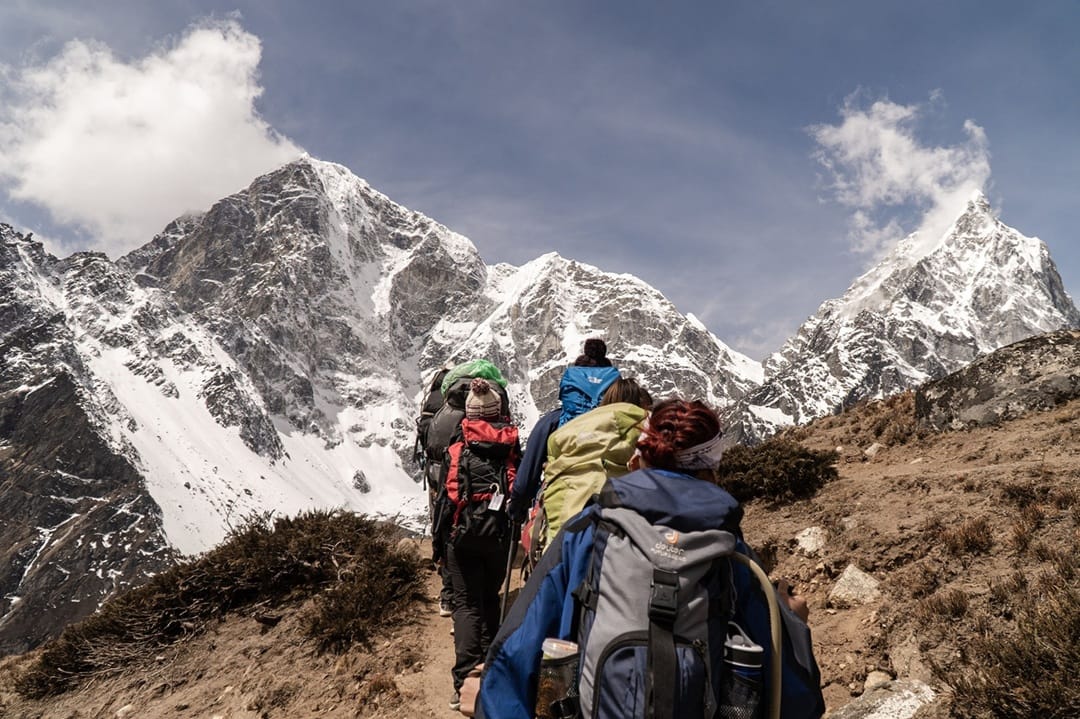
The best time to trek to Everest Base Camp is usually March to May or October to November. Spring suits travellers who want the main Everest expedition season; autumn is a strong choice for those who prioritise post-monsoon mountain views.
If you want a straightforward starting point, compare April and October first. Both sit within the main trekking windows, but neither guarantees clear skies, dry trails or uninterrupted flights.
September needs more care. It is often included in the autumn season, yet monsoon rain can persist into late September and October. Winter and summer trekking require a different level of preparation and flexibility.
This guide covers the trek to Everest Base Camp in Nepal, rather than the road-accessible northern approach in Tibet or an expedition to Everest’s summit.
When is the best time to trek to Everest Base Camp?
For most travellers, spring and autumn offer the strongest starting point for choosing dates. The decision then comes down to what matters more to you: expedition, visibility, cold, or quieter trails.
Nepal Tourism Board lists March–May and October–November as the main favourable seasons for Sagarmatha National Park. These are seasonal recommendations, not forecasts for your departure.
| Period | Main appeal | Main compromise | Who should consider it? |
|---|---|---|---|
| March–May | Spring trekking and the main expedition season | Conditions change across the season; popular periods can be busy | Travellers comparing spring dates and those interested in expedition activity |
| September | Transition towards autumn | Monsoon conditions may linger | Travellers with flexibility who have checked current conditions |
| October–November | Post-monsoon trekking and mountain-view priorities | Popular trails; increasingly cold conditions later in the season | Most travellers considering an autumn trek |
| December–February | An alternative outside the main trekking windows | Serious cold, shorter days and potentially disruptive snow or ice | Well-prepared trekkers with confirmed local arrangements |
| June–August | An option for travellers constrained to summer dates | Monsoon rain, cloud and transport disruption | Travellers who understand the compromises and can change their plans |
Trekking in a recommended season still involves high altitude and mountain hazards. Choose the itinerary and support arrangements as carefully as the month.
Spring or autumn: which should you choose?
Choose spring if seeing the Everest expedition camp is a major reason for going. Start with autumn if mountain visibility is your main priority. Then compare individual dates, rather than treating every week within either season as equivalent.
Mountain views
Nepal Tourism Board describes October and November as a period of particularly clear post-monsoon skies. That makes autumn a sensible starting point for photography-focused planning.
Spring can also provide excellent views. However, the quality of a particular morning depends on actual weather, not the seasonal label.
A clear autumn reputation is no guarantee that Everest will be visible when you arrive.
Cold and walking comfort
Consider where you will sleep, not just the weather in Kathmandu. Higher settlements on the EBC trek have very different conditions from the lower valleys.
Spring moves towards warmer conditions; autumn moves towards winter. This is useful when comparing March with May, or October with late November. It does not establish a precise temperature for your trip.
A warm afternoon lower down the trail says little about an early start from Gorak Shep.
Ask your trekking provider about the sleeping bag, layers and gloves needed for your dates, then use our Everest Base Camp packing list to organise your equipment.
Crowds and expedition activity
A busy expedition camp and a busy trekking trail are different things. Spring brings the main Everest climbing activity, but choosing autumn does not necessarily give you an empty trail.
Treat quieter-period recommendations as tendencies. Group departures, room availability and the trail can change your experience.
Do not choose a difficult weather window solely because it is described as less crowded.
| Your priority | Where to start comparing | What to check next |
|---|---|---|
| A balanced first EBC trip | April and October | Itinerary, available departures and travel contingency |
| Seeing the spring expedition camp | April and May | Expected expedition activity and visitor access |
| Post-monsoon mountain views | October and November | Forecasts and your tolerance for colder nights |
| Avoiding the busiest periods | Dates towards the edges of the main seasons | Whether reduced crowding justifies the weather and comfort trade-offs |
| A fixed summer holiday | Your actual June–August dates | Current conditions, transport arrangements and cancellation flexibility |
Trekking in spring: March to May
Spring is one of the principal Everest Base Camp trekking seasons. It also spans a substantial change in conditions, so March and late May should not be treated as interchangeable.
March: allow for earlier-season cold
March can suit travellers who want a spring trek before the main April–May expedition period. Early dates warrant particular attention to cold-weather preparation and existing snow or ice.
Check the route conditions before departure. If your itinerary adds high passes, its suitability needs a separate assessment from the standard Base Camp route.
April: a practical spring starting point
April is a useful month to compare when planning a first EBC trek. It falls within the established spring window and overlaps with preparations for the main Everest climbing season.
The compromise is popularity. Confirm accommodation and group arrangements rather than assuming that a widely recommended month will make every part of the trip easier.
April should still be approached as a mountain trek: bring suitable layers, allow time for acclimatisation, and keep room in your travel schedule for disruption.
May: expedition interest and a changing season
May is worth considering if you are interested in Everest’s spring expedition activity. The attraction is the temporary climbing camp and its wider context, not a promise of meeting climbers or entering private expedition areas.
Later dates move closer to the monsoon period. Check the outlook for your whole journey, including the return to Lukla. A trek beginning in May may finish in June.
Do not infer trekking conditions from news about a summit weather window. Climbers higher on Everest and trekkers travelling through the lower valleys face different situations.
Trekking in autumn: September to November
October and November are the clearest starting points for an autumn recommendation. September is a transition month and needs more qualification.
September: check the monsoon transition
September is not automatically dry because a trekking calendar calls it autumn.
Nepal’s Department of Hydrology and Meteorology gives 2 October as the normal monsoon withdrawal date for eastern Nepal in its historical report. It records withdrawal on 15 October in 2023 and 12 October in 2024.
These regional dates do not predict the weather on an individual EBC trekking day. They do explain why a fixed claim such as “the rain stops in mid-September” is unreliable.
If September is your only option, ask about current trail conditions, transport and contingency arrangements. Choose with that uncertainty in mind.
October: a strong autumn starting point
October is a sensible month to compare if you want an autumn Everest Base Camp trek. It sits within the Nepal Tourism Board’s recommended window, but early October can still be affected by a late monsoon.
Check accommodation arrangements and allow for busy sections of the route. A popular month can be a good choice without being a quiet one.
If you have flexibility, compare early and late October against the current outlook. There is no date that guarantees the weather has settled.
November: consider your tolerance for cold
November remains within the main autumn trekking window. It is particularly worth comparing if mountain views matter more to you than warmer evenings.
As the season progresses towards winter, cold-weather preparation becomes more consequential. Late-November itineraries may continue into December, so assess the entire trip.
Ask your provider about overnight conditions, suitable equipment and accommodation availability before choosing later dates for the prospect of quieter trails.
What about winter and monsoon trekking?
Winter and monsoon should be assessed as separate planning choices, rather than cheaper or quieter versions of the main seasons.
December to February: cold changes the trip
Winter trekking can be possible, but severe cold, shorter daylight hours, snow and ice may affect comfort, progress and route access.
Confirm the proposed itinerary, lodge arrangements and equipment with a provider operating during your dates. Do not assume that every teahouse or service remains available.
A forecast of clear skies is only one part of the decision. The ability to stay warm, manage the conditions and respond to delays matters too.
June to August: understand the monsoon compromises
Summer dates fall within the main monsoon period. Cloud can obscure views, and rain can affect the lower trails and transport links. Flooding and landslides can disrupt road journeys; poor mountain weather can delay flights.
If your holiday dates are fixed, discuss the actual itinerary and contingency plan before committing. Avoid building the trip around the expectation that rain will be brief or flights will resume the following day.
For a first EBC trek with little schedule flexibility and mountain views as the main goal, spring or autumn is the more sensible starting point.
Everest Base Camp month by month
Use this table to narrow your options. It describes broad planning considerations, not a forecast or a list of GLF departure dates.
| Month | Planning assessment | Main point to check |
|---|---|---|
| January | Winter option | Cold, snow or ice, accommodation and local support |
| February | Winter transitioning towards spring | Earlier and later dates may differ; confirm route conditions |
| March | Main spring window | Cold-weather equipment, especially for early departures |
| April | Strong spring starting point | Accommodation, group arrangements and expedition activity |
| May | Spring with expedition interest | Conditions towards monsoon and the return dates |
| June | Transition into the main monsoon period | Forecasts, road access and flight contingency |
| July | Monsoon planning | Rain, cloud and the ability to change plans |
| August | Monsoon planning | Transport disruption and expectations for views |
| September | Transition towards autumn | Whether monsoon conditions persist |
| October | Strong autumn starting point | Late monsoon risk early in the month and busy trails |
| November | Main autumn window | Cold preparation and trips extending into December |
| December | Transition into winter | Route access, lodge availability and winter equipment |
A two-week trek experiences a range of elevations and weather. Choose dates for the whole itinerary, not only the day you expect to reach Base Camp.
Choose your dates around your priorities
For a first high-altitude trek
Compare April and October first, then choose an itinerary with appropriate acclimatisation and support. A favourable season cannot compensate for rushing the ascent.
Spend time understanding the demands and how to get to Everest Base Camp before comparing departures solely by date or price.
For photography and mountain views
Start with October and November, while checking the forecast close to departure. Keep expectations realistic: reaching a viewpoint does not guarantee the mountain will be visible.
Our Everest Base Camp guide explains the difference between visiting Base Camp and viewing Everest from Kala Patthar.
For the spring expedition camp
Compare April and May. Check expected activity with your provider and respect restrictions around expedition operations.
The temporary camp is not an ordinary tourist attraction with guaranteed opening hours. Its layout and activity vary, and a trek package does not automatically include access to expedition facilities.
For quieter trails
Compare the edges of the main seasons, but decide what extra uncertainty you are willing to accept. Quietness is not a reason to ignore cold, monsoon conditions, or limited services.
If a provider proposes a different route to reduce crowding, check whether it introduces high passes, longer days, or different acclimatisation demands. An alternative itinerary deserves its own assessment.
What to check before booking
Confirm these points before paying for a departure:
- The full travel dates: include arrival, trekking, the return from Lukla and onward travel.
- The actual route: standard EBC, Phortse and high-pass variants are not identical journeys.
- Transport arrangements: confirm the Lukla departure airport and the plan for disruption.
- Contingency time: ask what margin is recommended and who pays for additional accommodation or alternative transport.
- Seasonal equipment: use advice for your elevations and dates, rather than Kathmandu’s forecast alone.
- Insurance: check cover for the full itinerary, medical treatment, evacuation and relevant disruption.
High-mountain flights can be delayed or cancelled by poor weather, even in a recommended month. Leave a practical margin before onward travel and understand your booking conditions.
Use Nepal’s current meteorological forecasts as departure approaches. Historical climate information helps you choose a season; it cannot tell you whether your flight will leave on a particular morning.
For the wider financial decisions, read our Everest Base Camp trek cost guide.
FAQs
Does choosing spring or autumn remove altitude sickness risk?
No. Season choice does not remove the need for gradual acclimatisation. Physical fitness does not protect you against altitude illness either. Keep the planned acclimatisation days and tell your guide if you feel unwell. Read our Everest Base Camp altitude sickness guide before travelling.
Will Base Camp have expedition tents in autumn?
Do not expect the large temporary camp associated with the main spring climbing season. Autumn trekking can provide a different Base Camp experience. If expedition activity is central to your plans, discuss spring dates and expected conditions with your provider.
Does a good trekking month mean Lukla flights will operate?
No. A seasonal recommendation describes broad conditions, not the weather or visibility needed for a specific flight. Confirm contingency arrangements and avoid assuming that a helicopter alternative will always be available.
How should I assess a trek that crosses into another month?
Look at when you will be in the higher settlements and when you return to Lukla. A late-May departure finishing in June or a late-November trek finishing in December needs planning for the transition. Ask about the entire itinerary, rather than relying on its starting month.
Is the quietest season the cheapest time to go?
Not necessarily. Compare what is included and the possible costs of disruption, equipment and changed accommodation arrangements. Fewer visitors do not prove that your total trip will be cheaper. Check actual quotes rather than assuming an off-season discount.
Explore GLF’s available Everest Base Camp departures
Once you have a preferred travel window, compare it with the itinerary and departures currently available through Get Lost Forever.
View the Everest Base Camp trek itinerary and available departures. If you are deciding between dates, enquire about the route, preparation and arrangements for the departures you are considering.
Sources
- Nepal Tourism Board: national parks and Sagarmatha season guidance
- Nepal Tourism Board: climate
- Nepal Department of Hydrology and Meteorology: historical monsoon dates
Seasonal recommendations are planning guidance, not a forecast for an individual departure.