
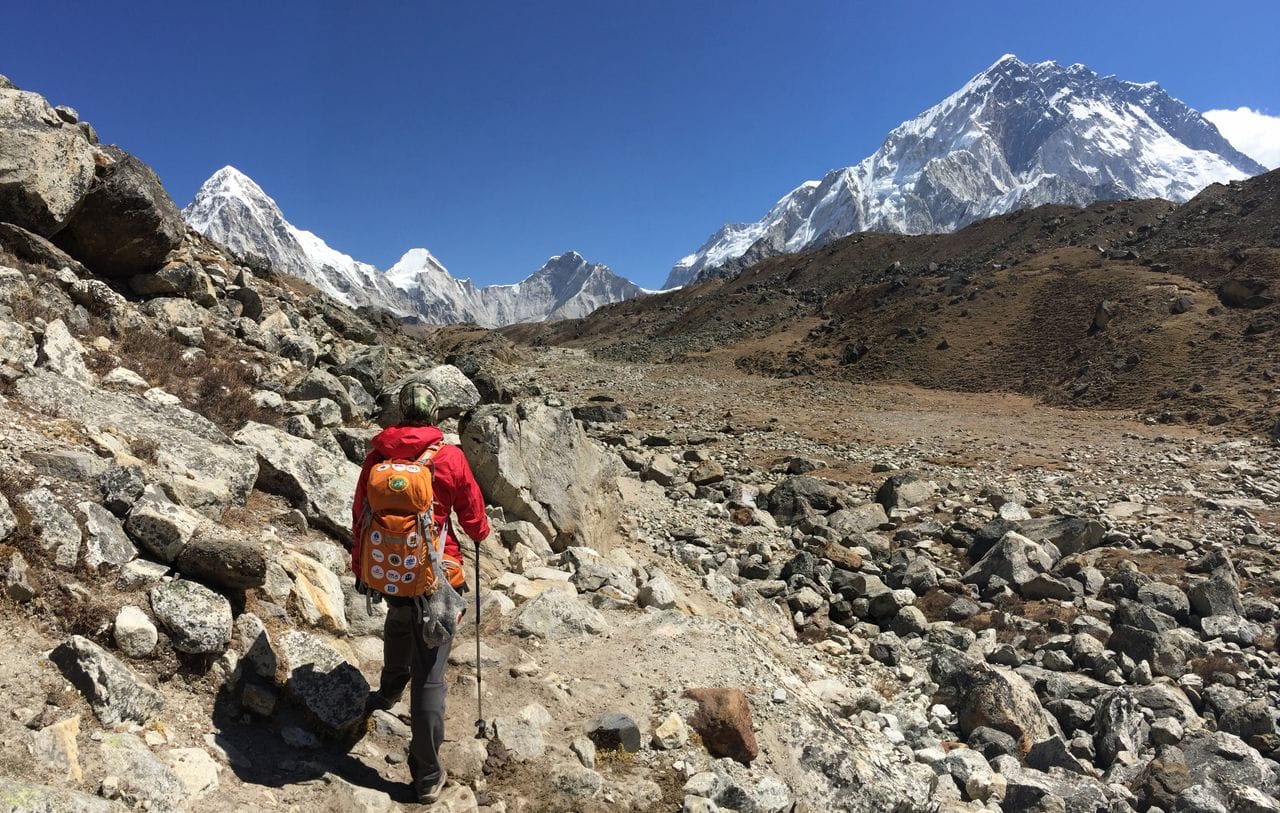
The Everest Base Camp trek is demanding because it combines repeated climbs and descents, consecutive walking days, and at high altitude. The standard route is a walking trek rather than a technical mountaineering climb, but do not mistake it for an easy holiday.
EBC trek difficulty also depends on the route you choose, fitness level, what you carry and the weather conditions. Those factors help explain why two people can describe the same trek very differently.
A prepared beginner can consider it. The useful question is whether you can build the endurance, tolerate basic mountain accommodation and choose an itinerary that gives you time to acclimatise.
Being fit helps with walking; it does not guarantee that you will adapt well to altitude.
This guide covers the standard trek in Nepal. Routes involving Gokyo, Cho La or the Three Passes need separate assessment because their terrain and daily demands differ. For broader route and planning information, start with our Everest Base Camp guide.
Everest Base Camp trek difficulty at a glance
Expect a sustained physical challenge rather than a climbing test. You need to manage your effort over the whole journey, including the return to Lukla, rather than treating Base Camp as the finish line.
Labels such as “moderate” or “strenuous” are useful only when the operator explains what they mean. There is no single label that captures how every trekker will experience the route.
| Demand | What it means for you |
|---|---|
| Technical skills | The standard route does not normally involve roped climbing. Uneven paths still require balance and care. |
| Endurance | You must repeat the effort on successive days, with climbs and descents rather than flat walking alone. |
| Altitude | Your pace and recovery may change as you ascend. Fitness cannot replace acclimatisation. |
| Comfort | Cold nights, variable facilities and disrupted sleep can make the next walking day feel harder. |
What makes the trek demanding?
Repeated climbs, descents and uneven footing
The trail does not climb smoothly from Lukla to Base Camp. You gain and lose height along the way, crossing valleys and climbing out again. A modest change between two overnight elevations can hide considerably more uphill walking.
Stone steps, rocky sections and uneven surfaces make foot placement matter. Descents also take effort, particularly when your legs are tired. Training only on flat roads gives you an incomplete picture of these demands.
Walking on consecutive days
The challenge is repeating a substantial walk after yesterday’s effort. One long hike at home is useful preparation, but it does not show how your feet, knees and energy levels will respond over a longer trek.
Walking hours and trek distance vary with the itinerary, pace, conditions and additional hikes. Ask for the daily schedule rather than relying on a single total-distance figure or a promise that every day will take the same number of hours.
Check what those hours include: moving time, lunch, breaks and side trips can be counted differently. Also distinguish days spent trekking from the complete holiday, which may include Kathmandu stays and travel days.
High altitude and reduced recovery
Base Camp is approximately 5,400 metres (17,700 feet) above sea level, according to the CDC. The standard trek takes you through progressively higher overnight stops, including Namche Bazaar, Dingboche, Lobuche and Gorak Shep. Reaching the destination is only part of the assessment: where you sleep and how quickly you move higher matter too.
Altitude adds a demand you cannot reproduce simply by making your workouts harder. As air pressure falls, less oxygen is available with each breath. You may need to walk more slowly even when the gradient looks manageable.
Sleep can also be disrupted, affecting how rested you feel the next morning. The CDC’s high-altitude travel guidance explains that training and physical fitness do not determine your risk of altitude illness. Strong endurance and appropriate acclimatisation therefore address different problems.
Our altitude sickness guide for the Everest trek covers prevention, symptoms and the response in more detail.
Cold nights and basic accommodation
Recovery depends partly on what happens after you stop walking. Cold rooms, shared facilities and unfamiliar sleeping arrangements can wear you down even when the day’s hike went well.
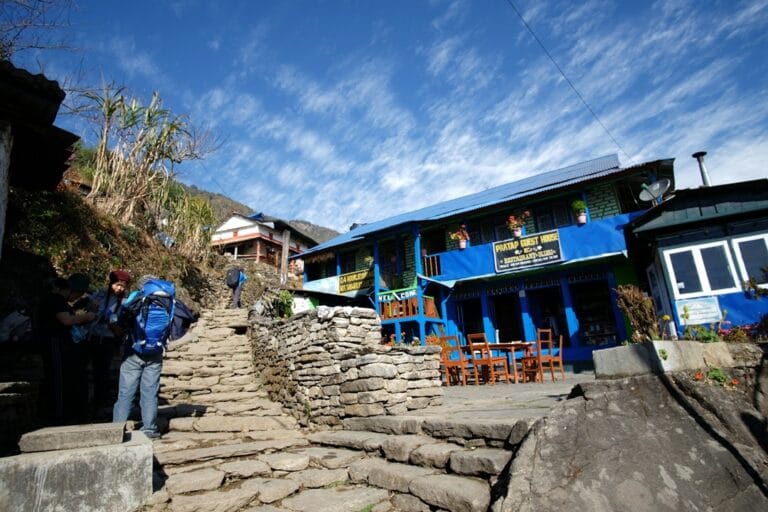
Accommodation standards vary between lodges and settlements. Ask what your itinerary includes instead of assuming every room has heating, a private bathroom or the same facilities. Your sleeping equipment and willingness to accept simpler conditions are part of preparation.
Weather can also change footing, visibility and comfort. Compare the trade-offs in our best time to trek to Everest Base Camp guide before choosing dates.
Which sections can feel hardest?
There is no universally hardest day. A steep climb may challenge one person most, while another struggles with fatigue on the higher trail or sore knees during the descent.
These are sections worth discussing when you review a standard itinerary. Their placement and combination vary between trips.
| Section | Why it can feel demanding |
|---|---|
| Approach to Namche Bazaar | A sustained climb early in the trek, while you are adjusting to the walking routine and altitude. |
| Thukla and the approach to Lobuche | An uphill section encountered higher on the route, after several days of effort. |
| Lobuche, Gorak Shep and Base Camp | High-altitude walking and rougher footing; the Base Camp visit also requires walking back to accommodation. |
| Kala Patthar | An additional uphill excursion above Gorak Shep, sometimes followed by a substantial descent that day. |
| Return to Lukla | Accumulated fatigue, downhill strain and further uphill sections. Lower altitude does not remove the walking workload. |
Can a beginner trek to Everest Base Camp?
Yes, a first-time multi-day trekker can consider Everest Base Camp with appropriate preparation and support. “Beginner”, however, should not mean arriving without experience of a substantial day walk.
Useful signs of physical preparation
Your recent walking experience is more useful than whether you describe yourself as fit. Before booking, consider whether you can:
- Spend several hours walking on hilly, uneven ground at a sustainable pace.
- Manage descents without persistent pain or a major loss of control.
- Carry the daypack you expect to use without uncomfortable rubbing or shoulder strain.
- Walk again the following day and recover reasonably well.
- Use your boots, layers and rain protection comfortably in changing conditions.
These are preparation indicators, not a validated pass-or-fail test. Meeting them does not predict your altitude response or guarantee completion.
When more preparation or individual advice is needed
If a short hill walk currently leaves you exhausted, build your walking capacity before committing to a demanding itinerary. Persistent joint pain, an unresolved injury or difficulty recovering deserves attention rather than an assumption that determination will solve it.
If you have a medical condition, previous significant altitude illness or concerns about exercising at altitude, seek individual advice from a clinician familiar with high-altitude travel. An operator can explain the route and support; it cannot give you medical clearance.
How do itinerary and support change the difficulty?
Acclimatisation time and compressed schedules
A shorter itinerary can increase the pressure to cover ground and move to higher sleeping elevations quickly. Compare the actual ascent schedule, not just the advertised trip length.
Acclimatisation days often include a walk before returning to the same accommodation. They are not necessarily complete days off. Equally, adding nights in Kathmandu does not provide the same altitude exposure as adding time on the mountain.
Ask where the extra nights occur, how strenuous the optional walks are and what happens if someone needs more time. A planned schedule is useful, but it must allow sensible decisions when conditions or health change.
Porter support and your daypack
A porter reduces the load you carry, which can make the walking more manageable. It does not reduce the altitude or remove the climbs.
You still need access to your daytime essentials, such as water, extra layers and rain protection. Confirm the permitted luggage allowance and what you are expected to carry; do not assume another operator’s arrangements apply to your trip.
Standard EBC versus high-pass variations
A route adding Cho La or other high passes should be assessed separately. More ambitious routes can add difficult days, different terrain and greater exposure to changing conditions.
If your priority is reaching Base Camp with a manageable preparation goal, understand the standard itinerary first. Do not choose a longer variation simply because its name also includes “Everest Base Camp”.
What a helicopter return changes
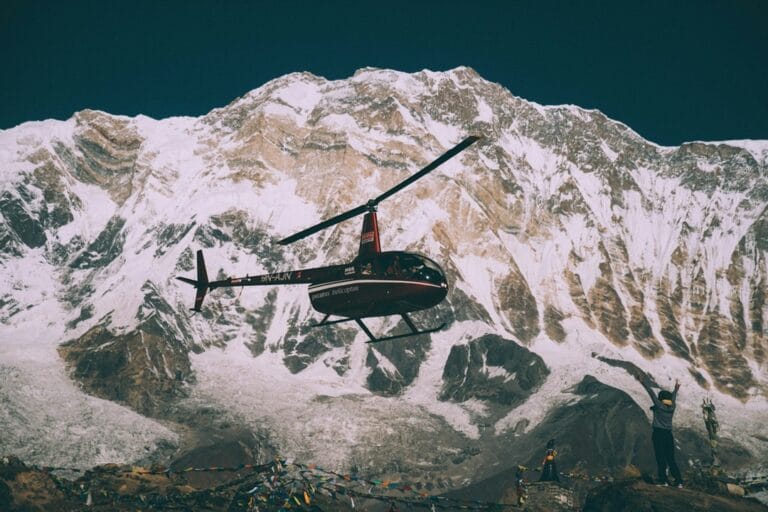
A scheduled helicopter return can remove part of the return walking. It does not make the outward trek a low-altitude journey or compensate for a rushed ascent.
Confirm where the flight starts, what walking remains and the arrangements if it cannot operate. Weather-dependent transport should not be treated as a guaranteed escape from the physical demands of the itinerary.
How should you prepare?
Prioritise the activities the trek actually requires: sustained walking, hills, descents and repeating the effort. Build gradually from your current ability rather than adopting a demanding programme designed for someone else.
Use practice hikes to test your footwear and daypack. As your capacity improves, include consecutive walking days so you can assess recovery as well as endurance. Cardio and strength work can support that preparation, but neither replaces time walking on varied ground.
Our guide to getting in shape for trekking covers the preparation in more detail. If downhill walking is your weak point, read how to train for downhill hiking.
Use the Everest Base Camp packing list to check your equipment. Familiar, comfortable kit is more useful than discovering problems with new boots or a poorly fitted bag after the trek starts.
When effort becomes a safety concern
Do not assume that feeling unwell higher on the route is simply a fitness problem you should push through. Tell your guide about symptoms promptly, and do not hide them to stay on schedule.
With symptoms of altitude illness, you should not ascend to sleep higher. Worsening symptoms require descent and appropriate assistance. Read our Everest altitude sickness guide before travelling so you understand the warning signs and response.
Turning back can be the correct decision even after careful preparation. Completion is not a reliable measure of someone’s determination or fitness.
Questions to ask before booking
Ask for enough detail to judge the itinerary against your experience. Useful questions include:
- What are the expected walking hours and sleeping locations each day?
- Where are the acclimatisation nights, and what walks are planned on those days?
- Does the route follow standard EBC or include high passes?
- How is the group managed when people walk at different speeds?
- What luggage support is included, and what will I carry?
- What happens if I need to descend or leave the trek early?
- Which accommodation facilities are included, and which vary?
Allow time to understand the travel arrangements too. Our guide to getting to Everest Base Camp explains the access and planning side of the journey.
Frequently asked questions
Is running fitness enough for Everest Base Camp?
Running can build cardiovascular fitness, but it does not test your ability to walk for hours with a daypack, descend on uneven ground or recover for another hiking day. Keep the running if it suits you, and add trek-specific walking.
Does hiring a porter make the trek easy?
It makes your load lighter. You still walk the route and face the same altitude. Porter support is a useful way to reduce effort, but it should accompany preparation and an appropriate itinerary.
Is descending always easier?
No. Breathing may feel easier as you lose altitude, but long descents can strain tired legs and require careful footing. Return days may also include uphill sections, so prepare for the whole trek.
Do better lodges remove the altitude challenge?
No. More comfortable accommodation may help you rest, but it does not lower your sleeping elevation. Compare comfort and acclimatisation separately when assessing a package.
Can I skip Kala Patthar?
Ask your operator whether the itinerary allows you to skip the excursion and how the group will be managed. Kala Patthar is a separate viewpoint hike rather than the Base Camp visit itself. If you are unwell, skipping it is not a substitute for assessing whether you should descend.
Discuss your preparation and itinerary with GLF
Review GLF’s Everest Base Camp trek itinerary and available departures. Before choosing dates, enquire about the daily walking schedule, acclimatisation and support, and explain your recent hiking experience so you can discuss the demands of the trip.