
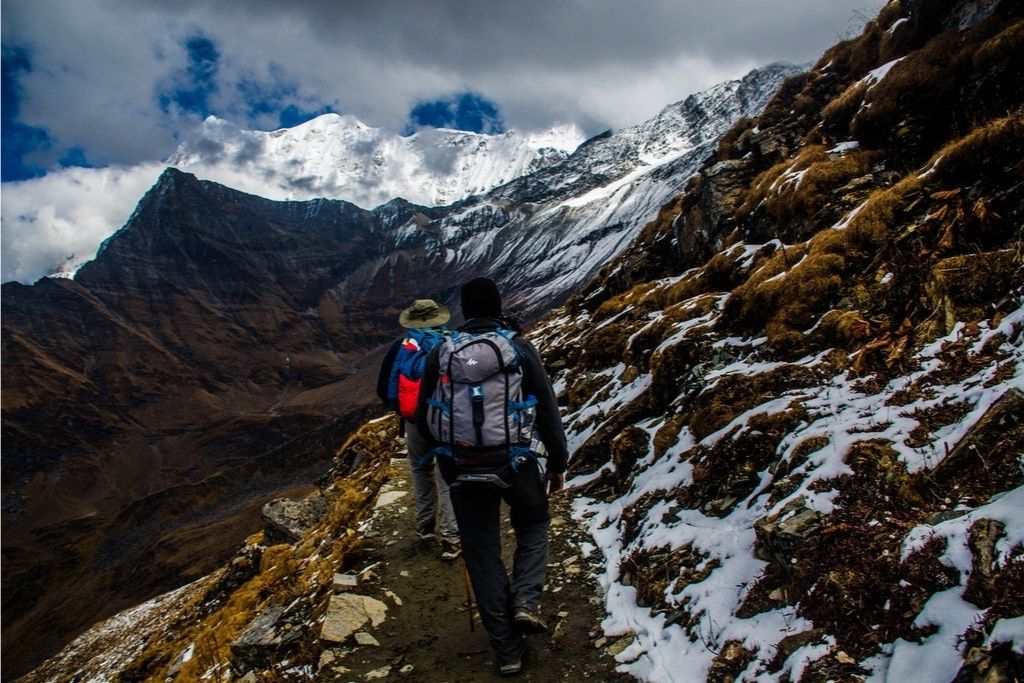
Our best Everest Base Camp packing list prepares you for cold mornings, sunny afternoons, unheated bedrooms and rapidly changing mountain weather, without exceeding your baggage or porter allowance.
For a standard guided trek with porter support, aim for a 30–40-litre daypack and keep the equipment carried by your porter within your operator’s allowance. On our 16-day Everest Base Camp trek, each traveller will have a porter carry up to 12 kg.
You do not need a new outfit for every day but a small number of reliable layers that work together, broken-in footwear, and enough protection for the coldest part of the route. This guide explains exactly what to pack, where to pack it and what you can leave at home.
Complete Everest Base Camp packing list at a glance
| Category | Essential items | Optional or seasonal items |
|---|---|---|
| Bags | 30–40 L daypack, porter duffel, waterproof liners or dry bags | Small lock, luggage scales |
| Upper body | Base layers, trekking shirts, fleece, insulated jacket, waterproof shell | Extra thermal layer for winter |
| Lower body | Trekking trousers, thermal leggings, waterproof overtrousers, underwear | Shorts for warmer lower sections |
| Footwear | Broken-in hiking boots, trekking socks, lightweight lodge shoes | Gaiters or microspikes when conditions require them |
| Head and hands | Sun hat, warm hat, neck gaiter, liner gloves, insulated gloves | Balaclava or hand warmers for winter |
| Sleeping | Appropriately rated sleeping bag | Sleeping-bag liner, pillowcase, earplugs |
| Trekking equipment | Trekking poles, head torch, sunglasses, water bottles and purification method | Thermos flask, sit mat |
| Health and hygiene | Personal medication, sunscreen, lip balm, toiletries, blister treatment and hand sanitiser | Wet wipes, travel towel and small repair kit |
| Electronics | Phone, charging cables, plug adaptor and power bank | Camera, spare batteries and e-reader |
| Documents | Passport, visa, insurance details, emergency contacts and Nepali rupees | Paper copies and passport photographs |
How much luggage can you take to Everest Base Camp?
Weight matters for three reasons: the weight restriction on flights to Lukla, the welfare of your porter, and your own comfort. Packing more does not necessarily make you better prepared.
We provide one porter for every two travellers, with an allowance of 12 kg per traveller. Your daypack is carried by you and should contain only the items needed while walking. For most people, keeping it at approximately 5–7 kg including water is a sensible target.
Domestic airlines operating flights to Lukla commonly use separate checked-baggage and hand-luggage limits. These can differ by airline, aircraft and current operating conditions. Treat the allowance in your confirmed flight documents and final trip information as authoritative rather than relying on a figure copied from an old packing guide.
Bring a small luggage scale and weigh both bags before leaving home. Leave enough margin for last-minute items rather than packing to the exact limit.
What goes in your daypack and porter duffel?
Your porter may walk at a different pace and you might not see the duffel again until the evening. Anything you may need during the day belongs in your daypack.
| Daypack | Porter duffel | Leave in Kathmandu |
|---|---|---|
| Water and purification method | Sleeping bag | Flight clothing |
| Waterproof jacket and trousers | Spare trekking clothes | Suitcase or travel bag |
| Fleece or insulating layer | Lodge clothing | Unnecessary valuables |
| Sun hat, warm hat and gloves | Sleeping clothes | Large toiletry bottles |
| Sunscreen and lip balm | Spare toiletries | Equipment needed only after the trek |
| Personal medicine and small first-aid kit | Non-essential electronics | Extra books and clothing |
| Passport, money and insurance details | Charging equipment not needed while walking | Anything added “just in case” with no clear purpose |
| Phone, camera and power bank | Additional snacks | International-flight cabin accessories |
| Head torch, sunglasses and snacks | Items required only at the teahouse | Excess packaging |
Use dry bags, waterproof stuff sacks or strong internal liners. A rain cover protects the outside of a backpack, but wind can lift it and water may still enter around the straps.
Use a layering system instead of packing bulky clothes
Temperatures change considerably between Lukla, Namche Bazaar and the highest part of the route. You may begin a day wearing gloves and an insulated jacket, walk in a single base layer under strong sunshine and become cold again when you stop.
A practical layering system has four parts:
- Base layer: moves perspiration away from your skin.
- Mid-layer: provides breathable warmth, usually with fleece or light insulation.
- Insulation layer: a down or synthetic jacket for cold mornings, evenings and rest stops.
- Outer shell: protects against wind, rain and snow.
Avoid relying on cotton for walking. It absorbs moisture, dries slowly and can leave you cold when your level of activity falls. Synthetic and merino-wool garments are more practical for repeated trekking days.
Upper-body clothing
- Two or three moisture-wicking trekking t-shirts
- One or two long-sleeved base-layer tops
- One fleece or breathable mid-layer
- One insulated down or synthetic jacket
- One waterproof and windproof shell jacket with a hood
- One clean top reserved for the teahouse or sleeping
Your insulated jacket should fit comfortably over the layers underneath it. The waterproof shell must then fit over the insulated jacket without compressing it excessively.
Do not judge a down jacket by fill-power alone. Warmth also depends on the quantity and distribution of insulation, the jacket’s construction, fit and weather protection. Ask your operator whether your proposed jacket is appropriate for your month of travel.
Lower-body clothing
- Two pairs of trekking trousers
- One pair of thermal leggings or long underwear
- One pair of lightweight waterproof overtrousers
- Four to six pairs of quick-drying underwear
- One pair of comfortable trousers for the teahouse
- Optional shorts for warm conditions at lower elevations
One pair of trekking trousers can be worn while the other is airing or drying. Heavy jeans are uncomfortable for walking, take a long time to dry and add unnecessary weight.
Footwear for the Everest Base Camp trek
Your hiking boots are among the few items you should not leave until Kathmandu. Buy them early enough to test them on long walks, uphill sections and descents while wearing the socks you intend to use in Nepal.
Suitable footwear should:
- Fit securely without crushing your toes
- Leave room for thicker socks
- Provide reliable grip on rock and loose ground
- Be water-resistant or waterproof
- Feel comfortable after several hours of walking
- Be fully broken in before departure
Some experienced walkers complete the standard route in trail shoes. However, supportive hiking boots offer greater protection against cold, mud, snow and uneven ground.
The correct choice also depends on your ankles, experience, departure month and the conditions forecast for your trek.
Pack three or four pairs of trekking socks. Merino wool or technical synthetic socks manage moisture better than cotton. Add lightweight trainers, sandals or slip-on shoes for the teahouses, but do not carry a second pair of heavy boots.
Do you need gaiters or microspikes?
Gaiters and microspikes are not automatically required on every standard Everest Base Camp departure. They may be useful when snow and ice are expected, particularly on colder departures. They become more important on routes involving high passes.
Ask your operator shortly before departure. Current trail conditions are more useful than a universal recommendation made months in advance.
Headwear, gloves and sun protection
- One sun hat with good coverage
- One warm beanie or wool hat
- One neck gaiter or buff
- One pair of thin liner gloves
- One pair of warm, wind-resistant gloves or mittens
- UV-protective sunglasses
- High-protection sunscreen
- Lip balm with sun protection
UV exposure is strong at altitude and can be intensified by snow. Take sunglasses from a reputable source and ensure they fit securely.
Sunscreen and lip protection belong in your daypack, not in the porter duffel.
A neck gaiter helps with cold, wind and trail dust. It may also make the dry air more comfortable, but it does not prevent altitude sickness or replace medical treatment.
What sleeping bag do you need for Everest Base Camp?
Teahouse bedrooms are generally unheated, and a blanket does not remove the need for an appropriate sleeping bag. For the main spring and autumn seasons, many operators recommend a sleeping bag with a comfort rating around -10°C to -15°C. Colder winter departures may require substantially more insulation.
Check the comfort rating, not merely the lower-limit or extreme rating printed in large type. People also experience cold differently, so the correct specification depends on the month, lodge conditions, clothing and the individual.
A sleeping-bag liner improves hygiene and can add a little warmth, but it cannot turn an unsuitable summer sleeping bag into a winter one.
You may be able to rent a sleeping bag in Kathmandu. Inspect its condition, confirm its rating and ask when it was last cleaned. If renting through your operator, reserve it before arrival where possible.
Bags and trekking equipment
Daypack
A well-fitting 30–40L daypack normally provides enough room when a porter carries the duffel. It should have comfortable shoulder straps, a supportive hip belt, accessible bottle pockets and a rain cover.
Practise using it during training. A pack that feels comfortable for ten minutes in a shop may feel very different after six hours of walking.
Porter duffel
Your duffel should be durable, easy to close and resistant to rough handling. GLF will confirm whether a duffel is supplied for your departure. Do not assume you need to buy one before checking what the package includes.
Trekking poles
Adjustable trekking poles are strongly recommended. They improve stability on uneven ground and reduce some of the strain placed on the knees during long descents. Learn how to adjust and use them before the trek.
Head torch
Bring a head torch for early starts, power cuts and nighttime visits to shared bathrooms. Keep it accessible and carry a charging cable or spare batteries appropriate to the model.
Water and hydration equipment
Bring the capacity to carry approximately two litres of water, following your guide’s daily advice. A practical combination is two wide-mouthed one-litre bottles. A hydration bladder is convenient while walking but its hose can freeze in very cold weather and it is harder to monitor how much water remains.
Bring a reliable treatment method such as purification tablets or an appropriate filter. Water-treatment products have different limitations, so follow their instructions carefully. Boiled water may also be available from teahouses for a charge.
A wide-mouthed bottle that safely holds hot water can double as a hot-water bottle inside your sleeping bag. Check that the bottle is designed for this use before filling it.
Toiletries and personal hygiene
- Toothbrush and small toothpaste
- Small biodegradable soap
- Hand sanitiser
- Toilet paper in a waterproof bag
- Small quick-drying towel
- Moisturiser and hand cream
- Sunscreen and protective lip balm
- Personal hygiene products
- Small packet of wet wipes
- Nail clippers
- Seal-able bags for used or wet items
Hot showers become more expensive and less practical as you climb. Many trekkers rely on basic washing and wet wipes between proper showers. Do not leave wipes or toilet paper on the trail; pack out waste when local disposal is unavailable.
Transfer liquids into small, secure containers. Toiletry bottles should be placed inside sealable bags to protect the rest of your equipment from leakage.
First aid and personal medication
Your guide may carry a group first-aid kit, but it will not replace your prescribed medication or personal supplies.
Consider packing:
- Your regular medication, with extra for reasonable delays
- A copy of your prescription
- Blister plasters and dressings
- Medical tape
- Simple pain relief suitable for you
- Oral rehydration salts
- Throat lozenges
- Small antiseptic wipes
- Any medication recommended by your doctor or travel clinic
Discuss acetazolamide, commonly known as Diamox, with a qualified medical professional before travelling. It is not appropriate for everyone and should not be treated as permission to ascend through worsening symptoms.
No medicine, fitness level or packing list guarantees protection from altitude illness. Learn the warning signs before departure using our guide to altitude sickness on the Everest Base Camp trek.
Electronics and charging
- Mobile phone
- Charging cables
- Universal travel adaptor suitable for Nepal
- Power bank
- Head torch
- Camera and spare memory card if required
- Spare batteries where applicable
- Protective waterproof pouch
Charging is available in many teahouses but may cost extra. Electricity and connectivity become less reliable higher on the route. A suitable power bank reduces dependence on daily charging.
Cold temperatures drain batteries faster. Keep your phone, camera batteries and power bank insulated at night rather than leaving them against an external wall or on the floor.
Limit unnecessary electronics. Every device creates additional weight, cables, batteries and charging costs.
Documents, insurance and money
Carry the following securely:
- Passport with appropriate validity
- Nepal visa or visa documentation
- Travel-insurance details
- Emergency-assistance telephone number
- Copies of important documents
- Flight and accommodation information
- Any medical information your guide should know
- Nepali rupees for personal trail expenses
Your insurance must cover the maximum altitude reached by your itinerary and emergency helicopter evacuation where medically necessary. Keep both digital and paper copies of the policy details.
Cards and ATMs should not be treated as dependable above Namche Bazaar. Our Everest Base Camp trek cost guide explains the expenses that should be included in your overall budget.
Everest Base Camp packing essentials for women
Most of the packing list is identical for everyone, but women may want to consider:
- Two or three supportive sports bras
- Enough menstrual products for the complete trek and possible delays
- A menstrual cup only if you already use one confidently
- Seal-able disposal bags
- Personal hygiene wipes
- Extra underwear
- Any regular medication or pain relief
- A lightweight scarf or sarong for privacy
Do not assume your preferred products will be available in small mountain settlements. If using a menstrual cup, consider how you will wash your hands and clean it safely when facilities are basic.
How the packing list changes by season
| Period | Likely conditions | Packing adjustment |
|---|---|---|
| March | Cold at higher elevations, with possible snow and ice | Prioritise a warmer sleeping bag, insulated gloves and confirmed traction advice. |
| April–May | Warmer lower trail but still cold around Lobuche and Gorak Shep | Keep the complete layering system; do not remove insulation because Kathmandu is warm. |
| September | Possible lingering monsoon moisture | Strengthen waterproofing and use reliable internal bag liners. |
| October | Generally popular conditions with cold nights at altitude | Use the standard list and retain proper insulation and waterproof shells. |
| November | Increasingly cold mornings, evenings and bedrooms | Add warmer gloves, stronger insulation and potentially a warmer sleeping bag. |
| December–February | Winter cold, fewer trekkers and possible snow or ice | Requires a winter-specific review rather than simply adding one jumper. |
| June–August | Monsoon rain, cloud, mud and possible transport disruption | Prioritise waterproofing, quick-drying clothes and additional schedule flexibility. |
These are broad patterns rather than forecasts. Your final packing decisions should reflect current conditions and advice from the operator shortly before departure.
What should you rent or buy in Kathmandu?
Renting can reduce the cost of equipment you may never use again. Sleeping bags, down jackets and trekking poles are commonly available, either through operators or rental businesses in Kathmandu.
Possible rental items include:
- Sleeping bag
- Down jacket
- Trekking poles
- Duffel bag
- Microspikes when required
Items you should normally buy and test before travelling include:
- Hiking boots
- Daypack
- Base layers
- Trekking socks
- Sports bras and underwear
- Sunglasses
- Personal water-treatment equipment
Thamel contains everything from established outdoor brands to inexpensive products with unreliable labels. A sleeping bag marked “-20°C” is not necessarily comfortable at that temperature. Rent through a trusted provider, inspect the item and confirm whether its temperature figure is a comfort or extreme rating.
What not to pack for Everest Base Camp
- Too many clothes: repeat outfits and air them when possible.
- Heavy cotton clothing: it absorbs moisture and dries slowly.
- Jeans: bulky, restrictive and difficult to dry.
- A second pair of hiking boots: take lightweight lodge shoes instead.
- Large toiletry bottles: decant what you need.
- A tent or cooking equipment: unnecessary on the standard teahouse route unless your operator says otherwise.
- A heavy laptop: most travellers can manage with a phone.
- Large quantities of snacks: bring favourites, not an expedition food supply.
- Expensive jewellery: it adds risk rather than value.
- Unfamiliar medication: discuss it with a medical professional before departure.
Your final pre-departure packing test
Complete this test at least two weeks before flying:
- Pack the exact daypack and duffel you intend to take.
- Weigh each bag separately.
- Walk for several hours carrying the filled daypack.
- Wear your base layer, fleece, insulation and shell together.
- Check that the layers fit without restricting movement.
- Test your waterproof clothing in rain.
- Use your trekking poles and water-treatment method.
- Confirm that your boots remain comfortable on descents.
- Charge and test your power bank and head torch.
- Place essential documents, medicine and electronics in waterproof pouches.
If the duffel is overweight, remove duplicated clothing and “just in case” items first. Do not remove essential weather protection or prescribed medication to meet the limit.
Frequently asked questions
What size backpack do I need for Everest Base Camp?
A 30–40L daypack is normally sufficient when a porter carries your main duffel. Travellers carrying all their equipment need a larger pack, but its size depends on their itinerary, equipment and experience.
How many pairs of socks should I pack?
Three or four pairs of technical trekking socks are normally sufficient for a standard EBC itinerary. Rotate and air them rather than packing a clean pair for every day.
Do I need a down jacket for Everest Base Camp?
You need a reliable insulated jacket. Down provides excellent warmth for its weight, while synthetic insulation performs better when damp. The required warmth depends on your departure month and the rest of your layering system.
Do I need a four-season sleeping bag?
You need a sleeping bag with a genuine comfort rating appropriate for the conditions. For many spring and autumn departures, operators recommend approximately -10°C to -15°C comfort. Winter trips may require a warmer bag.
Can I rent Everest Base Camp equipment in Kathmandu?
Yes. Sleeping bags, down jackets, poles and other equipment can often be rented. Boots, daypacks and items whose fit is critical should normally be purchased and tested before travelling.
Are trekking poles necessary?
They are not compulsory, but they are strongly recommended for stability and reducing strain during long descents.
What should I carry in my daypack?
Carry water, waterproofs, warm layers, sun protection, medication, documents, money, phone, camera, power bank, snacks and anything else you may need before reaching the next teahouse.
Should I bring Diamox?
Ask a qualified medical professional whether acetazolamide is suitable for you. It has potential side effects and does not make it safe to ignore worsening altitude-sickness symptoms.
Can I wash clothes during the trek?
Limited laundry may be possible in settlements such as Namche Bazaar, but cold and damp conditions make drying difficult. Pack clothing that can be worn repeatedly and do not base your entire packing plan on regular laundry.
Do I need separate April, September or October packing lists?
The core list remains broadly the same. Seasonal adjustments mainly affect insulation, sleeping-bag warmth, waterproofing and possible traction equipment. Check current conditions with your operator before departure.
Planning your Everest Base Camp trek?
Our 16-day Everest Base Camp trek includes experienced local guide support, porterage of up to 12kg per traveller, return Lukla flights, specified accommodation and the permits listed in the itinerary. Review the live trip page for current dates, pricing, inclusions and equipment arrangements.
Packing note: Weather, airline baggage rules, trail conditions and operator equipment arrangements can change. Confirm the final requirements for your departure before buying or renting equipment.