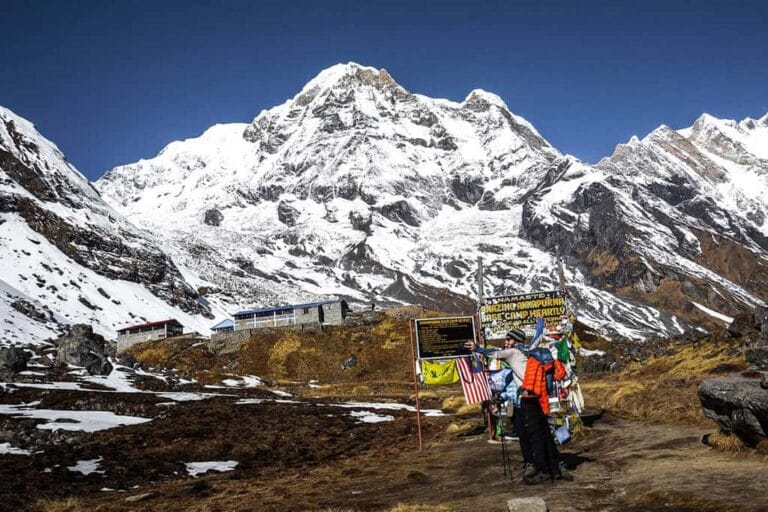

The best time to trek to Annapurna Base Camp is October to mid-November for the clearest views, or March to April for rhododendron forests and milder nights. Both seasons usually bring dry trails and daytime temperatures at Annapurna Base Camp (4,130 m) of roughly 8–14°C, with nights at or below freezing.
December to February is quieter and often clear but cold, with snow and avalanche risk higher up. June to September is the monsoon: green, wet, leech-prone and often cloudy. Below is a month-by-month guide to the weather, temperatures, crowds and risks, so you can pick the right dates for you. For the full route overview, start with our Annapurna Base Camp trek guide.
Quick answer: Annapurna Base Camp weather by season
| Season | Months | ABC day / night (typical) | Main appeal | Main compromise |
|---|---|---|---|---|
| Autumn | Late Sep–Nov | 8–15°C / -6 to 3°C | Clearest skies, dry trails, settled weather | Busiest lodges, especially in October |
| Winter | Dec–Feb | 0–7°C / -9 to -15°C | Quiet trails, often crisp, clear mornings | Cold nights, snow above Deurali, avalanche risk |
| Spring | Mar–May | 4–16°C / -10 to 0°C | Rhododendrons, longer days, warmer nights by April | More afternoon cloud and haze; early-March snow |
| Monsoon | Jun–mid Sep | 12–17°C / 2–7°C | Green valleys, waterfalls, few trekkers | Daily rain, leeches, landslides, cloud-hidden peaks |
A note on temperatures: there is no public long-term weather station at Annapurna Base Camp. The figures in this guide are typical ranges compiled from trekking-operator reports and the normal drop of roughly 6–7°C per 1,000 m of altitude. They are not station data or a forecast. Wind, cloud and a single storm can push any day well outside these ranges, so check a mountain forecast for the summit elevations a few days before you go.
Key facts that shape ABC weather
- Altitude range: the trek runs from about 1,000–1,100 m at the trailheads to 4,130 m (13,550 ft) at Annapurna Base Camp, so you walk through subtropical, temperate and alpine zones in a few days.
- Pokhara is one of Nepal’s wettest places: it averages roughly 3,900 mm of rain a year, and July alone can bring more than 900 mm. The Modi Khola valley that leads to ABC catches the same monsoon flow.
- The monsoon calendar: Nepal’s Department of Hydrology and Meteorology gives a normal monsoon onset of 13 June and withdrawal of 2 October. In recent years both dates have shifted by a week or more, which is a reminder that the edges of the season move.
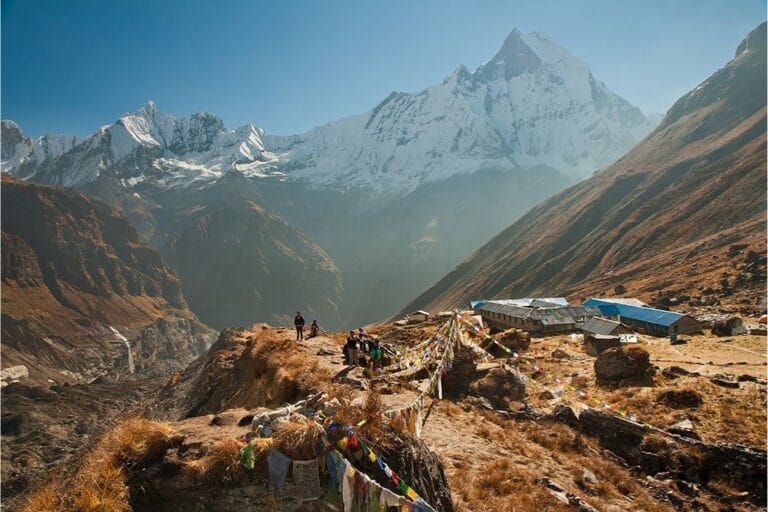
- The sanctuary effect: ABC sits in a natural amphitheatre ringed by Annapurna I (8,091 m), Annapurna South, Hiunchuli, Gangapurna and Machhapuchhre (6,993 m). Cloud often builds in the gorge by late morning, so the best views are usually at dawn.
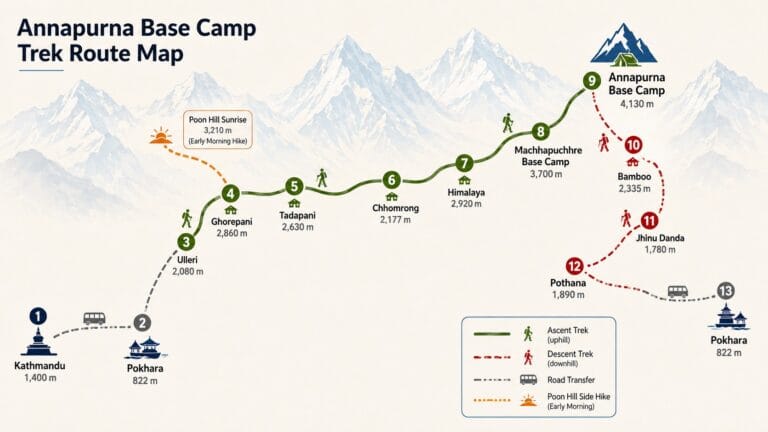
- Avalanche zone: the stretch between Himalaya, Deurali and Machhapuchhre Base Camp (MBC) runs beneath steep gullies. It is the part of the trek most affected by heavy snow in winter and early spring.
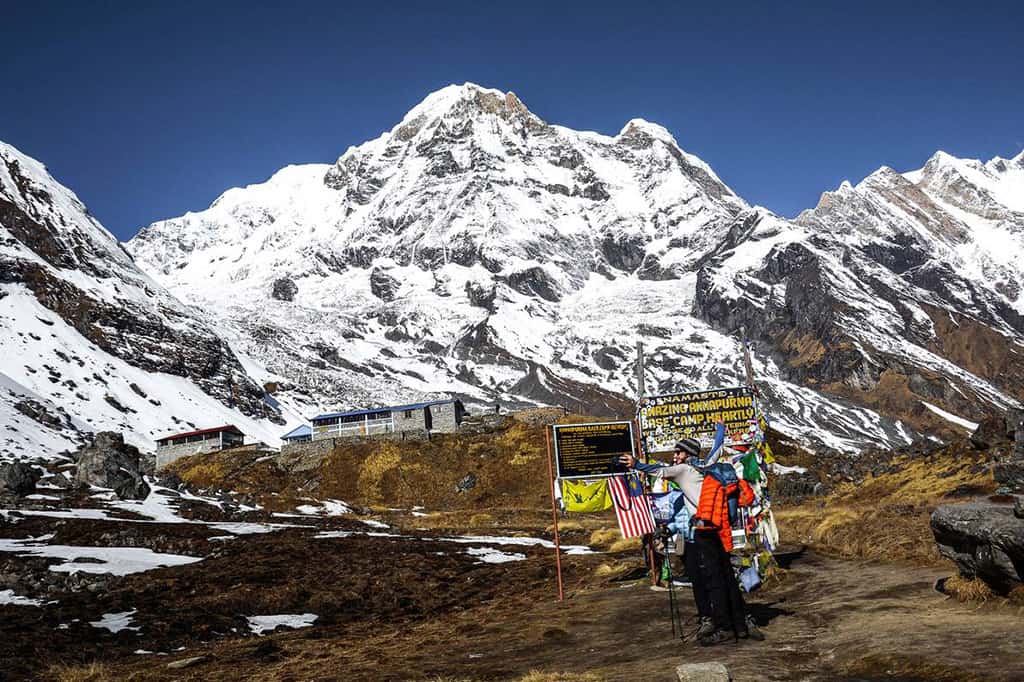
Annapurna Base Camp temperature and weather month by month
This table compares typical conditions at ABC (4,130 m) with Chhomrong (about 2,170 m), the large Gurung village where most itineraries spend a night on the way up and down. Expect lodges in Deurali and MBC to sit between the two.
| Month | ABC day / night | Chhomrong day / night | Rain | Crowds | Views | Avalanche risk (Deurali–MBC) | Rhododendrons |
|---|---|---|---|---|---|---|---|
| January | 0–6°C / -10 to -15°C | 9–15°C / 0–4°C | Very low; snow possible | Very quiet | Often clear | Elevated after snowfall | No |
| February | 1–7°C / -9 to -14°C | 10–16°C / 1–5°C | Low; snow spells | Quiet | Often clear | Highest after heavy snow | First blooms at low level late in month |
| March | 4–10°C / -6 to -10°C | 14–20°C / 5–8°C | Low; occasional storms | Building | Good, more haze later | Elevated early in month | Starting, best low down |
| April | 8–14°C / -3 to -6°C | 17–23°C / 8–11°C | Low to moderate; afternoon showers | Busy | Good mornings, afternoon cloud | Low to moderate | Peak in the forests |
| May | 10–16°C / -3 to 0°C | 19–25°C / 12–14°C | Rising; pre-monsoon storms | Moderate | Hazier, more cloud | Low | Fading, higher blooms |
| June | 12–17°C / 2–5°C | 20–25°C / 15–17°C | High from mid-month | Very quiet | Mostly hidden | Low (landslides instead) | No |
| July | 12–17°C / 4–7°C | 20–25°C / 16–18°C | Very high | Very quiet | Brief early breaks | Low (landslides instead) | No |
| August | 12–17°C / 4–7°C | 20–25°C / 16–18°C | Very high | Very quiet | Brief early breaks | Low (landslides instead) | No |
| September | 10–15°C / 0–3°C | 19–24°C / 13–15°C | High early, easing late | Building late | Improving late | Low | No |
| October | 8–13°C / -3 to -6°C | 17–22°C / 9–12°C | Low (risk of late monsoon early on) | Peak | Excellent | Low | No |
| November | 4–9°C / -6 to -10°C | 13–18°C / 5–8°C | Very low | Busy early, easing | Excellent | Low | No |
| December | 0–6°C / -9 to -14°C | 10–15°C / 1–5°C | Very low; occasional snow | Quiet | Often clear | Rising after snowfall | No |
Two things the table cannot show. First, wind chill at ABC can make a -5°C night feel far colder, especially in the dining room before the stove is lit. Second, lodges at MBC and ABC are unheated apart from communal stoves, so the night-time figure is close to what your bedroom will feel like.
Autumn: September to November (the classic season)
Autumn is the most popular time to trek to Annapurna Base Camp because the monsoon has washed the air clean and the weather is usually settled. If you want the best chance of sharp views of Annapurna I and Machhapuchhre at sunrise, this is the season to aim for.
September: the monsoon’s tail
Early September is still wet in the Modi Khola valley, with cloud, leeches and the chance of landslides on the lower trail and roads. Conditions usually improve in the second half of the month. A late-September start can work well for travellers who want quieter lodges and accept a few wet days. Our guide on protecting yourself from leeches is worth reading for this month.
October: the peak month
October is the strongest all-round month for ABC: dry trails, comfortable walking temperatures and the highest odds of clear skies. The trade-off is crowds. Lodges at MBC and ABC have limited rooms, and during the Dashain and Tihar festival period domestic travel is also busy. Book early and expect to share rooms or dining space.
Do not assume the first week is guaranteed dry. The monsoon has withdrawn later than its 2 October normal in several recent years, and late-season downpours have caused serious floods and landslides in parts of Nepal in early October. Build a spare day into your plans if you are travelling in early October.
November: clear and cold
November often has the most stable skies of the year, and numbers fall after the first two weeks. Nights at ABC regularly drop to -6°C or lower, and days are shorter, so you start earlier and finish earlier. For many trekkers, the first half of November is the best balance of views, temperature and space.
Spring: March to May (rhododendron season)
Spring is the second main season. Temperatures rise steadily, days lengthen and the lower forests turn red, pink and white with rhododendron, Nepal’s national flower. Mornings are often clear, but cloud and haze build more often in the afternoon than in autumn.
March: snow higher up, blooms lower down
Early March can still bring snow above Deurali, with colder nights and some avalanche risk on the Deurali–MBC section after heavy falls. By late March, the forests around Ghorepani, Ulleri and the Bamboo–Dovan section are coming into flower.
April: the spring sweet spot
April is the best month for rhododendrons and gives warmer nights than autumn. It is busy, though usually a little less crowded than October. Expect occasional afternoon showers or hail; a light waterproof should always be in your daypack. If you add Poon Hill to your route, the ridge forests on that section are at their best this month.
May: warmer, hazier, quieter
May brings the warmest trekking temperatures and fewer people, but also more haze, pre-monsoon thunderstorms and humidity lower down. Views are still possible early in the day. Late May can feel like the start of the monsoon, especially in years with an early onset.
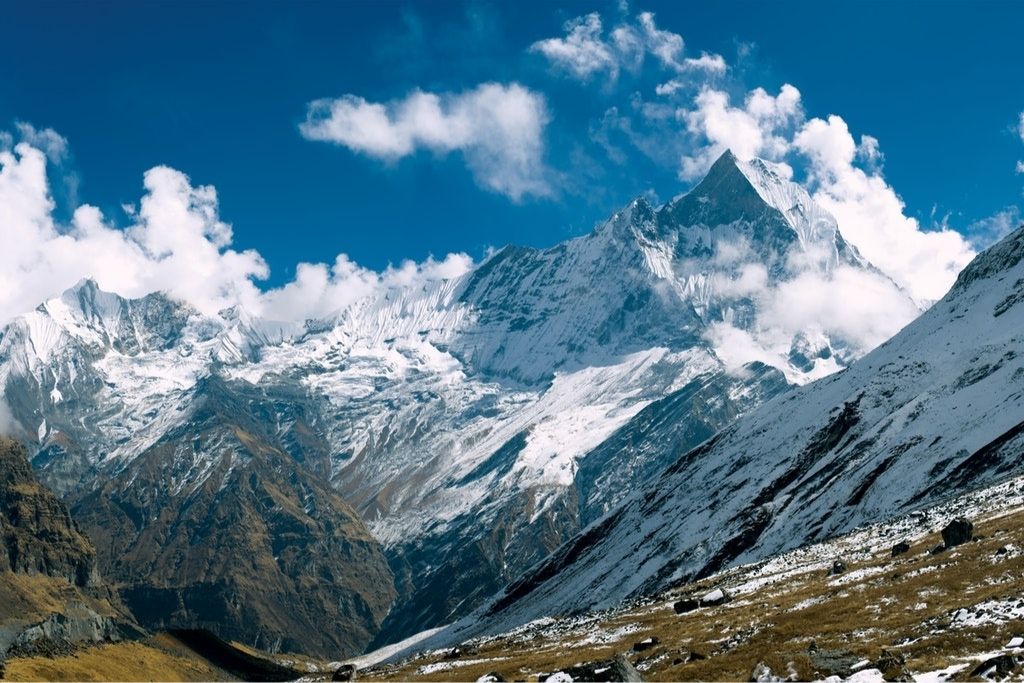
Annapurna Base Camp in winter: December to February
Trekking to ABC in winter is possible and rewarding if you are prepared for the cold. Trails are quiet, skies are often clear after a cold front, and lower villages such as Chhomrong and Ghandruk are pleasant in the daytime sun.
ABC in December
December is often dry and clear, with short days and cold nights. It is a good option for travellers who dislike crowds and own a warm sleeping bag. Snow on the trail beyond MBC becomes more likely as the month goes on.
ABC in January and February
January and February are the coldest months, with night-time temperatures at ABC typically between -10°C and -15°C and sometimes lower. Snowfall can bury the trail above Deurali, and lodges at MBC and ABC may close temporarily after heavy falls. The gorge between Himalaya, Deurali and MBC is the main avalanche zone of the trek.
This risk is real. On 17 January 2020, an avalanche between Himalaya and Deurali, at about 3,200 m, swept away four South Korean trekkers and three Nepali staff. Some bodies were not recovered until months later. Since then, local authorities and lodge owners have sometimes closed the trail after heavy snow. In winter, trek with a licensed guide, follow local advice and be ready to wait or turn back.
What winter trekking requires
- A sleeping bag rated to around -15°C (comfort) or a liner to add warmth to a rented one.
- A down jacket, warm hat, insulated gloves and spare dry layers.
- Microspikes for icy sections, particularly between MBC and ABC.
- Flexibility: at least one spare day in case of snow closures.
Annapurna Base Camp in the monsoon: June to August
The monsoon is the least popular time to trek to ABC, and for good reasons. Rain is frequent and often heavy, the stone steps become slippery, leeches are common in the forests below Deurali, and landslides can block roads to the trailhead. Cloud hides the big peaks for days at a time.
That said, some trekkers enjoy it. The valleys are intensely green, waterfalls are at full force and lodges are almost empty. Early mornings sometimes give brief clear windows. If monsoon dates are your only option, consider whether a rain-shadow trek such as Upper Mustang suits you better. If you do go to ABC, allow extra days, carry a proper waterproof and pack cover, and make sure your travel insurance covers trekking to 4,130 m and helicopter evacuation.
Choose your dates around your priorities
| Your priority | Best months | What to check |
|---|---|---|
| Clearest mountain views and photography | October to mid-November | Lodge availability; book early |
| Rhododendron forests | Late March to April | Afternoon cloud; add Poon Hill for the best forests |
| Fewer people | December, late May, late September | Cold (Dec), haze (May), lingering rain (Sep) |
| Warmest nights for a first trek | April to May | Pre-monsoon storms in May |
| Snowy scenery | January to February | Avalanche advisories and trail closures |
| Budget and flexibility | Shoulder months | Weather risk can cost extra days |
If you are still deciding between this trek and Nepal’s other headline route, our comparison of Annapurna Base Camp vs Everest Base Camp covers seasons side by side, and our guide to the best time to trek Everest Base Camp explains how the Khumbu differs.
How the season changes your itinerary and kit
The time of year affects more than what you pack. In peak months, the main challenge is getting a bed at MBC or ABC; in winter, it is cold and snow; in the monsoon, it is rain, mud and road access. A typical itinerary of 7–12 days from Pokhara allows a buffer day in most seasons. See our sample Annapurna Base Camp itineraries for options with and without Poon Hill.
- All seasons: a warm layer for evenings, sun protection, a headtorch and water treatment.
- Autumn and spring: a sleeping bag rated to about -10°C, a light down jacket and a waterproof shell.
- Winter: warmer sleeping bag, microspikes, extra gloves and hand warmers.
- Monsoon: waterproof jacket and trousers, pack liner, quick-dry clothing, leech socks or salt.
Our free trek packing checklist covers the essentials. Season also nudges costs: lodge prices are fairly stable year-round, but flights and Pokhara hotels can rise in peak weeks. See our Annapurna Base Camp trek cost breakdown for current permit fees and daily budgets.
Does the season change how hard ABC feels?
Yes. The route and altitude stay the same, but conditions change the effort. Wet stone steps in the monsoon are slower and more tiring, snow above Deurali makes the final climb harder, and cold nights in winter affect sleep and recovery. Altitude sickness is possible in any month: choosing a good season does not reduce the effect of altitude. Read our guide to Annapurna Base Camp trek difficulty to see which days are hardest, and our safety tips for trekking in Nepal.
What to check before booking
- Your full date range. A trek that starts in late September may finish in October; check conditions for every day, not just the start.
- Festival dates. Dashain and Tihar move each year with the lunar calendar and affect transport and lodge demand.
- Buffer days. Allow at least one spare day in Pokhara for weather, road closures or slow progress.
- Guide requirement. Since April 2023, foreign trekkers in the Annapurna region are required to trek with a licensed guide arranged through a registered agency.
- Insurance. Confirm cover to at least 4,130 m, including helicopter rescue.
Our 15-day Annapurna Base Camp trek runs via Poon Hill with a licensed guide, and our team can advise which departure suits your priorities.
Frequently asked questions
What is the best month to trek Annapurna Base Camp?
October is the best all-round month, with dry trails and the clearest views, but it is also the busiest. The first half of November and April are excellent alternatives: November for stable skies, April for rhododendrons and warmer nights.
How cold is Annapurna Base Camp at night?
In the main seasons, nights at ABC are typically between about -3°C and -10°C. In January and February they often fall to between -10°C and -15°C, and occasionally lower. In the monsoon, nights are usually just above freezing. These are typical ranges, not station data.
Can you trek to Annapurna Base Camp in December or January?
Yes. Many trekkers reach ABC in December and January, when trails are quiet and skies are often clear. You need a warm sleeping bag, microspikes and flexibility, because heavy snow can close the trail between Deurali and MBC for days because of avalanche risk.
Is it worth trekking to Annapurna Base Camp in the monsoon?
It is possible but not ideal. Expect daily rain, leeches, slippery steps, landslide disruption and cloudy views. If you only have June to August free and want big mountain views, consider a rain-shadow trek such as Upper Mustang, or accept that ABC views will be a matter of luck.
When do the rhododendrons bloom on the ABC trek?
Rhododendrons usually bloom from late March to April, starting in the lower forests and moving higher as the season progresses. The forests around Ghorepani and Poon Hill, and between Sinuwa and Dovan, are among the best places to see them.
Is there snow at Annapurna Base Camp?
Snow is possible at ABC in any month, but it is most common from December to March. In autumn, the base camp is often dry underfoot with snow on the surrounding peaks. After heavy winter falls, the trail above Deurali can be deep in snow.
Is April or October better for Annapurna Base Camp?
October usually gives clearer, more reliable views; April gives warmer nights, longer days and flowering forests but more afternoon cloud. Both are good choices for a first high-altitude trek. Choose October for photography, April for flowers and comfort.
Is there avalanche risk on the Annapurna Base Camp trek?
Yes, mainly in winter and early spring on the section between Himalaya, Deurali and Machhapuchhre Base Camp, which lies below steep gullies. A January 2020 avalanche there killed seven people. Trek with a licensed guide, follow lodge and local advice, and do not pass through after heavy snowfall.