

Last checked 25 November 2026. Fees, rates and rules change; confirm current prices with your agency before you pay.
The Annapurna Circuit trek costs most UK trekkers roughly £850–£1,450 per person on the trail for 12 to 14 days with a licensed guide, before flights to Nepal, a visa and insurance. A local agency package usually falls around £675–£1,450, and an international operator’s group trip starts at about £1,150. The two biggest lines are your guide (and porter, if you take one) and your teahouse food, both charged by the day.
This guide breaks the Annapurna Circuit cost down line by line, in pounds: the permits you must pay, what guides and porters charge, teahouse and food prices as you climb, transport at each end, tips, and the money that goes on before you leave the UK. It finishes with two worked budgets and a cash plan.
For the route itself, day by day, see our Annapurna Circuit trek guide.
Annapurna Circuit trek cost at a glance
| Cost item | Typical 2026/27 price | Approx. GBP |
|---|---|---|
| ACAP permit (foreign nationals) | NPR 3,000 | £15 |
| TIMS card (issued through your agency) | NPR 1,000–2,000 | £5–10 |
| Licensed guide | US$25–35 per day | £19–26 per day |
| Porter (optional) | US$15–25 per day | £11–19 per day |
| Teahouse room | US$3–10 per night, more for an upgraded room | £2–8 |
| Food and hot drinks | US$20–40 per day, rising with altitude | £15–30 per day |
| Kathmandu to Besisahar (bus) | US$5–15 | £4–11 |
| Jomsom to Pokhara | bus US$12–20 / flight US$100–150 | £9–15 / £75–113 |
| Tips | roughly US$8–12 a day (guide), US$5–8 (porter) | £6–9 / £4–6 per day |
| Nepal tourist visa (30 days) | US$50 | £38 |
Permit and visa figures are official. Guide, porter, lodge, food, transport and tip figures are ranges published by Nepali trekking agencies in 2025–26; they move with the season and the agency, so treat them as a guide to budgeting, not a quote. We convert at roughly NPR 200 and US$1.33 to £1, close to the Nepal Rastra Bank rates in November 2026 (about NPR 202–203 to the pound).
What drives the Annapurna Circuit cost
Days are the single biggest lever. Your guide, porter, room and food are all paid per day, so a 16-day circuit costs about a seventh more on the trail than a 14-day one. Do not cut acclimatisation days to save money; on this route they are what get you over the pass.
Four other things move your total:
- Whether you take a porter. A porter adds about a fifth to a quarter to the trail budget for one trekker, less if two of you share one.
- How you leave the mountains. The bus from Jomsom to Pokhara is cheap and long; the flight costs several times more and can be cancelled by wind.
- Altitude. Everything above the road head is carried up, so a plate of dal bhat costs noticeably more at Thorong Phedi than in the lower valley.
- Small daily extras. Hot showers, phone charging, wifi, bottled water, snacks and beer are usually charged separately in teahouses, and they add up over two weeks.
Permit costs: ACAP and TIMS
The circuit sits inside the Annapurna Conservation Area, run by the National Trust for Nature Conservation (NTNC). Every foreign trekker needs two payments.
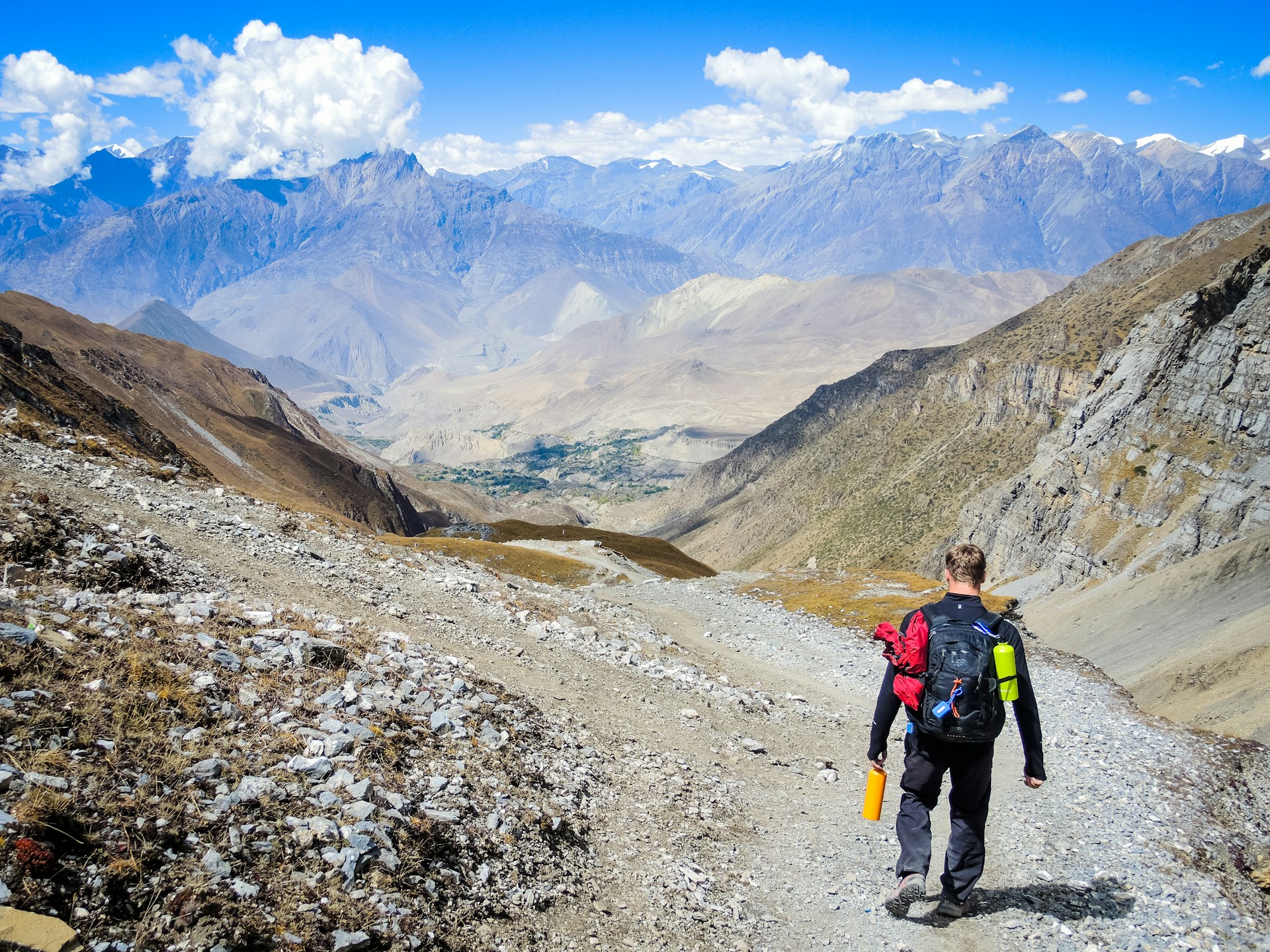
ACAP entry permit: NPR 3,000 (about £15) for foreign nationals, NPR 1,000 for SAARC nationals. That is the figure on the NTNC’s own online permit site, tax included. Children under 10 do not need one. Three details catch people out:
- Buying at a checkpoint costs double. Get it in Kathmandu, in Pokhara or online before you start.
- Paying online adds a 2.9% card charge. Paying at the counter does not.
- One government page still shows an older figure. The Nepal Tourism Board’s Annapurna page lists NPR 2,000; the NTNC permit site and recent press reports both give NPR 3,000. Budget for NPR 3,000.
TIMS card: NPR 1,000–2,000 (about £5–10). The Nepal Tourism Board’s fee table lists NPR 1,000 for group trekkers and NPR 2,000 for free individual trekkers, per route. Because you must trek with a guide booked through an agency, the agency normally arranges the card for you. Ask which rate it is charging you.
Nar Phu side trek: a restricted area permit on top. If you add the Nar Phu valley, you need a special permit from the Department of Immigration, arranged by an agency. The Himalayan Times reported in October 2026 that the seven-day permit costs US$100 per person. Confirm the current rate with your agency before you commit.
Our guide to Thorong La Pass explains what crossing day involves, including the permit and guide rules.
Guide and porter costs
You need to budget for a licensed guide. From 1 April 2023, the Nepal Tourism Board stopped foreign trekkers walking in national parks and conservation areas without a guide or porter, naming the Annapurna trails among them. The fine set out at the time was NPR 12,000. The UK government’s Nepal travel advice, updated in October 2026, still says independent trekkers must use a local guide or porter in protected areas.
That makes the guide the largest single line in most budgets:
- Licensed guide: about US$25–35 a day (£19–26). This usually covers the guide’s own food, room and insurance. Rates at the top of the range tend to come with more experience or a second language.
- Porter: about US$15–25 a day (£11–19). A porter typically carries up to about 20 kg. Two trekkers often share one, which halves the cost each.
- Porter-guide: in between. Some agencies offer one person who carries a lighter load and guides. It can be good value for a fit pair who pack light.
Over 14 trail days, a guide alone comes to roughly £265–£370, and a porter adds roughly £155–£265.
Check what the daily rate includes. Ask whether it covers the guide’s transport to the trailhead and back, and whether the agency adds a fee for arranging the guide and TIMS card. Those two lines are where quotes differ most.
Teahouse accommodation and food costs
Rooms are cheap; food is where the trail money goes. Basic twin rooms in teahouses on the circuit commonly cost US$3–10 a night, and some lodges charge very little for the room if you eat your evening meal and breakfast there. Upgraded rooms with an attached bathroom, where they exist lower down, cost more.
Food and hot drinks typically run to US$20–40 (£15–30) a day per person. One UK operator put dal bhat at about £3.50 low on the route rising to about £6 higher up. Dal bhat is usually the best value on the menu because refills are normally included.
Prices climb in two steps:
- Besisahar to Chame. The lower valley is the cheapest stretch, with jeep-road villages and plenty of lodges.
- Pisang, Manang and above. Prices rise as you climb, and the highest lodges before the pass, at Yak Kharka, Letdar and Thorong Phedi, are the most expensive of the trek.
On the far side, prices ease again from Muktinath down to Jomsom and Marpha. Our Manang village guide covers lodges and facilities at the main acclimatisation stop.
Budget for the extras separately. Allow about US$5–10 (£4–8) a day for hot showers, charging, wifi, water refills and snacks. Treating your own water instead of buying bottles saves money and plastic.
Transport costs: getting to and from the trail
Most circuit trips start by road from Kathmandu and finish at Jomsom, with a bus or flight to Pokhara.
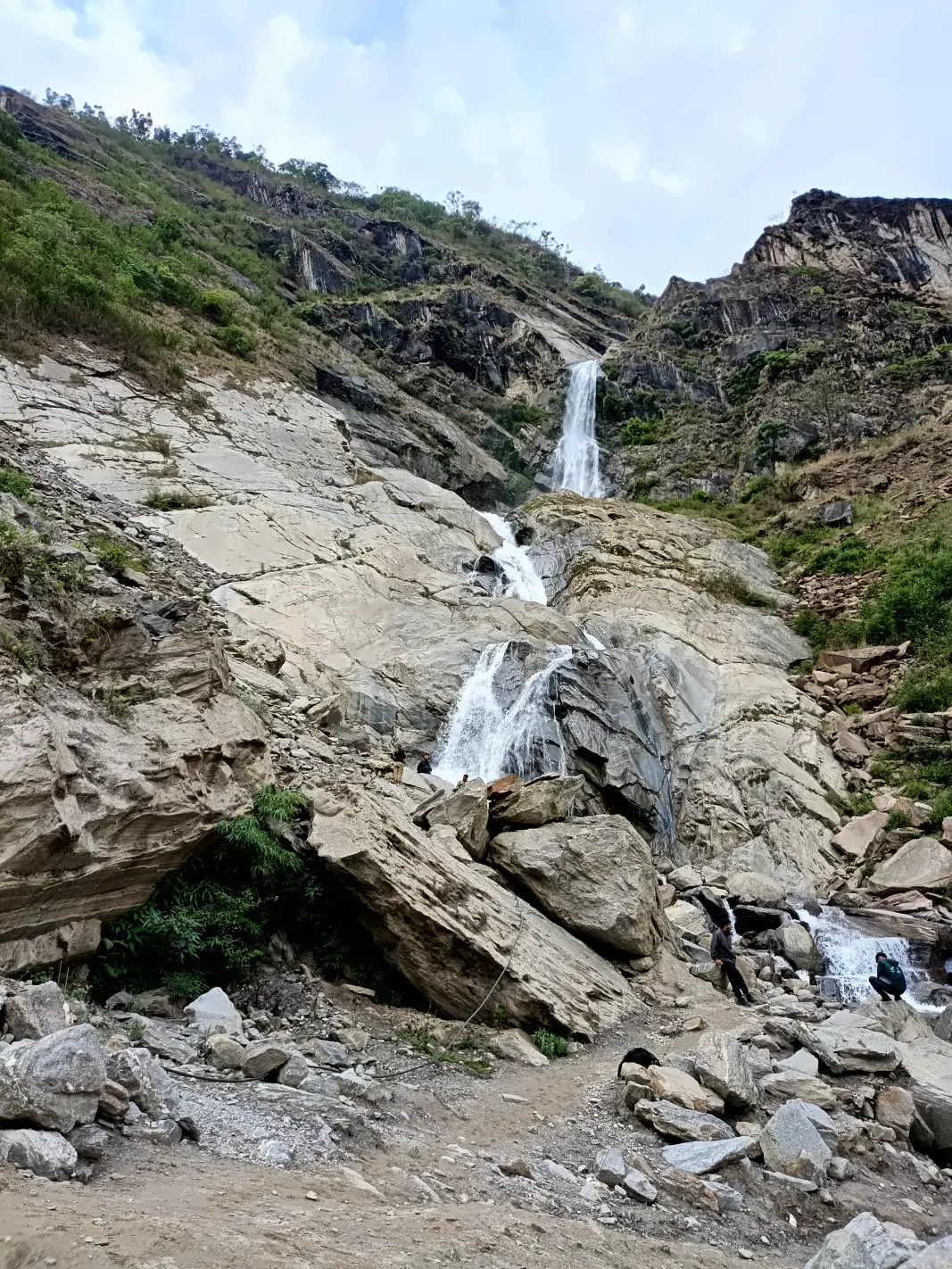
Getting in. A local bus or microbus from Kathmandu to Besisahar is the cheapest start, at roughly US$5–15 (£4–11) and most of a day. Many trekkers carry on by shared jeep towards Chame to skip the road walking in the lower valley; that adds a shared fare or, by private jeep, a much larger one split between the group.
Getting out. From Jomsom you have two choices:
- Bus or shared jeep to Pokhara: roughly US$12–20 (£9–15). It is a long, rough day on the Kali Gandaki road.
- Flight to Pokhara: roughly US$100–150 (£75–113) one way, about 20 minutes. Flights can be delayed or cancelled by wind and cloud, so keep a spare day.
Back to Kathmandu. The tourist bus from Pokhara is the cheap option; a flight costs more but saves most of a day. Our Kathmandu to Pokhara guide compares the bus, car and flight.
Costs before you leave the UK
Three costs fall outside the trek itself but belong in your budget.
Nepal visa: US$50 (about £38) for 30 days. Tourist visas cost US$30 for 15 days, US$50 for 30 days and US$125 for 90 days. A 15-day visa is too tight for most circuit trips once Kathmandu days and travel are added. Our Nepal visa guide covers how to get one on arrival.
Trekking insurance: do not skip this line. The UK government advises that your policy should cover mountain rescue and helicopter costs, and notes that a helicopter evacuation in Nepal usually costs between £1,000 and £2,000 or more per flying hour. Make sure the policy covers trekking to at least 5,416 m, the height of Thorong La. Our guide to travel insurance for trekking explains what to check.
Flights and kit. Return flights from the UK to Kathmandu vary too much by date to quote. Kit is cheapest if you already own it; rental in Kathmandu or Pokhara works for items like a down jacket or sleeping bag. Our trek packing checklist lists what you need.
Tips for guides and porters
Tipping at the end of the trek is expected in Nepal and is a real part of your guide’s and porter’s income. Several agencies suggest roughly US$8–12 a day for a guide and US$5–8 a day for a porter, given at the end. For a 14-day trek that is about £85–£125 for a guide and £50–£85 for a porter per group. Put the tip in an envelope and hand it over directly.
Sample Annapurna Circuit budgets
Both examples assume one UK trekker, 14 days on the trail from Besisahar to Jomsom, and the price ranges above. They exclude international flights, insurance and the visa.
| Line | Lean, guide only | Comfortable, guide, porter and flight out |
|---|---|---|
| Permits (ACAP and TIMS) | £25 | £25 |
| Guide, 14 days | £315 | £315 |
| Porter, 14 days | — | £210 |
| Rooms and food, 14 days | £315 | £420 |
| Daily extras | £80 | £105 |
| Transport in and out | £40 | £125 |
| Tips | £105 | £165 |
| Total on the trail | about £880 | about £1,365 |
Two trekkers sharing one guide and one porter can bring the per-person figure down by roughly a quarter, because the staff lines are split. Adding Tilicho Lake adds two to three days of everything above.
Packages are the other route. Nepali agencies publish circuit packages from roughly US$900–1,400 (£675–£1,050), with standard packages up to about US$1,900 (£1,425). International operators selling to UK travellers start at about £1,150 for a group departure. Packages usually include permits, guide, transport and lodging, but check what is excluded: meals, porter, tips and the Jomsom flight are the common gaps.
How much cash to carry
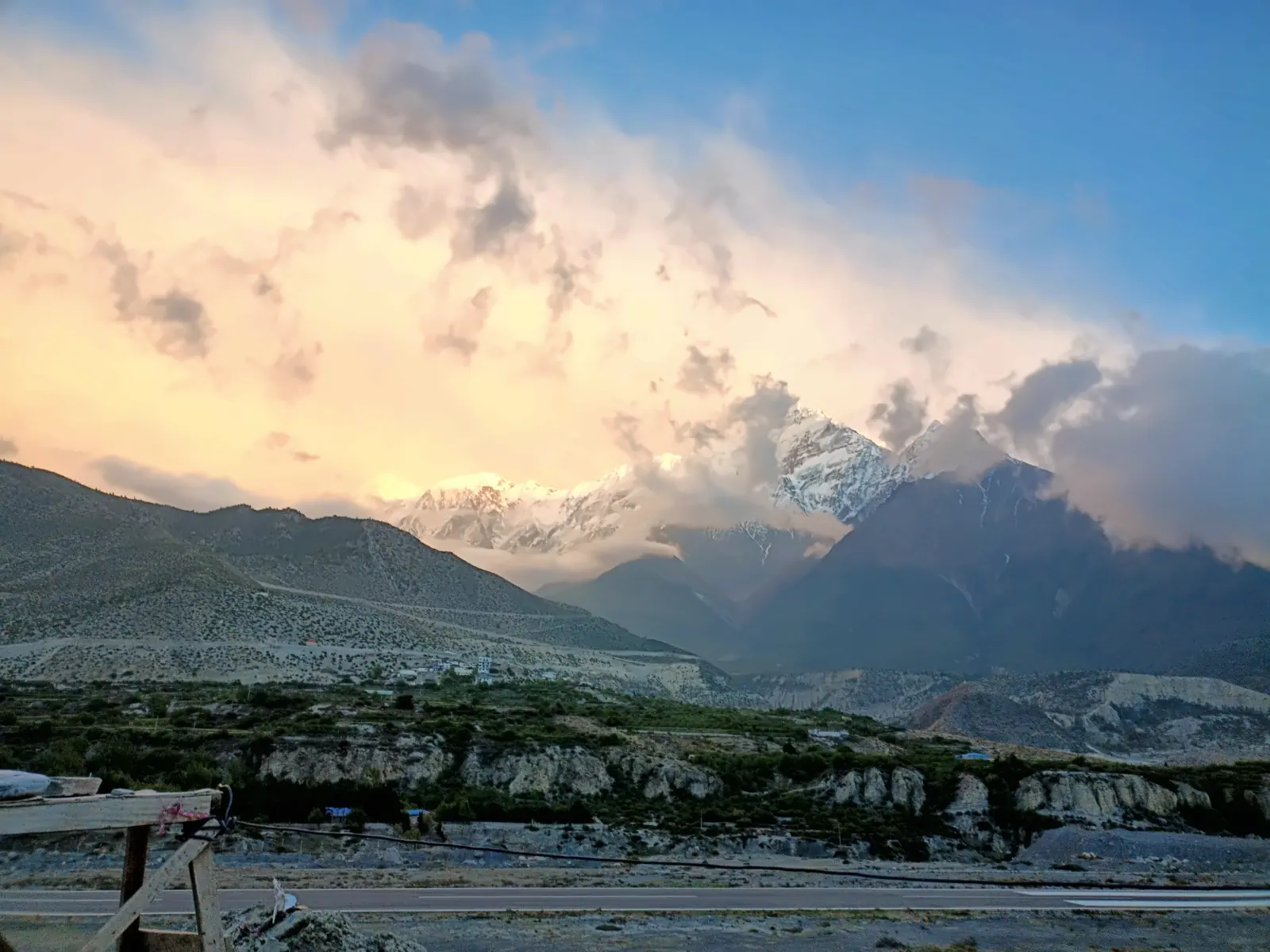
Plan to pay for almost everything on the trail in Nepali rupees, in cash. The UK government notes that ATMs are not reliable outside the main tourist centres and that cards are often not accepted in remote areas. ATMs on the route can run out of money or reject foreign cards, so do not rely on them.
A simple rule: withdraw your whole on-trail budget in Kathmandu or Pokhara, then add a reserve of about 20–30% for weather delays, an extra acclimatisation day or a forced change of plan. Split it between two places in your pack.
How to keep the cost down without cutting corners
- Share staff. A guide and porter shared between two or three trekkers is the biggest legitimate saving.
- Take the bus out. The Jomsom to Pokhara bus saves roughly £60–£100 against the flight, at the cost of a long day.
- Eat dal bhat and treat your water. Both cut the daily spend without affecting how well you walk.
- Buy your ACAP before the trail. Paying at a checkpoint doubles it.
- Be wary of very cheap deals. The UK government warns of rare cases where guides rush trekkers to altitude and then call expensive helicopter evacuations. A low price that cuts acclimatisation days is not a saving.
Is the Annapurna Circuit cheaper than Everest Base Camp?
Usually, yes. The circuit has no compulsory mountain flight at the start; you reach it by road. On Everest Base Camp most trekkers fly to Lukla, and that flight is a large fixed cost. The circuit is longer, though, so the per-day savings are partly eaten by extra days. For a like-for-like look at a shorter Annapurna trek, see our Annapurna Base Camp trek cost guide.
Plan your Annapurna Circuit trek
If you would like help planning a guided circuit, tell us your dates and how you like to travel on our Plan Your Trip page, and we will come back to you with options and a clear list of what is and is not included.
Frequently asked questions
How much does the Annapurna Circuit trek cost per person?
Most UK trekkers spend roughly £850–£1,450 on the trail for 12 to 14 days with a licensed guide. Add international flights, a US$50 visa and trekking insurance on top.
How much is the ACAP permit for the Annapurna Circuit?
NPR 3,000 (about £15) for foreign nationals and NPR 1,000 for SAARC nationals, according to the NTNC’s permit site. It costs double if you buy it at a checkpoint.
Do I still need a TIMS card in 2026?
Yes. The Nepal Tourism Board lists TIMS at NPR 1,000–2,000 per route, and the agency that books your guide normally arranges it.
Is it cheaper to arrange the trek yourself or book a package?
Hiring a guide through a local agency and paying lodges as you go is usually cheapest. A package costs more but fixes the price and the paperwork. Compare what each excludes before deciding.
Can I trek the Annapurna Circuit solo to save money?
Not legally without a guide or porter. Nepal’s 2023 rules require foreign trekkers in conservation areas, including Annapurna, to trek with one, and the UK government’s advice still says so.
Are there ATMs on the Annapurna Circuit?
There are some in the larger villages, but the UK government says ATMs are not reliable outside the main tourist centres. Carry your whole trail budget in cash.
How many days does the Annapurna Circuit take?
Most itineraries spend 12 to 16 days walking, depending on where you start and finish and whether you add Tilicho Lake. Our Annapurna Circuit trek guide has day-by-day options.