

A trip to Nepal costs roughly £20–30 a day as a backpacker, £40–75 a day mid-range and £110–225+ a day in comfort, before international flights. A typical 10–14 day trip, including a short trek or a few domestic flights, comes to about £650–1,500 per person on the ground, plus around £550–1,100 for return flights from the UK (more from the US or Australia). Guided treks such as Everest Base Camp sit on top of that, usually as a package.
This guide breaks down every cost you are likely to meet in 2026: visas, hotels, food, transport, entry fees, activities, trekking permits and staff wages. It also shows sample totals and explains how Nepal tour packages compare with doing it yourself. Prices are given in Nepali rupees (NPR) with approximate pounds, using NPR 200 ≈ £1 and US$1 ≈ £0.75. Treat them as planning figures; prices move with season, exchange rates and fuel costs.
Nepal trip cost at a glance
| Cost item | Typical price | Approx. GBP |
|---|---|---|
| Tourist visa on arrival (15 / 30 / 90 days) | US$30 / US$50 / US$125 | £23 / £38 / £94 |
| Dorm bed or basic guesthouse room | NPR 700–2,500 a night | £4–13 |
| Mid-range hotel (double room) | NPR 5,000–12,000 a night | £25–60 |
| Dal bhat in a local restaurant | NPR 300–600 | £1.50–3 |
| Meal in a tourist restaurant (Thamel, Lakeside) | NPR 900–2,000 before tax and service | £4.50–10 |
| Tourist bus, Kathmandu to Pokhara | NPR 2,000–3,500 | £10–18 |
| Flight, Kathmandu to Pokhara (one way, foreigner fare) | US$90–145 | £68–110 |
| Kathmandu Durbar Square entry | NPR 1,000 | £5 |
| Chitwan National Park entry | NPR 2,000 per person | £10 |
| Tandem paragliding, Pokhara | NPR 8,000–12,000 | £40–60 |
| Licensed trekking guide | US$25–40 a day | £19–30 |
| Porter | US$15–30 a day | £11–23 |
| Return flights to Kathmandu from the UK | Roughly £550–1,100 | £550–1,100 |

Is Nepal expensive?
For most visitors from the UK, Europe, North America and Australia, no. Day-to-day costs such as local food, buses, guesthouses and taxis are low by Western standards, and a careful traveller can live comfortably on £25–30 a day in Kathmandu or Pokhara.
What makes a Nepal trip add up is the big-ticket items: international flights, domestic mountain flights (charged at a higher foreigner rate), trekking permits, guides and porters, and comfortable hotels. Prices also rise sharply as you climb. A plate of dal bhat that costs NPR 400 in Kathmandu can cost NPR 1,000–1,500 at a high teahouse, because everything is carried up by porter or pack animal.
Tourist-area restaurants and hotels commonly add a 10% service charge and 13% VAT to the menu price, so a bill can be around 24% higher than the figures on the menu. Check whether prices are listed “inclusive” or “plus taxes”.
Daily budget: backpacker, mid-range and comfort
The figures below are per person per day for time spent in Kathmandu, Pokhara and Chitwan, assuming two people share a room. They exclude international flights, the visa and trekking costs, which are covered separately.
| Per day | Backpacker | Mid-range | Comfort |
|---|---|---|---|
| Accommodation (per person, sharing) | NPR 500–1,500 (£2.50–7.50) | NPR 2,500–6,000 (£13–30) | NPR 8,000–25,000+ (£40–125+) |
| Food and drink | NPR 1,200–2,000 (£6–10) | NPR 2,500–5,000 (£13–25) | NPR 5,000–10,000 (£25–50) |
| Local transport | NPR 300–800 (£1.50–4) | NPR 1,000–2,500 (£5–13) | NPR 3,000–8,000 (£15–40, private car and driver) |
| Sights and activities (averaged) | NPR 500–1,000 (£2.50–5) | NPR 1,500–3,000 (£8–15) | NPR 3,000–8,000 (£15–40) |
| Extras (SIM, laundry, snacks) | NPR 300–500 (£1.50–2.50) | NPR 500–1,000 (£2.50–5) | NPR 1,000–2,000 (£5–10) |
| Daily total | about £20–30 | about £40–75 | about £110–225+ |
Solo travellers pay more for rooms, often 60–100% of the double-room price. Peak season (October–November and March–April) pushes hotel rates up; the monsoon months bring discounts but more travel disruption. Our guide to the best season to travel in Nepal explains the trade-offs.
Accommodation costs
Nepal has a wide range of places to stay, and accommodation is the single biggest lever on your daily budget.
- Hostels and dorms: from about NPR 700–1,500 (£4–8) a night in Thamel and Lakeside Pokhara.
- Budget guesthouses: NPR 1,500–3,500 (£8–18) for a private double, usually with hot water and Wi-Fi.
- Mid-range and boutique hotels: NPR 5,000–12,000 (£25–60) for a double, often in restored Newari buildings or with breakfast included.
- Upper-range and international-brand hotels: NPR 15,000–40,000+ (£75–200+) a night in Kathmandu, with lake-view resorts in Pokhara and safari lodges in Chitwan at similar levels.
Booking-site averages for Thamel sat at around £20–25 a night in 2026, which shows how much choice exists below the international chains. On a trek, teahouse rooms are cheap (often NPR 750–4,500, or £4–23) but meals are where the money goes; see the trekking section below.
Food and drink costs
Eating like a local is one of the best ways to keep costs down, and it is also some of the best food you will have in Nepal.
| Item | Local eatery | Tourist restaurant |
|---|---|---|
| Dal bhat (refills usually included) | NPR 300–600 (£1.50–3) | NPR 700–1,200 (£3.50–6) |
| Plate of momos | NPR 150–300 (£0.75–1.50) | NPR 400–700 (£2–3.50) |
| Western main course (pizza, burger, pasta) | – | NPR 800–1,800 (£4–9) |
| Milk tea / espresso coffee | NPR 30–80 / – | NPR 150–250 / NPR 250–450 |
| Large local beer | NPR 500–700 (£2.50–3.50) | NPR 700–1,000 (£3.50–5) |
Tap water is not safe to drink. Refill stations and filtered water in hotels are cheap and cut plastic waste; a purifying bottle or tablets pay for themselves on a trek, where boiled water costs NPR 100–300 a litre.
Local transport costs

Roads in Nepal are slow and journeys take longer than distances suggest. Budget money, and time, accordingly.
| Journey | Option | Typical cost (one way) | Time |
|---|---|---|---|
| Kathmandu airport to Thamel | Taxi or ride-hailing app | NPR 700–1,000 (£3.50–5) | 20–45 min |
| Around Kathmandu | Taxi / ride-hailing (Pathao, inDrive) | NPR 200–800 (£1–4) | Traffic-dependent |
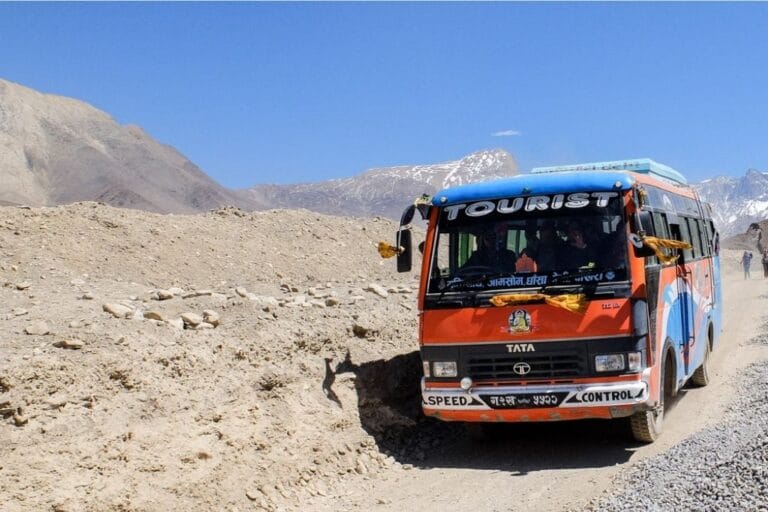
| Kathmandu to Pokhara | Tourist bus | NPR 2,000–3,500 (£10–18) | 7–9 hours |
| Kathmandu to Pokhara | Private car or jeep (per vehicle) | US$120–200 (£90–150) | 6–8 hours |
| Kathmandu or Pokhara to Chitwan (Sauraha) | Tourist bus | NPR 1,500–3,000 (£8–15) | 5–7 hours |
| Pokhara to trailheads (Nayapul, Ghandruk area) | Shared / private jeep | US$5–30 / US$50–150 per vehicle | 1.5–3 hours |
Our Kathmandu to Pokhara guide compares the bus, car and flight in more detail.
Domestic flight costs
Domestic flights save long road days but are charged at foreigner fares in US dollars, typically several times the local price. These are typical one-way adult fares published in 2026; check with the airline or your operator before booking.
| Route | One-way fare (foreigner) | Approx. GBP |
|---|---|---|
| Kathmandu – Pokhara | US$90–145 | £68–110 |
| Kathmandu – Bharatpur (for Chitwan) | US$80–130 | £60–98 |
| Kathmandu – Lukla (for Everest) | US$188–257 | £140–195 |
| Everest mountain flight (return sightseeing flight from Kathmandu) | US$190–250 | £145–190 |
Mountain flights are often delayed or cancelled by weather, so leave a buffer day before your international flight home and keep some extra money for an unplanned night. The UK FCDO notes that no Nepali airline currently meets international safety standards for the UK Air Safety List, which bars them from flying to the UK; this does not stop you flying with them inside Nepal, but it is worth knowing.
Entry fees: Kathmandu, Pokhara and Chitwan
Entry fees for foreign visitors are modest but add up if you visit every heritage site. These are the foreigner rates reported in 2025–2026; SAARC nationals and Chinese visitors usually pay less, and children are often discounted or free.
Kathmandu Valley
| Site | Foreigner fee | Approx. GBP |
|---|---|---|
| Kathmandu Durbar Square | NPR 1,000 | £5 |
| Patan Durbar Square (includes Patan Museum) | NPR 1,000 | £5 |
| Bhaktapur Durbar Square (covers the old town) | NPR 2,000 / US$15 | £10–11 |
| Pashupatinath Temple | NPR 1,000–1,500 (sources differ) | £5–7.50 |
| Boudhanath Stupa | NPR 400 | £2 |
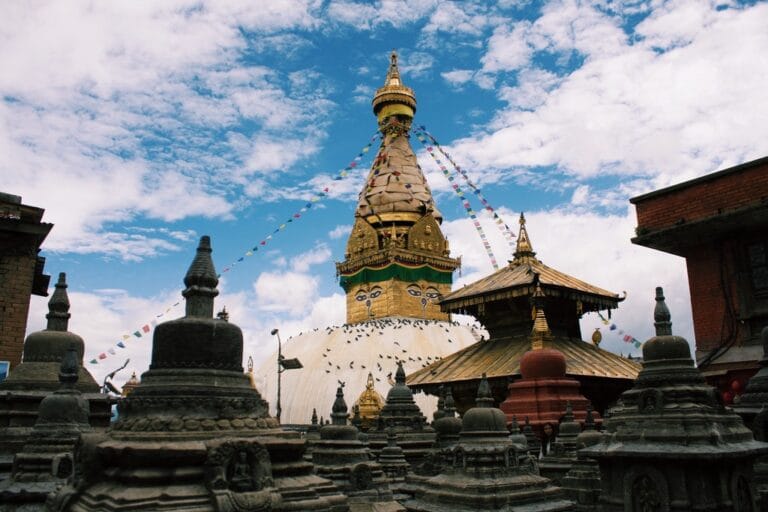
| Swayambhunath (Monkey Temple) | NPR 200 | £1 |
| Changu Narayan | NPR 400 | £2 |
Seeing all seven costs roughly NPR 6,000 (£30). Keep your Bhaktapur ticket: it is generally valid for several consecutive days if you show your passport.
Pokhara
Pokhara is cheap for sightseeing. The World Peace Pagoda is free; the International Mountain Museum is around NPR 500 (£2.50); Gupteshwor Mahadev Cave around NPR 200 (£1); and Devi’s Fall around NPR 100. Boat hire on Phewa Lake is usually NPR 700–1,500 (£3.50–7.50) an hour. See our Pokhara guide for what is worth your time.
Chitwan National Park
The park entry fee for foreigners is NPR 2,000 (£10) per person, paid at the park gate or through your lodge. It is generally charged per day you enter the park, and some lodges quote it with 13% VAT added. On top of this you pay for activities: canoe trips, guided jungle walks and jeep safaris typically run from about NPR 2,500 to NPR 8,000 (£13–40) per person depending on length and group size. Many visitors buy a two-night Chitwan package from a Sauraha lodge, which bundles room, meals, park fees and activities for roughly £80–200 per person.
Activity costs: paragliding, rafting and more

| Activity | Typical price | Approx. GBP | Notes |
|---|---|---|---|
| Tandem paragliding, Sarangkot (20–30 min) | NPR 8,000–12,000 | £40–60 | Photos/video usually NPR 1,500–2,500 extra |
| Long or “cross-country” paragliding flight (about 1 hour) | NPR 15,000–20,000 | £75–100 | Varies by operator |
| White-water rafting, Trishuli (day trip) | US$40–75 | £30–55 | Usually includes lunch, guide and transport |
| Everest mountain flight | US$190–250 | £145–190 | About an hour, early morning |
| Chitwan jeep safari (half day) | NPR 4,000–8,000 | £20–40 | Plus park entry |
| Cooking class or guided city walk | NPR 2,500–6,000 | £13–30 | Group or private |
Read more in our guides to paragliding in Nepal and rafting in Nepal. For safety-critical activities, do not choose purely on price: ask about equipment, guide qualifications and insurance.
Trekking costs
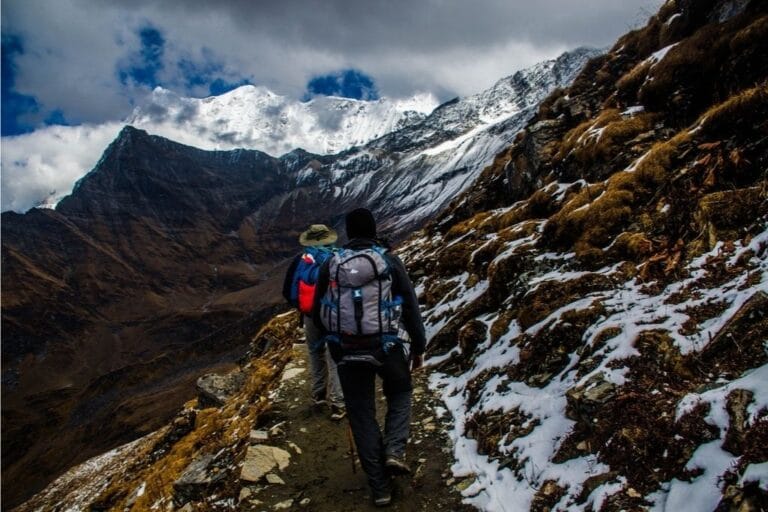
Trekking is the main reason many people visit Nepal, and it has its own cost structure: permits, a licensed guide (required in most areas), an optional porter, teahouse rooms and meals, and transport to the trailhead.
Permits
| Permit | Where | Foreigner fee |
|---|---|---|
| Annapurna Conservation Area Permit (ACAP) | ABC, Poon Hill, Annapurna Circuit, Mardi Himal | NPR 3,000 (£15) |
| Sagarmatha National Park permit | Everest region | NPR 3,000 (£15), with VAT sometimes added |
| Khumbu Pasang Lhamu Rural Municipality fee | Everest region | NPR 3,000 (£15) |
| Restricted area permits | Manaslu, Upper Mustang, Dolpo and others | From about US$75 a week to US$500 for 10 days in Upper Mustang |
The status of the TIMS card is inconsistent between sources: the UK FCDO still lists it as required for the main trekking regions, while several Nepali operators say it is no longer issued for the Annapurna region since the 2023 guide rule. If you book with an agency, it will arrange whatever is currently needed.
Guides and porters
Since 1 April 2023, foreign trekkers in most of Nepal’s protected trekking areas, including the Annapurna region, must trek with a licensed guide arranged through a registered agency. The Khumbu (Everest) local government did not adopt the rule, but a guide is still strongly recommended there. Typical daily rates, which include the guide’s food and accommodation when booked through an agency:
- Licensed guide: US$25–40 (about NPR 3,750–6,000, or £19–30) a day.
- Porter: US$15–30 (£11–23) a day; one porter often carries for two trekkers, up to about 20kg in total.
- Porter-guide: US$25–30 (£19–23) a day, carrying some of your gear and guiding.
Teahouse rooms and meals
Teahouse rooms are simple twin rooms, cheap at low altitude and more expensive higher up. Many teahouses expect you to eat where you sleep. On the Annapurna Base Camp route, rooms run from about US$5–12 a night low down to US$20–30 at base camp, and food from about US$18–25 a day to US$35–45. The Everest region is generally a little dearer. Extras such as hot showers (NPR 200–500), device charging and Wi-Fi (NPR 100–500 each) and boiled water add up over two weeks.
What a trek costs in total
Independent-style (agency guide, self-paid teahouses) budgets run at about US$50–70 a day on a lean budget and US$75–110 mid-range, from Pokhara or Lukla. A 7–10 day guided trek in the Annapurna region typically totals US$400–1,200 (£300–900) from Pokhara. Everest Base Camp costs more because of the Lukla flights and higher prices on the trail.
For the full breakdown, see our Everest Base Camp trek cost guide and our Annapurna Base Camp trek cost guide.
Visa fees
Most nationalities, including UK, US, EU, Canadian and Australian citizens, can get a tourist visa on arrival at Kathmandu’s Tribhuvan International Airport or apply online in advance. Current fees:
- 15 days: US$30 (about £23)
- 30 days: US$50 (about £38)
- 90 days: US$125 (about £94)
Carry the fee in clean US dollar notes in case card machines are down. A 16-day trek package with arrival and departure days needs the 30-day visa. Indian nationals do not need a visa. See our Nepal visa guide for the application steps and extension fees.
International flights to Nepal
There are no direct flights to Kathmandu from the UK, US or Australia, so you will connect, usually in the Gulf, India, Turkey or South-East Asia. Return economy fares move a lot with season, route and how early you book, so treat these as broad ranges only:
| From | Typical return economy fare | Common connections |
|---|---|---|
| UK (London) | Roughly £550–1,100 | Doha, Dubai, Istanbul, Delhi |
| US (East or West Coast) | Roughly US$1,100–2,000 (£825–1,500) | Doha, Dubai, Istanbul, Delhi, Bangkok |
| Australia (Sydney, Melbourne) | Roughly A$1,300–2,500 | Singapore, Kuala Lumpur, Bangkok, Delhi |
Fares tend to peak for the October–November trekking season and around Christmas. Booking two to four months ahead and being flexible by a day or two usually saves the most.
Tipping in Nepal
Tipping is customary for trekking and tour staff and appreciated elsewhere, though not compulsory.
- Trekking guide: roughly US$5–10 a day from the group.
- Porter: roughly US$3–7 a day from the group.
- A common rule of thumb: 10–15% of total staff wages, paid at the end of the trek directly to each person.
- Restaurants: if a 10% service charge is already on the bill, an extra tip is optional; in places without it, rounding up or leaving 5–10% is generous.
- Drivers and city guides: NPR 500–1,000 (£2.50–5) for a day is a kind gesture.
Other costs to budget for
- Travel insurance: essential, and it must cover trekking to your maximum altitude and helicopter rescue. Expect roughly £50–250 depending on age, trip length and altitude.
- Local SIM and data: NPR 500–1,500 (£2.50–7.50) for a tourist SIM with data from Ncell or Nepal Telecom.
- ATM fees: local banks often charge around NPR 500 or more per withdrawal, on top of your own bank’s fees. Withdraw larger amounts less often.
- Gear: trekking gear can be rented or bought cheaply in Thamel and Lakeside, but boots should be your own and worn in.
- Contingency: keep £100–200 spare for flight delays, an extra night or a change of plan.
Sample Nepal trip costs: 7, 10 and 14 days
These totals are per person, sharing a room, and exclude international flights and insurance. They include the visa, accommodation, food, transport, entry fees and a sensible amount of activities. For route ideas, see our Nepal itinerary guide.
| Trip | Backpacker | Mid-range | Comfort |
|---|---|---|---|
| 7 days: Kathmandu Valley and Pokhara, bus one way | £180–300 | £450–800 | £1,100–2,000 |
| 10 days: Kathmandu, Chitwan, Pokhara, one domestic flight | £260–420 | £650–1,150 | £1,600–2,800 |
| 14 days: as above plus a 4–5 day guided trek such as Poon Hill | £400–650 | £950–1,600 | £2,100–3,600 |
| 16-day Everest Base Camp trek: guided package plus extras | About £2,300–4,200 all-in including international flights, insurance, gear, meals and tips | ||
Add your international flight to any of these for a door-to-door figure. A mid-range 14-day trip from the UK, for example, typically lands at around £1,600–2,700 per person all in.
Nepal tour packages: how they compare
Nepal tour packages, holiday packages and travel packages range from a three-night Kathmandu city break to a three-week trek with every night booked. The headline price only makes sense once you know what is in it.
Land-only vs flights included
A land-only package covers everything from Kathmandu airport arrival to departure: transfers, hotels, guide, permits and in-country transport. You book your own international flights, which gives you more choice of airline, airport and loyalty scheme, and often a better fare. A flights-included holiday is simpler but usually costs more, and you are tied to the operator’s routing.
If you book flights separately, they are protected only under the airline’s or booking agent’s own terms, so ask your operator what financial protection applies to the land arrangements.
Local agency vs international operator
| Type | Typical price | What you get |
|---|---|---|
| Guide only, self-arranged | Daily wage only | Lowest cost; you handle permits, rooms, food and transport |
| Local Nepali agency package | Low to mid | Good value; quality varies widely, so vet licences and reviews |
| International operator with a Nepali ground partner | Mid to high | Clearer contracts, English-language support, vetted itineraries |
We sell land-only treks run with licensed Nepali ground partners: the 16-day Everest Base Camp trek from £1,295 and the 15-day Annapurna Base Camp trek from £795. For anything else, from a Kathmandu and Chitwan trip to a different trek, we can arrange a tailor-made trip with our partners.
What to check in a quote
- Permits and fees: are ACAP, Sagarmatha, municipality and any restricted-area permits included?
- Guide licence and staffing: is the guide licensed, and what is the porter-to-trekker ratio and baggage allowance?
- Staff welfare: are guides and porters insured, properly equipped and paid fairly?
- Meals: are trail meals included (full board) or only accommodation? This can be a £300–600 difference on a two-week trek.
- Domestic flights and transfers: are Lukla or Pokhara flights included, and what happens if they are cancelled?
- Kathmandu hotel nights: how many, what standard, and is breakfast included?
- Single supplement: what does a private room cost if you travel alone?
- Exclusions: visa, insurance, tips, drinks, hot showers, charging, Wi-Fi and international flights are the usual ones.
- Payment terms: deposit, balance date, cancellation and refund rules.
- Who runs it on the ground: the name of the registered Nepali agency and how emergencies are handled.
The UK FCDO warns that some cut-price treks have taken inexperienced trekkers too high too fast and then called costly helicopter evacuations. A quote far below the market is a reason to ask more questions, not to book quickly.
Money-saving tips
- Travel in shoulder season (late February, early March, late November, December) for lower hotel rates and quieter trails.
- Eat dal bhat: refills are usually included, so it is filling and cheap at every altitude.
- Use tourist buses rather than domestic flights where time allows.
- Share a guide, porter and jeep with friends; the per-person cost drops quickly.
- Carry a filter or purification tablets instead of buying boiled or bottled water on a trek.
- Check whether menu prices include the 10% service charge and 13% VAT.
Safety and current travel advice
The UK FCDO advice for Nepal does not advise against travel to Nepal, but highlights flooding and landslide risk, including after major flooding in Rasuwa district in August 2026, and notes that political protests and strikes can start at short notice and disrupt transport. It advises against trekking alone and recommends insurance that covers mountain rescue and helicopter evacuation. Check the latest advice from your own government shortly before you travel and build a buffer day or two into your plans.
Frequently asked questions
How much does a trip to Nepal cost for 10 days?
For 10 days in Kathmandu, Chitwan and Pokhara, expect about £260–420 per person as a backpacker, £650–1,150 mid-range and £1,600–2,800 in comfort, sharing a room. That excludes international flights, which from the UK are roughly £550–1,100 return.
Is Nepal expensive to visit?
No. Local food, buses and guesthouses are cheap, and a careful traveller can manage on £20–30 a day. The bigger costs are international flights, domestic mountain flights, trekking permits, guides and comfortable hotels.
How much money do I need per day in Nepal?
Roughly £20–30 a day on a backpacker budget, £40–75 mid-range and £110–225 or more for comfortable hotels, private transport and guided activities. On a trek, plan on about US$50–110 a day including a guide, depending on the region and your style.
How much is a Nepal tour package?
It depends on length and inclusions. A short Kathmandu and Pokhara package can be a few hundred pounds land-only, while a guided two-week trek typically runs from about £800 to £2,000 land-only. Our Annapurna Base Camp trek starts from £795 and our Everest Base Camp trek from £1,295, both land-only.
Do Nepal holiday packages include flights?
Some do, many do not. Land-only packages start at Kathmandu airport and leave you to book international flights, which often gives you a cheaper fare and more choice. Always check whether domestic flights, such as Kathmandu to Lukla, are included.
How much does the Nepal visa cost?
A tourist visa on arrival costs US$30 for 15 days, US$50 for 30 days and US$125 for 90 days. Bring clean US dollar notes in case card payment is unavailable. Indian nationals do not need a visa.
Should I pay in rupees, dollars or by card in Nepal?
Pay for most day-to-day things in Nepali rupees. Larger hotels, agencies and airlines quote in US dollars and often accept cards, sometimes with a 3–4% surcharge. On treks, carry enough cash in rupees, because ATMs are scarce or absent above the main towns.
How much should I tip my trekking guide and porter?
A common guideline is roughly US$5–10 a day for a guide and US$3–7 a day for a porter, pooled across the group, or 10–15% of total staff wages. Give it at the end of the trek directly to each person.