
The best Nepal itinerary for 7 days is two or three nights in Kathmandu, then three or four nights in either Pokhara (mountains and lakes) or Chitwan (rhinos and jungle). With 10 days you can fit in all three, or swap Chitwan for the short Poon Hill trek. With 14 days you can add a proper multi-day trek, and with three weeks you can walk to Everest or Annapurna Base Camp and still see the cities.
Below you will find day-by-day plans for 3, 5, 7, 10 and 14 days and three weeks, with realistic travel times, where to stay, what each day costs and how much buffer to leave for Nepal’s famously unreliable flights and roads.
Nepal itinerary at a glance
| Trip length | Best route | Pace | Who it suits |
|---|---|---|---|
| 3 days | Kathmandu Valley only (Kathmandu, Patan or Bhaktapur, optional Nagarkot night) | Easy | Stopovers, add-ons to an India trip |
| 5 days | Kathmandu (2 nights) + Pokhara (3 nights) by flight | Easy | First taste of mountains and temples |
| 7 days | Kathmandu (3) + Pokhara (4), or Kathmandu (3) + Chitwan (2) + 1 buffer | Relaxed | First-timers, couples, families |
| 10 days | Kathmandu + Chitwan + Pokhara, or Kathmandu + Pokhara + Poon Hill trek | Moderate | The classic “Silver Triangle” |
| 14 days | Cities + Chitwan + a 4–6 day trek (Poon Hill, Mardi Himal) | Moderate to active | Active travellers, first trek |
| 3 weeks | Everest Base Camp or Annapurna Base Camp trek + Kathmandu + Pokhara or Chitwan | Active | Trekkers who want the big walk |

Before you plan: how travel in Nepal really works
Nepal is a small country on the map, but it is slow to cross. Almost everything runs through three hubs: Kathmandu (about 1,400m), Pokhara (about 820m) and the Chitwan lowlands (around 150m). Distances between them are short, yet road journeys regularly take a full day.
Three rules make any itinerary work better:
- Travel days are lost days. A bus between Kathmandu and Pokhara takes most of a day. If you have a week or less, fly that leg.
- Plan one buffer day for every domestic flight into the mountains. Pokhara flights are usually reliable; flights to Lukla (Everest) and Jomsom are not.
- End your trip in Kathmandu with a spare night. Never book an international departure for the same day you fly in from Pokhara, Lukla or Bharatpur.
Getting between the main stops
| Route | By road | By air | Notes |
|---|---|---|---|
| Kathmandu – Pokhara | Tourist bus 7–9 hrs (officially 6–7), around NPR 800–2,500 (£4–£12.50); private car 6–7 hrs | 25–30 min, roughly US$80–130 one way for foreigners | Buses leave about 7am from Sorhakhutte near Thamel. See our Kathmandu to Pokhara guide. |
| Kathmandu – Chitwan (Sauraha) | Tourist bus 5–7 hrs, around NPR 800–1,000 (£4–£5) | About 25 min to Bharatpur, then 30–40 min by taxi | Buses drop at a tourist bus park outside Sauraha; ask your hotel to collect you. |
| Pokhara – Chitwan (Sauraha) | Tourist bus 5–6 hrs, around NPR 700–800 (£3.50–£4) | No reliable direct option; usually via Kathmandu | Most people take the morning tourist bus. |
| Kathmandu – Nagarkot / Bhaktapur | 1–1.5 hrs / 45 min–1 hr by taxi | – | Easy half-day or overnight trips. |
| Kathmandu – Lukla (Everest) | – | About 35 min from Kathmandu; in peak seasons many flights leave from Manthali (Ramechhap), a 4–5 hr drive away | The least reliable flight in Nepal. Allow at least one, ideally two, buffer days. |
| Pokhara – Lumbini | 6–8 hrs | Via Kathmandu to Bhairahawa | Lumbini works best on a two-week-plus trip. |
A 2026 road warning: floods and landslides from late August 2026 repeatedly blocked the Prithvi Highway (the main Kathmandu–Pokhara and Kathmandu–Chitwan road) near Krishnabhir, disrupting tourist buses and filling Pokhara flights. The road reopened in stages from mid-September, but sections stay prone to landslides. Check the road status a day or two before any bus journey. If you are on a tight schedule, book the Pokhara flight early.

Nepal itinerary: 3 days (Kathmandu Valley)
Three days is enough for the Kathmandu Valley’s World Heritage sites and nothing more. Do not try to add Pokhara: you would spend a third of your trip in transit.
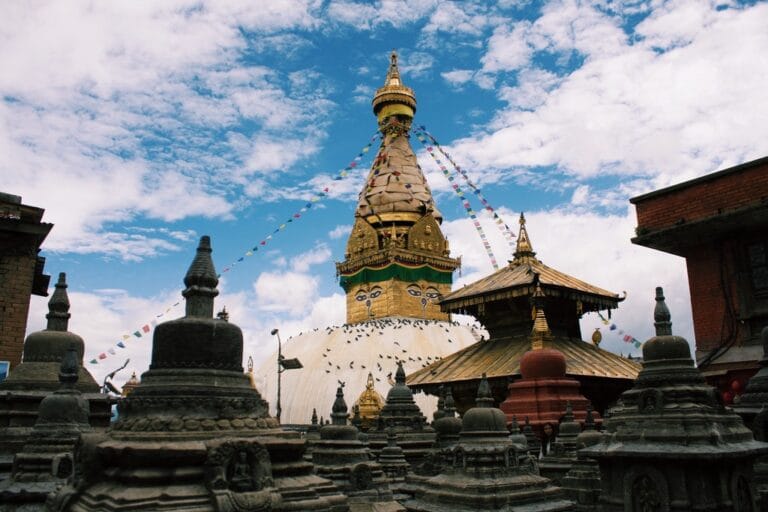
- Day 1 – Kathmandu. Swayambhunath (the “Monkey Temple”) in the morning for views over the city, then Kathmandu Durbar Square and an afternoon walk through Asan and Indra Chowk’s old bazaars. Dinner in Thamel or Jhamsikhel.
- Day 2 – Pashupatinath and Boudhanath. Pashupatinath, Nepal’s most important Hindu temple, on the Bagmati river, then walk or taxi 20–30 minutes to Boudhanath Stupa. Stay at Boudha for the evening kora, when pilgrims circle the stupa at dusk.
- Day 3 – Bhaktapur or Patan. Bhaktapur is the best-preserved medieval city in the valley; Patan is closer, with the excellent Patan Museum. If you have an evening flight, choose Patan.
Variant: swap Day 3 for an overnight trip to Nagarkot (about 2,175m) for a sunrise view of the Himalaya on a clear day, stopping at Bhaktapur on the way back.
Read our full Kathmandu guide for opening times and how to plan each heritage site.

Nepal itinerary: 5 days
Five days lets you add the mountains, as long as you fly to Pokhara. This is the most searched short itinerary for Nepal, and it works well.
- Day 1 – Arrive Kathmandu. Visa on arrival, check in, evening in Thamel or Boudha.
- Day 2 – Kathmandu sightseeing. Swayambhunath, Kathmandu Durbar Square, Pashupatinath and Boudhanath. It is a full day; hire a driver or guide to keep it efficient.
- Day 3 – Fly to Pokhara. Take a morning flight (sit on the right side for mountain views), then spend the afternoon on Phewa Lake by rowing boat and walk up to the World Peace Pagoda for sunset.
- Day 4 – Sarangkot sunrise and paragliding. Pre-dawn drive to Sarangkot (about 1,590m) for the sunrise on Annapurna and Machhapuchhre, then paraglide back down to the lake if the weather allows.
- Day 5 – Fly back to Kathmandu. Morning flight, last-minute shopping, and an international flight that evening at the earliest. If you can, push your international flight to Day 6.
Nepal itinerary: 7 days
A week is the sweet spot for a first visit that is not built around trekking. You have two good options. Choose Pokhara if you want mountain views and easy walks; choose Chitwan if wildlife matters more to you. Trying to do all three in seven days means two long road days and very little time in each place.
Option A: 7 days in Nepal – Kathmandu and Pokhara (mountains)
| Day | Plan | Overnight |
|---|---|---|
| 1 | Arrive in Kathmandu; evening wander in Thamel and the Garden of Dreams | Kathmandu |
| 2 | Swayambhunath, Kathmandu Durbar Square, Pashupatinath, Boudhanath | Kathmandu |
| 3 | Bhaktapur in the morning; afternoon flight to Pokhara (or the 7am tourist bus, skipping Bhaktapur) | Pokhara |
| 4 | Sarangkot sunrise, paragliding, Phewa Lake by boat to Tal Barahi temple | Pokhara |
| 5 | Day hike: Australian Camp from Kande (about 1 hr drive, 1–1.5 hr walk up) or the World Peace Pagoda trail; quieter Begnas Lake in the afternoon | Pokhara |
| 6 | Flexible day: International Mountain Museum, Davis Falls and Gupteshwor Cave, or a rest day. Fly back to Kathmandu late afternoon | Kathmandu |
| 7 | Patan Durbar Square and Patan Museum; depart | – |
Day 6 is deliberately loose. If weather grounds your Pokhara flight, you still have a morning to fly back before your international departure.

Option B: 7 days in Nepal – Kathmandu and Chitwan (wildlife)
| Day | Plan | Overnight |
|---|---|---|
| 1 | Arrive Kathmandu; evening in Thamel | Kathmandu |
| 2 | Kathmandu heritage day: Swayambhunath, Durbar Square, Pashupatinath, Boudhanath | Kathmandu |
| 3 | Tourist bus or private car to Sauraha (5–7 hrs); sunset by the Rapti river | Chitwan |
| 4 | Dugout canoe on the Rapti, guided jungle walk, then a half-day jeep safari; Tharu cultural show in the evening | Chitwan |
| 5 | Early birdwatching or a second safari; afternoon flight or bus back to Kathmandu | Kathmandu |
| 6 | Bhaktapur, with an optional night at Nagarkot for the sunrise | Kathmandu or Nagarkot |
| 7 | Patan; depart | – |
Our Chitwan National Park guide covers safaris, park fees and which side of the park to stay on.
Nepal itinerary: 10 days
Ten days is enough for the classic Kathmandu–Chitwan–Pokhara loop at a comfortable pace, or for a short trek. Both versions keep one buffer day.
Option A: 10 days – Kathmandu, Chitwan and Pokhara (the Silver Triangle)
- Day 1 – Arrive Kathmandu. Rest and an easy evening.
- Day 2 – Kathmandu heritage. Swayambhunath, Durbar Square, Pashupatinath, Boudhanath.
- Day 3 – Bhaktapur and Patan. Bhaktapur in the morning, Patan in the afternoon.
- Day 4 – To Chitwan. Morning tourist bus to Sauraha (5–7 hrs) or a 25-minute flight to Bharatpur.
- Day 5 – Chitwan safari day. Canoe, jungle walk and jeep safari.
- Day 6 – To Pokhara. Morning tourist bus (5–6 hrs). Lakeside evening.
- Day 7 – Sarangkot and paragliding.
- Day 8 – Day hike or adventure. Australian Camp and Dhampus, kayaking on Phewa Lake, or zip-lining from Sarangkot.
- Day 9 – Fly to Kathmandu. Use the afternoon as your buffer, or visit the Garden of Dreams and Asan Tole.
- Day 10 – Depart.
Add Bandipur: the hilltop Newar town of Bandipur (about 1,030m) sits just off the Pokhara road. Drop Day 8 and break the Chitwan–Pokhara journey with a night there.
Option B: 10 days with the Poon Hill trek
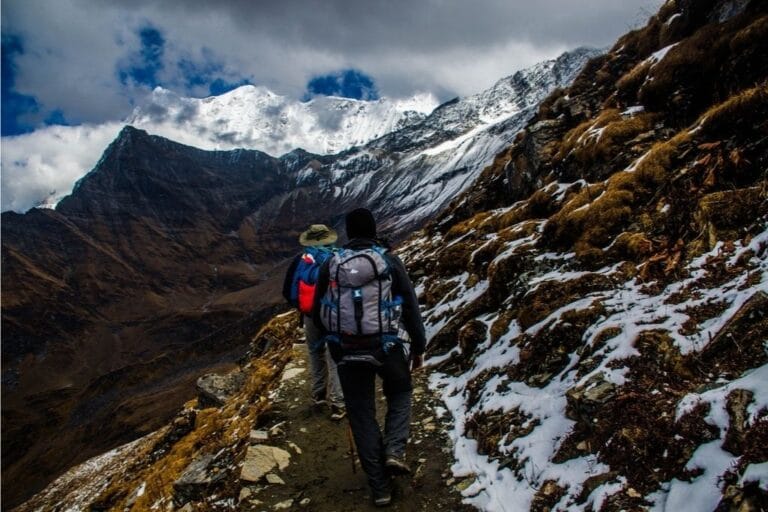
This is the best 10-day itinerary for anyone who wants real Himalayan views without high altitude. The Poon Hill trek tops out at about 3,210m and suits fit beginners.
| Day | Plan | Overnight (approx. altitude) |
|---|---|---|
| 1 | Arrive Kathmandu | Kathmandu (1,400m) |
| 2 | Kathmandu heritage sites | Kathmandu |
| 3 | Fly to Pokhara; afternoon at the lake | Pokhara (820m) |
| 4 | Drive to Nayapul/Tikhedhunga (about 1.5–2 hrs); trek up the stone steps to Ulleri | Ulleri (about 2,050m) |
| 5 | Trek through rhododendron forest to Ghorepani | Ghorepani (about 2,870m) |
| 6 | Pre-dawn climb to Poon Hill for sunrise on Dhaulagiri and Annapurna; trek to Tadapani | Tadapani (about 2,630m) |
| 7 | Descend to the Gurung village of Ghandruk; jeep back to Pokhara | Pokhara |
| 8 | Rest day in Pokhara: boat, massage, paragliding | Pokhara |
| 9 | Fly to Kathmandu; Patan in the afternoon | Kathmandu |
| 10 | Depart | – |
Since 1 April 2023, foreign trekkers in the Annapurna region must trek with a licensed guide booked through a registered Nepali agency. You also need the ACAP permit (NPR 3,000, about £15). Your agency arranges both.
Nepal itinerary: 14 days (2 weeks in Nepal)
Two weeks is the most popular trip length for a reason. You can see Kathmandu, add Chitwan and still complete a proper trek of four to six days. Pick your trek by how much effort you want.
| Trek | Days from Pokhara | High point | Character |
|---|---|---|---|
| Poon Hill (Ghorepani–Ghandruk) | 4 | About 3,210m | Villages, forest, sunrise panorama; busiest |
| Mardi Himal | 4–6 | About 4,200–4,500m (viewpoints) | Ridge walk, close views of Machhapuchhre; quieter, steeper |
| Annapurna Base Camp (fast version) | 7–8 | About 4,130m | Walk into a ring of 7,000–8,000m peaks; the most dramatic |
Option A: 14 days – culture, Chitwan and Poon Hill
- Day 1 – Arrive Kathmandu.
- Day 2 – Kathmandu heritage day.
- Day 3 – Bhaktapur, then on to Nagarkot for sunset and sunrise.
- Day 4 – Back via Patan; evening in Kathmandu.
- Day 5 – To Chitwan by road or air.
- Day 6 – Chitwan safari day.
- Day 7 – To Pokhara by tourist bus (or via Bandipur, overnighting there).
- Days 8–11 – Poon Hill trek (Ulleri, Ghorepani, Tadapani, Ghandruk, back to Pokhara).
- Day 12 – Pokhara rest and paragliding.
- Day 13 – Fly to Kathmandu; buffer afternoon.
- Day 14 – Depart.
Option B: 14 days – Kathmandu, Pokhara and the Mardi Himal trek
Swap Chitwan for more time in the mountains. The Mardi Himal trek climbs a grassy ridge above the treeline to viewpoints facing Machhapuchhre and Annapurna South.
- Day 1 – Arrive Kathmandu.
- Day 2 – Kathmandu heritage day.
- Day 3 – Bhaktapur and Patan.
- Day 4 – Fly to Pokhara.
- Day 5 – Drive to Kande or Phedi; trek to Forest Camp (about 2,550m).
- Day 6 – Trek to Low Camp or Badal Danda.
- Day 7 – Trek to High Camp (about 3,550m).
- Day 8 – Pre-dawn hike to the viewpoint (about 4,200m; the upper base camp viewpoint is higher still), then descend to Low Camp.
- Day 9 – Descend to Siding and drive to Pokhara.
- Day 10 – Spare day for weather on the trek, or rest in Pokhara.
- Day 11 – Adventure day: paragliding, a half-day rafting trip on the Seti or Trishuli, or a mountain bike ride around Phewa Lake.
- Day 12 – Fly to Kathmandu.
- Day 13 – Free day in Kathmandu: Boudhanath at dusk, shopping in Patan.
- Day 14 – Depart.
Option C: 14 days with a fast Annapurna Base Camp trek
If you are fit and already hike regularly, you can reach Annapurna Base Camp in a two-week trip. Use jeeps to shorten the approach (Pokhara to Jhinu Danda or Siwai) and allow seven or eight trekking days: Chhomrong, Bamboo, Deurali, ABC, then back down to Jhinu’s hot springs. That leaves two days in Kathmandu, a day either side in Pokhara and one buffer day. There is no time for Chitwan, and no room for illness or bad weather, so we only suggest this version to experienced hikers.
Our own 15-day Annapurna Base Camp trek (from £795, land only) is built around this shape, with acclimatisation and buffer built in.
Nepal itinerary: 3 weeks
Three weeks opens up the two great base camp treks. The rule of thumb: the trek takes 12–14 days, Kathmandu needs two or three days at each end, and the rest goes on a reward, either Pokhara or Chitwan.
Option A: 3 weeks with the Everest Base Camp trek
| Days | Plan |
|---|---|
| 1–2 | Arrive Kathmandu; heritage sightseeing; trek briefing and gear check |
| 3 | Fly to Lukla (2,860m), from Kathmandu or from Manthali after a very early drive; trek to Phakding |
| 4–5 | Trek to Namche Bazaar (3,440m); acclimatisation day |
| 6–8 | Tengboche monastery, then Dingboche (about 4,410m) with a second acclimatisation day |
| 9–11 | Lobuche, Gorak Shep, Everest Base Camp (5,364m) and Kala Patthar sunrise |
| 12–14 | Descend via Pheriche and Namche to Lukla |
| 15 | Fly back to Kathmandu |
| 16 | Buffer day for Lukla flight delays |
| 17–19 | Recover in Chitwan or Pokhara |
| 20–21 | Back to Kathmandu, Bhaktapur or Patan, depart |
The Khumbu (Everest) region did not adopt the 2023 compulsory-guide rule, but we still strongly recommend a licensed guide at this altitude. Read more on the Everest Base Camp trek, or see our 16-day Everest Base Camp trek (from £1,295, land only), which slots straight into days 1–16 above.
Option B: 3 weeks with Annapurna Base Camp, Pokhara and Chitwan
- Days 1–3 – Kathmandu Valley: Kathmandu, Bhaktapur, Patan, Boudhanath.
- Day 4 – Fly or drive to Pokhara.
- Days 5–14 – Annapurna Base Camp at a relaxed pace, with the Poon Hill sunrise on the way in: Ghorepani, Tadapani, Chhomrong, Deurali, ABC (4,130m), then down to Jhinu hot springs.
- Day 15 – Rest day in Pokhara.
- Days 16–18 – Chitwan (bus from Pokhara, safaris, canoeing).
- Day 19 – Back to Kathmandu.
- Day 20 – Buffer day or free day.
- Day 21 – Depart.
Add Lumbini: with an extra two days, travel from Chitwan to Lumbini, the birthplace of the Buddha, and fly back to Kathmandu from Bhairahawa.
Itinerary variations by travel style
Culture and heritage
Spend more time in the valley than most visitors do. Allow a full day each for Bhaktapur and Patan, add Changu Narayan (the valley’s oldest temple) and the Newar villages of Bungamati and Khokana, and sleep a night in Bandipur on the way to Pokhara. If your dates allow, plan around Dashain and Tihar (usually October to November) or Holi (usually March). Expect busier transport and some closed offices during Dashain. Lumbini is the natural extension for anyone interested in Buddhism.
Wildlife
Give Chitwan two full days rather than one, so you get one jeep safari and one walking or canoe day. February to April is often the best time for sightings, after the tall grass has been cut. For more remote wildlife, Bardia National Park in the far west offers a better chance of tigers, but adds a long journey or a flight to Nepalgunj; allow at least four days for it.
Adventure
Base yourself in Pokhara and build in one activity a day: paragliding from Sarangkot, the zip-line, kayaking on Phewa Lake, or mountain biking. Add white-water rafting on the Trishuli or Seti, then a trek such as Mardi Himal. Some rivers and canyon routes are affected by monsoon floods, so check with your operator which sections are running in your season.
Families
Keep road days short and avoid altitude. A good family plan is Kathmandu (3 nights), a flight to Pokhara (4 nights, with a boat trip, an easy hike to the World Peace Pagoda and a short overnight walk to Australian Camp), then Chitwan (2 nights). Children usually love canoeing on the Rapti and spotting rhinos from the riverbank. For a family trek, Poon Hill done slowly over five days, or Ghandruk and Australian Camp, stay below about 3,200m.
Where to stay in each stop
| Stop | Area | Best for |
|---|---|---|
| Kathmandu | Thamel | First-timers, trek shops, restaurants, walking to Durbar Square; noisy at night |
| Kathmandu | Boudhanath | Calm guesthouses and monasteries; atmospheric evenings |
| Kathmandu | Patan (Lalitpur), Jhamsikhel | Couples and families; quieter, good cafés, heritage hotels |
| Bhaktapur | Old town | An overnight among medieval squares once the day-trippers leave |
| Pokhara | Lakeside (Baidam) | Restaurants, boating, trek and paragliding offices |
| Pokhara | Sarangkot or Dhampus | Hillside lodges with mountain views at sunrise |
| Chitwan | Sauraha | Most hotels, easy safari access, budget to mid-range |
| Chitwan | Barauli, Meghauli or Amaltari | Quieter lodges on the park’s western side, mostly higher-end |
How much a Nepal itinerary costs per day
Prices below are per person, per day, excluding international flights, and are approximate. For a full breakdown see our Nepal trip cost guide.
| Style | Per day (approx.) | What you get |
|---|---|---|
| Budget | NPR 5,000–8,000 (£25–£40) | Guesthouses, local restaurants, tourist buses, shared safaris |
| Mid-range | NPR 12,000–24,000 (£60–£120) | Comfortable hotels, some domestic flights, private car or guide for sightseeing |
| Comfort | NPR 30,000+ (£150+) | Boutique or heritage hotels, flights on every long leg, private guides, upmarket Chitwan lodges |
| Trekking days | NPR 8,000–14,000 (£40–£70) including guide | Teahouse room and meals, plus a guide’s daily wage; add more for a porter |
Typical extras to budget for (fees for foreign visitors, approximate and subject to change):
- Nepal tourist visa on arrival: US$30 (15 days), US$50 (30 days), US$125 (90 days). See our Nepal visa guide.
- Heritage site entry: Kathmandu Durbar Square about NPR 1,000 (£5), Patan about NPR 1,000 (£5), Bhaktapur about NPR 2,000 (£10), Pashupatinath about NPR 1,000 (£5), Boudhanath about NPR 400 (£2), Swayambhunath about NPR 200 (£1).
- Chitwan National Park: about NPR 2,000 (£10) per person per day, usually included in safari packages.
- ACAP permit (Annapurna region): NPR 3,000 (about £15).
- Kathmandu–Pokhara flight: roughly US$80–130 (£60–£100) one way.
- Paragliding in Pokhara: commonly around NPR 10,000–15,000 (£50–£75) for a tandem flight, depending on duration and season.
Best time to follow these itineraries
| Season | Months | Good for | Watch out for |
|---|---|---|---|
| Autumn | October–November | Clearest mountain views, all treks, festivals | Peak crowds and prices; book flights and lodges early |
| Winter | December–February | Clear skies, Chitwan, lower treks such as Poon Hill | Cold nights at altitude; morning fog in the lowlands can delay Bharatpur and Kathmandu flights |
| Spring | March–May | Rhododendrons, treks, wildlife sightings in Chitwan | Haze in late spring; heat in Chitwan from April |
| Monsoon | June–September | Green landscapes, fewer visitors, rain-shadow areas such as Mustang | Landslides, road closures, leeches, cloud hiding the peaks, frequent flight delays |
For month-by-month detail, read our guide to the best season to travel in Nepal.
Building buffers into your Nepal itinerary
Most Nepal trips that go wrong do so because there was no slack. Weather closes mountain airports regularly. On one day in late September 2026, for example, Pokhara, Lukla and Bharatpur airports all suspended flights because of poor visibility. Roads close for landslides, strikes and protests, sometimes at short notice.
- Pokhara or Chitwan leg: fly back to Kathmandu at least one day before your international flight.
- Lukla (Everest): keep one or two spare days after the trek. If you run out of time, a shared helicopter is the usual fallback, at extra cost.
- Treks: add one spare day to any trek above 3,500m for illness or bad weather.
- Morning flights are more reliable than afternoon flights, when cloud builds up.
- Book flexible tickets where you can, and keep your agency’s or hotel’s phone number handy so rebooking is quick.
Practical tips for your Nepal trip
- Visa: most nationalities get a visa on arrival at Kathmandu airport; fill in the online form shortly before you fly to save time.
- Guides: a licensed guide booked through a registered agency is compulsory for foreign trekkers in most trekking areas, including Annapurna. The Khumbu (Everest) local government did not adopt the rule. TIMS card requirements have changed several times and sources still conflict, so let your agency confirm what you need.
- Safety: the UK FCDO currently notes flood and landslide risk after the August 2026 floods, advises avoiding protests, avoiding night buses and overcrowded buses, and points out that no Nepali airline meets international safety standards for UK purposes. Nepal saw major political protests in September 2025, and demonstrations can still start at short notice. Check your own government’s latest advice before you go.
- Insurance: if you trek, make sure your policy covers helicopter rescue to the maximum altitude on your itinerary.
- Money: carry cash for trekking and smaller towns; card acceptance is patchy outside Kathmandu and Pokhara.
- Altitude: Kathmandu and Pokhara are both comfortable. Above about 3,000m, climb slowly and follow your guide’s acclimatisation plan.
Planning a tailor-made Nepal itinerary
Every route above can be adjusted: more time in the valley, a different trek, a family pace or an extra wildlife stop. If you want help turning one of these plans into a bookable trip, with the guide, permits, hotels and transfers handled by our licensed ground partners in Nepal, tell us your dates and interests on our plan your trip page.
Frequently asked questions
How many days do you need in Nepal?
Seven days is the minimum for a satisfying first trip: Kathmandu plus either Pokhara or Chitwan. Ten days lets you see all three, and two weeks lets you add a short trek such as Poon Hill or Mardi Himal. For Everest or Annapurna Base Camp, plan on about three weeks in total.
Is 7 days in Nepal enough?
Yes, if you keep it to two bases. Spend three nights in Kathmandu and three or four in Pokhara (or two in Chitwan), and fly between them. Seven days is not enough for Everest Base Camp, which takes 12 days or more on the trail alone.
What is the best Nepal itinerary for 10 days?
For first-timers, the Kathmandu–Chitwan–Pokhara loop is the classic choice, with a flight back to Kathmandu at the end. If you prefer mountains to wildlife, replace Chitwan with the four-day Poon Hill trek from Pokhara, which reaches about 3,210m and needs no previous trekking experience.
Can I do a trek on a 2-week Nepal trip?
Yes. Two weeks comfortably fits a 4–6 day trek such as Poon Hill or Mardi Himal alongside Kathmandu and Pokhara, and even Chitwan. Fit, experienced hikers can fit a fast Annapurna Base Camp trek into 14 days, but with very little spare time for weather or illness.
Should I fly or take the bus from Kathmandu to Pokhara?
Fly if you have a week or less: the flight takes 25–30 minutes, while the tourist bus usually takes 7–9 hours. The bus is far cheaper and shows you the countryside, but the Prithvi Highway is prone to landslides, as the August–September 2026 closures showed. Check the road status before you travel.
How much does a week in Nepal cost?
Excluding international flights, budget travellers can manage on about NPR 5,000–8,000 (£25–£40) a day, while mid-range trips usually cost NPR 12,000–24,000 (£60–£120) a day. A mid-range week with a return Pokhara flight and entry fees typically comes to roughly £550–£950 per person.
Do I need a guide to travel around Nepal?
Not for cities, Pokhara or Chitwan, although a guide makes heritage sites far more rewarding, and safaris inside Chitwan are always guided. For trekking, foreigners must use a licensed guide in most areas, including Annapurna, since 1 April 2023. The Khumbu (Everest) region is the main exception, but a guide is still strongly recommended there.
When is the best time to visit Nepal?
October–November and March–April offer the best mix of clear mountain views and comfortable temperatures for most itineraries. December–February is good for lower treks and Chitwan, though cold at altitude. June–September is monsoon, with frequent landslides and flight delays.