

The best things to do in Nepal are seeing the temples and old royal squares of the Kathmandu Valley, relaxing by the lake in Pokhara, looking for rhinos in Chitwan, visiting Lumbini where the Buddha was born, and trekking towards Everest or Annapurna. Pokhara also has some of Asia’s best paragliding, and Nepal has whitewater rafting, bungee jumps, festivals and a lot of good food. Below are 25 places to visit and things to do. Each one tells you why it’s worth going, how to get there, when to go, roughly what it costs and how much time to allow.
Prices are in Nepali rupees (NPR) with rough sterling amounts (NPR 200 is about £1, and US$1 is about £0.75). They were checked against 2025–2026 sources, but fees in Nepal change often, so treat them as a guide.
Things to do in Nepal at a glance
| # | Place / experience | Best for | Time needed | Best season |
|---|---|---|---|---|
| 1 | Kathmandu Durbar Square and the old city | History, architecture | Half a day | Oct–Apr |
| 2 | Pashupatinath Temple | Hindu culture | 2–3 hours | All year; Shivaratri (Feb/Mar) |
| 3 | Boudhanath Stupa | Tibetan Buddhist culture | 2–3 hours | All year; Losar (Feb/Mar) |
| 4 | Swayambhunath (Monkey Temple) | Valley views, sunset | 2 hours | Oct–Apr |
| 5 | Patan | Newar art, museums | Half to full day | Oct–Apr |
| 6 | Bhaktapur | Best-preserved old town | Full day or overnight | Oct–Apr; Bisket Jatra (Apr) |
| 7 | Nagarkot | Himalayan sunrise near Kathmandu | Overnight | Oct–Dec |
| 8 | Bandipur | Hill-town atmosphere | 1–2 nights | Oct–Apr |
| 9 | Pokhara and Phewa Lake | Relaxing, mountain views | 2–4 days | Oct–Nov, Mar–Apr |
| 10 | Paragliding in Pokhara | Adrenaline with Annapurna views | Half a day | Oct–Dec |
| 11 | Chitwan jungle safari | Rhinos, birds, maybe tigers | 2–3 nights | Oct–Mar |
| 12 | Lumbini | Buddhist pilgrimage | 1–2 days | Oct–Mar |
| 13 | Poon Hill trek | Short first trek | 4–5 days | Oct–Nov, Mar–Apr |
| 14 | Annapurna Base Camp trek | Mountain amphitheatre, moderate altitude | 10–15 days | Oct–Nov, Mar–May |
| 15 | Everest Base Camp trek | The classic Himalayan trek | 12–16 days | Oct–Nov, Mar–May |
| 16 | Everest mountain flight | Seeing Everest without trekking | Half a morning | Oct–Dec |
| 17 | Annapurna Circuit, Manaslu and other big treks | Experienced trekkers | 12–20 days | Oct–Nov, Mar–Apr |
| 18 | Mustang and Lo Manthang | Desert scenery, Tibetan culture | 5–14 days | Mar–Nov (incl. monsoon) |
| 19 | Rara Lake | Remote lake scenery | 5–10 days | Sep–Nov, Apr–May |
| 20 | Shey Phoksundo Lake | Turquoise high-altitude lake | 8–14 days | Apr–May, Sep–Oct |
| 21 | Langtang and Gosaikunda | A trek close to Kathmandu | 7–12 days | Oct–Nov, Mar–Apr |
| 22 | Whitewater rafting | Day trips to multi-day rivers | 1–10 days | Oct–Dec, Mar–May |
| 23 | Bungee, zip-lining and canyoning | Adrenaline | 1 day | Oct–May |
| 24 | Festivals | Culture and celebration | Plan around dates | Dashain/Tihar (Oct–Nov) |
| 25 | Nepali food | Everyone | Every meal | All year |
What is Nepal known for?
Nepal is best known for the Himalaya. Eight of the world’s 14 peaks over 8,000 m are fully or partly in Nepal, including Everest (8,849 m), and that makes it one of the world’s great trekking countries. It is also known as the birthplace of the Buddha (Lumbini), for the Sherpa and Gurung mountain communities, and for the seven UNESCO-listed monument zones of the Kathmandu Valley.
The country covers far more than mountains. In the south, the Terai lowlands are subtropical jungle with one-horned rhinos and Bengal tigers, and Chitwan National Park is a UNESCO site too. Hindu and Buddhist traditions mix here in a way you won’t see in many other places. Festivals fill the calendar, and dal bhat and momos are now known well beyond Nepal. For background on customs and etiquette, read our guide to culture in Nepal.

25 best things to do and places to visit in Nepal
The list starts in the Kathmandu Valley, where most trips begin. It then moves west to Pokhara and south to the lowlands, and finishes with the treks, remote lakes, adventure sports and the culture you’ll meet everywhere.
1. Explore Kathmandu Durbar Square and the old city
Kathmandu Durbar Square (Hanuman Dhoka) was the royal palace complex of the Malla and later Shah kings. It is full of tiered pagoda temples, carved wooden windows and courtyards. Here you’ll also find the Kumari Ghar, home of the Kumari, a young girl worshipped as a living goddess. The 2015 earthquake damaged the square badly and restoration is still going on, but there is plenty to see.
Walk on from the square through the old trading streets of Asan and Indra Chowk, where the markets have hardly changed in centuries. The square is about 15 minutes’ walk from Thamel, the main backpacker district. Our Kathmandu guide covers neighbourhoods, hotels and getting around.
- Entry fee: NPR 1,000 (about £5) for foreign visitors, Tribhuvan Museum included.
- When: Early morning, before the tour groups arrive, when locals come to make offerings.
- Time: 2–3 hours, or half a day with the old bazaars.
2. Watch evening aarti at Pashupatinath Temple
Pashupatinath is Nepal’s most sacred Hindu temple. It is dedicated to Shiva and stands on the banks of the Bagmati River. Only Hindus may enter the main temple. Visitors can still walk the riverbanks, the smaller shrines and the terraces across the river, where sadhus (holy men) gather. Open-air cremations take place on the ghats every day. Watch quietly from the far bank and don’t photograph grieving families.
Every evening a fire ceremony (aarti) takes place by the river, with music, bells and oil lamps. The temple is about 5 km east of Thamel, close to the airport. See our Pashupatinath Temple guide for etiquette and timings.
- Entry fee: NPR 1,000 (about £5).
- When: Late afternoon into the evening aarti. Maha Shivaratri (February or March) brings huge crowds of pilgrims.
- Time: 2–3 hours.
3. Walk the kora at Boudhanath Stupa
Boudhanath’s huge white dome and gold spire, painted with the eyes of the Buddha, dominate north-east Kathmandu. The stupa is the centre of the city’s Tibetan community, and monasteries surround it. Join the pilgrims walking the kora (a clockwise circuit), spin the prayer wheels and climb to a rooftop café for the view at dusk. The butter lamps are lit at that time.
Boudha is a 20–30 minute taxi ride from Thamel and pairs well with Pashupatinath, which is about 30 minutes’ walk away. More in our Boudhanath Stupa guide.
- Entry fee: NPR 400 (about £2).
- When: Dawn or dusk, when the kora is busiest with locals. Losar (Tibetan New Year, around February) is a special time to visit.
- Time: 2–3 hours.
4. Climb to Swayambhunath (the Monkey Temple)
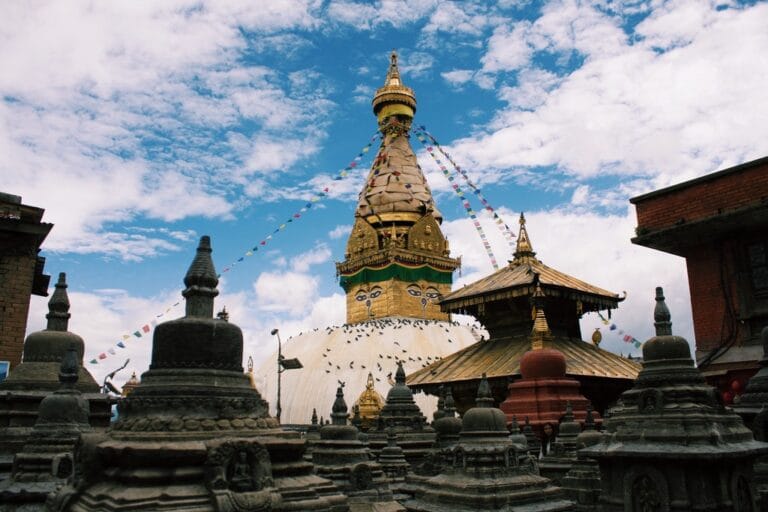
Swayambhunath stands on a hill west of the city and is one of the oldest Buddhist sites in the valley. The main approach is a steep eastern stairway of around 365 steps, past stone Buddhas and a lot of monkeys. From the top you look out across the whole Kathmandu Valley. On a clear day after the monsoon, the Himalaya line the northern horizon.
Swayambhu is about 30 minutes’ walk or a short taxi ride from Thamel. Keep food out of sight, because the monkeys grab it. See our Swayambhunath guide.
- Entry fee: NPR 200 (about £1).
- When: Late afternoon for sunset over the valley.
- Time: About 2 hours.
5. Spend a day in Patan
Patan (Lalitpur) is just across the Bagmati River from Kathmandu but has a slower, more crafted feel. Its Durbar Square is arguably the finest of the three in the valley, with the stone Krishna Mandir and the former palace. The palace now houses the Patan Museum, one of the best museums in South Asia for Hindu and Buddhist art. Nearby, the Golden Temple (Hiranya Varna Mahavihar) and side streets full of metalworking workshops are worth an hour more.
A taxi from Thamel takes 20–30 minutes. The area around Jhamsikhel and Pulchowk has good cafés and quieter hotels. Read our Patan guide.
- Entry fee: NPR 1,000 (about £5), Patan Museum included.
- When: Any clear day. Rato Machhindranath, a chariot festival in spring, can run for weeks.
- Time: Half a day, or a full day with the museum.

6. Stay overnight in Bhaktapur
Bhaktapur is the best-preserved of the valley’s old royal cities. Its brick lanes, open squares and potters’ yards feel as if they belong to a living town, not a museum. Don’t miss the five-tiered Nyatapola Temple in Taumadhi Square, the 55-Window Palace, and pottery being thrown and dried in Pottery Square. Try juju dhau, the creamy “king of curds” sold in clay bowls.
Bhaktapur is about 13 km east of Kathmandu, 45–60 minutes by taxi depending on traffic. Stay the night and you’ll see the squares at dawn, before the day-trippers arrive. See our Bhaktapur guide.
- Entry fee: around NPR 2,000 or US$15 (about £10–11). It covers the whole old town and can be extended for longer stays, so keep your ticket.
- When: Bisket Jatra in mid-April (Nepali New Year) is the town’s big festival, with chariot tug-of-war battles.
- Time: A full day, ideally with an overnight stay.
7. Watch sunrise over the Himalaya from Nagarkot
Nagarkot is a village on the north-eastern rim of the Kathmandu Valley, at around 2,100 m. It is the easiest place near Kathmandu for a wide Himalayan sunrise. On a clear morning the view runs from Annapurna in the west, past Langtang, to the Everest region in the east. Everest itself is a distant speck.
Nagarkot is about 30 km from Kathmandu, 1–1.5 hours by road, and combines well with Bhaktapur. A popular short day hike runs downhill from Nagarkot to the hilltop temple of Changu Narayan, another UNESCO site. Details in our Nagarkot guide.
- Cost: No entry fee. You pay only transport and accommodation.
- When: October to December gives the most reliable clear mornings. From June to September the mountains are usually hidden.
- Time: One night.
8. Slow down in Bandipur
Bandipur is a Newar trading town on a ridge above the Kathmandu–Pokhara highway. Its main street is traffic-free and lined with restored 18th- and 19th-century merchant houses, now home to guesthouses and cafés. Walk out to Tundikhel viewpoint for mountain views, visit the Thani Mai temple, or explore Siddha Gufa, one of Nepal’s largest caves, a steep walk below the town.
Bandipur is a short drive up from Dumre on the Prithvi Highway. That makes it a natural overnight stop between Kathmandu and Pokhara. Read our Bandipur guide and our guide to getting from Kathmandu to Pokhara.
- Cost: No town entry fee. Siddha Gufa charges a small fee.
- When: October to April.
- Time: 1–2 nights.
9. Unwind in Pokhara and paddle on Phewa Lake
Pokhara is Nepal’s second tourist hub and the base for the Annapurna treks. Its relaxed Lakeside district looks across Phewa Lake to the summit of Machhapuchhre (Fishtail) and the Annapurna range. Hire a wooden boat to the island temple of Tal Barahi, walk or drive up to the World Peace Pagoda, and watch sunrise from Sarangkot. Other good stops are Davis Falls, Gupteshwor Mahadev Cave and the International Mountain Museum.
Pokhara is about 200 km from Kathmandu. Tourist buses take 6–8 hours, or you can fly in about 25 minutes. For other activities, see mountain biking and zip-lining, and our full Pokhara guide.
- Cost: Boat hire on Phewa costs a few hundred rupees per hour. Most viewpoints are free or cheap.
- When: October–November and March–April for mountain views.
- Time: 2–4 days, plus time before or after a trek.

10. Go paragliding above Pokhara
Pokhara is one of the world’s best-known places for tandem paragliding. You take off from Sarangkot (about 1,590 m) and ride the thermals with Phewa Lake below and the Annapurna range ahead, then land at the lakeshore. No experience is needed, because the pilot does all the flying.
Choose an established operator and check your travel insurance covers paragliding. Most standard policies don’t. Our paragliding guide covers operators, safety and flight options.
- Cost: About NPR 9,000 (around £45) for a 20–30 minute tandem flight, and around NPR 12,000 (about £60) for an hour-long flight. Photos and video cost extra.
- When: September to early June. October to December is best. Flights are limited or suspended in the July–August monsoon.
- Limits: Most operators set a weight limit of about 100 kg.

11. Go on a jungle safari in Chitwan National Park
Chitwan, in the lowland Terai, is Nepal’s oldest national park and a UNESCO World Heritage Site. It has one of the world’s largest populations of greater one-horned rhinos, along with Bengal tigers, sloth bears, gharial crocodiles and more than 500 bird species. Jeep safaris, canoe trips on the Rapti River and guided jungle walks are the main activities. The local Tharu culture, including evening stick dances, adds a lot to a visit.
Seeing a rhino is likely. Seeing a tiger is luck. We recommend skipping elephant rides, because welfare concerns are well documented and jeep or walking safaris are better for the animals. If you have more time, Bardia National Park in the far west is wilder and quieter. Sauraha, the main base for Chitwan, is about 5–6 hours by road from Kathmandu or 4–5 hours from Pokhara. You can also fly to Bharatpur. Read our Chitwan guide.
- Park entry: NPR 2,000 (about £10) per person for foreign visitors. Check whether your safari price includes it.
- When: October to March is cool and dry. February–March, after the tall grass is cut, is best for wildlife. Jeep safaris stop in the monsoon (roughly July–September).
- Time: 2–3 nights.
12. Visit Lumbini, the birthplace of the Buddha
Lumbini is a UNESCO site and one of the most important pilgrimage places in Buddhism. At its centre is the Maya Devi Temple, built over the spot where Siddhartha Gautama is believed to have been born around the 6th century BCE. Inside the temple is a marker stone, and nearby are the Ashoka Pillar and the sacred pool. Around it stretches the Monastic Zone, a large landscaped area where countries have built monasteries in their own styles. Hire a bicycle to get between them.
The nearest airport is Bhairahawa (Gautam Buddha International), about 30 minutes from Lumbini. Bhairahawa is a short flight from Kathmandu. By road, Lumbini combines well with Chitwan. See our Lumbini guide.
- Cost: There is a fee for the Maya Devi Temple area, and it went up in 2026. Check the current rate on arrival.
- When: October to March. From April to June the plains are very hot. Buddha Jayanti (April or May) is the main festival.
- Time: 1–2 days.
13. Trek to Poon Hill for an Annapurna sunrise
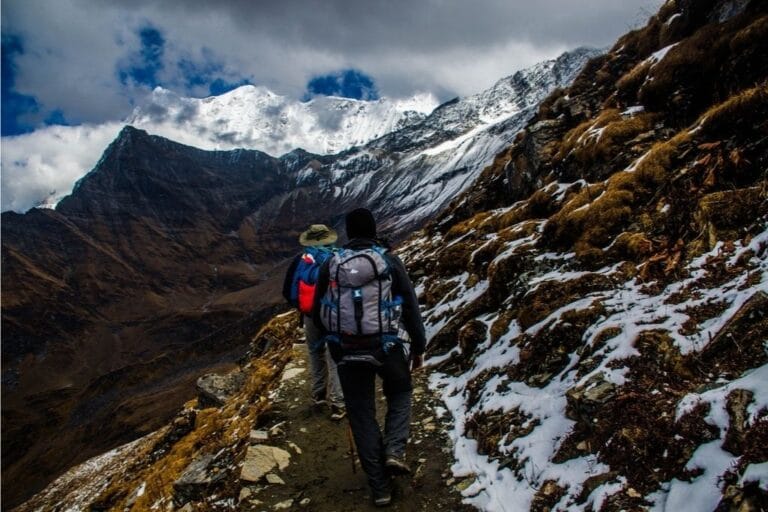
If you only have a few days to trek, choose Poon Hill. The trail climbs from near Pokhara through rhododendron forest and stone villages to Ghorepani. Before dawn you walk up to Poon Hill (3,210 m) for a sunrise over Dhaulagiri, Annapurna South and Machhapuchhre, then return via the Gurung village of Ghandruk. It stays well below the altitudes where serious altitude sickness becomes likely.
Since April 2023, foreign trekkers in the Annapurna region must trek with a licensed guide arranged through a registered agency. You also need an ACAP permit. See our Poon Hill trek guide and the wider list of best treks from Pokhara.
- Permit: ACAP NPR 3,000 (about £15).
- When: October–November for clear skies. March–April for rhododendrons in bloom.
- Time: 3–5 days from Pokhara.
14. Trek to Annapurna Base Camp
The Annapurna Base Camp (ABC) trek follows the Modi Khola valley into the Annapurna Sanctuary. This is a ring of peaks around a glacier basin, with Annapurna I (8,091 m), Machhapuchhre and Hiunchuli on all sides of you at 4,130 m. The route passes terraced Gurung villages such as Chhomrong and climbs through bamboo forest. Compared with Everest it is shorter, cheaper and lower. Most people with good fitness and no previous trekking can do it.
Our 15-day Annapurna Base Camp trek starts from £795 (land only), with licensed guides from our Nepali ground partners. To read up first, start with our ABC trek guide.
- Permit: ACAP NPR 3,000 (about £15). A licensed guide is required.
- When: October–November and March–May. In winter there is a risk of avalanches on the upper trail.
- Time: 7–12 days on foot from Pokhara.
15. Trek to Everest Base Camp
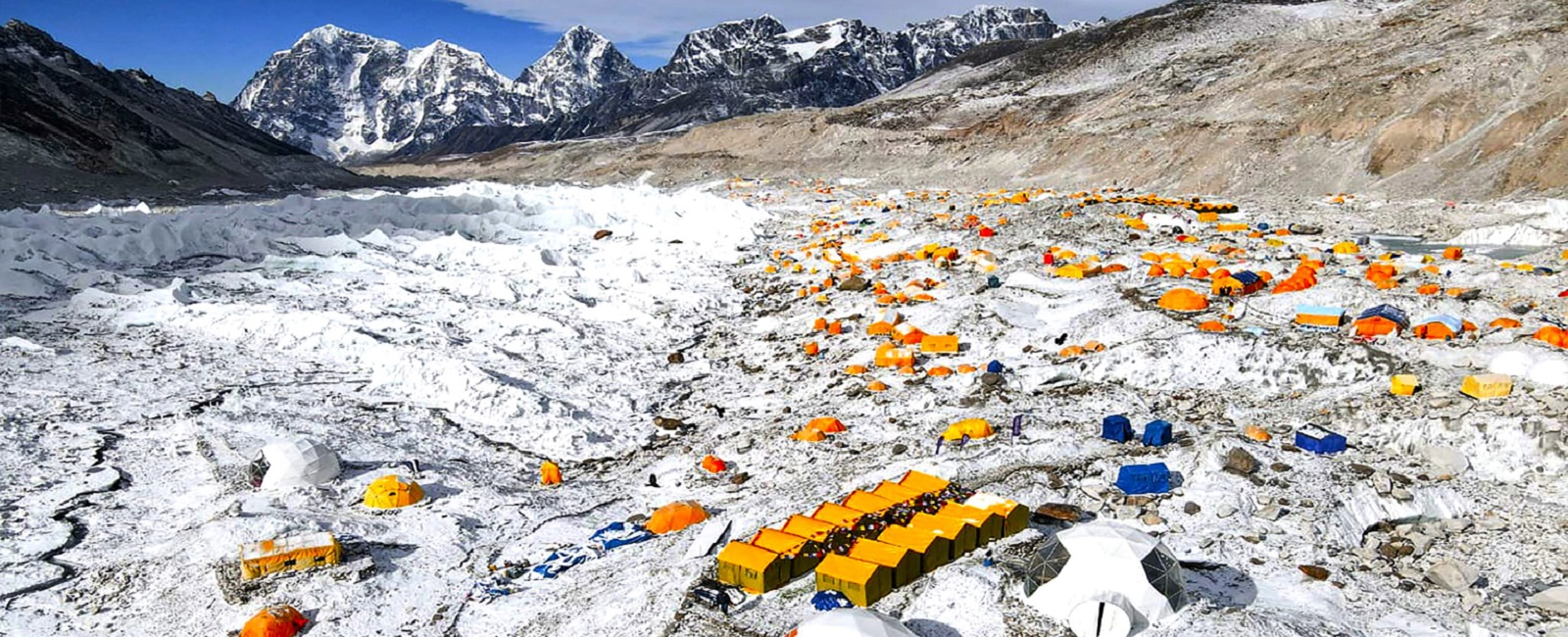
The Everest Base Camp (EBC) trek is the Himalayan trip most people dream of. It starts with a flight to Lukla and climbs through Sherpa villages, including Namche Bazaar and the monastery at Tengboche, to base camp at about 5,364 m. The best view of Everest comes from Kala Patthar (about 5,550 m) above Gorak Shep. Base camp itself doesn’t look onto the summit.
EBC is a serious altitude trek. Plan acclimatisation days and train for it. Our 16-day Everest Base Camp trek starts from £1,295 (land only). For costs, difficulty and the day-by-day route, see the EBC trek guide.
- Permits: Sagarmatha National Park NPR 3,000 plus the Khumbu Pasang Lhamu Rural Municipality fee (a few thousand rupees; check the current rate). The Khumbu local government did not adopt the 2023 compulsory-guide rule, but most first-timers still trek with a guide, and we recommend it.
- When: October–November and March–May.
- Time: 12–16 days including flights and acclimatisation.
16. Take an Everest mountain flight
If you don’t have the time or fitness to trek, a mountain flight from Kathmandu is the easiest way to see Everest. Early-morning flights run along the Himalaya for about an hour, passing Langtang, Gauri Shankar and the Everest group. Each passenger usually gets a window seat and a turn in the cockpit view.
Several domestic airlines run the flights, including Buddha Air and Yeti Airlines. Flights are often delayed or cancelled when there’s cloud, so book for early in your stay so you have spare days. Note that the UK FCDO says no Nepali airline currently meets international safety standards for the UK Air Safety List.
- Cost: Around US$200–280 (about £150–210) for foreign passengers. Published prices vary, and so does whether airport tax is included.
- When: October to December has the clearest skies. Flights leave around 6–7 am.
- Time: About an hour in the air, or 3–4 hours including hotel pickup.
17. Take on the Annapurna Circuit, Manaslu or Gokyo
Nepal has plenty of teahouse treks beyond the two base camps. The Annapurna Circuit goes all the way round the Annapurna massif. It crosses the Thorong La pass (5,416 m) between Manang and the pilgrimage temple of Muktinath, then drops into the Kali Gandaki, one of the world’s deepest gorges. The Manaslu Circuit is quieter and more remote. Gokyo, in the Everest region, swaps the base-camp crowds for turquoise glacial lakes.
Shorter options include Mardi Himal near Pokhara. We sell only the EBC and ABC treks as fixed trips, but we can arrange any of these as a tailor-made trek with our ground partners through plan your trip. Our Nepal trekking hub compares them all.
- Permits: ACAP for the Annapurna Circuit. Manaslu is a restricted area that needs a special permit and a registered agency.
- When: October–November and March–April. High passes can close after heavy snow.
- Time: 12–20 days.
18. Discover Mustang and the walled city of Lo Manthang
Mustang is in the rain shadow north of the Annapurna and Dhaulagiri ranges. It is a high, dry landscape of red cliffs, cave dwellings and whitewashed villages, culturally close to Tibet. Lower Mustang, around Jomsom and the old village of Kagbeni, needs only an ACAP permit and can be reached by road or a short flight from Pokhara. Upper Mustang is a restricted area that ends at Lo Manthang (around 3,800 m), the walled capital of the former kingdom of Lo, with monasteries hundreds of years old.
Because so little rain reaches it, Mustang is one of the few parts of Nepal that is good to visit in the monsoon. The Tiji festival in Lo Manthang usually falls in May. Read our guides to Mustang and Lo Manthang.
- Permits: Upper Mustang has long cost US$500 (about £375) for the first 10 days, then US$50 a day. The government has approved a move to a flat US$50 per day, but at the time of writing we couldn’t confirm it is in force. Check with your agency. Restricted-area permits must be arranged through a registered agency.
- When: March to November.
- Time: 2–4 days for Lower Mustang, 10–14 days for Upper Mustang.
19. Reach Rara Lake in the far west
Rara is Nepal’s largest lake. It sits at about 2,990 m in Rara National Park in Mugu district, ringed by pine and juniper forest with snow peaks behind. Very few foreign travellers make it here, so you’ll find little tourist infrastructure. Bring patience and flexibility.
Most visitors fly via Nepalgunj to the small airstrip at Talcha, then walk or drive the last few hours to the lake. Longer treks from Jumla take about a week. Flights to these airstrips are often disrupted by weather. We can arrange Rara as a tailor-made trip through plan your trip.
- Park entry: NPR 3,000 (about £15).
- When: September–November and April–May.
- Time: 5–10 days including flights.
20. See the turquoise water of Shey Phoksundo Lake
Phoksundo, in Dolpo’s Shey Phoksundo National Park, is Nepal’s deepest lake. It sits at about 3,610 m and its water is a vivid turquoise. On its shore is Ringmo, a village of Bon and Buddhist tradition with a small monastery. Its remoteness is a big part of the appeal.
The usual route is a flight from Nepalgunj to Juphal, then two to three days on foot up the Suli Gad valley. Phoksundo is in Lower Dolpo, which needs a cheaper permit than restricted Upper Dolpo. Our Dolpo guide has the detail.
- Permits: Shey Phoksundo National Park NPR 3,000 (about £15) plus a Lower Dolpo restricted-area permit (a weekly fee, arranged through an agency).
- When: April–May and September–October.
- Time: 8–14 days.

21. Trek in Langtang or to Gosaikunda
Langtang is the nearest major trekking region to Kathmandu. The trailhead at Syabrubesi is a day’s drive away, so no flight is needed. The Langtang Valley trek climbs through Tamang villages and yak pastures to Kyanjin Gompa, below the Langtang Lirung glaciers. Gosaikunda is a sacred lake at about 4,380 m where thousands of Hindu pilgrims gather at the Janai Purnima full moon (usually August). It can be added to the trek or done on its own.
The region was hit hard by the 2015 earthquake and has since rebuilt. In August 2026 floods also hit Rasuwa district, which includes the access road. Check road and trail conditions before you book. See our Langtang guide.
- Permit: Langtang National Park NPR 3,000 (about £15).
- When: October–November and March–April.
- Time: 7–12 days.
22. Go whitewater rafting
Rivers fed by Himalayan meltwater make Nepal one of Asia’s best rafting countries. The Trishuli, beside the Kathmandu–Pokhara highway, is the easy, popular choice, with Class II–III rapids that suit beginners on a day trip. The Upper Seti near Pokhara and the Bhote Koshi near the Tibetan border are steeper and more technical. The Sun Kosi and Karnali are multi-day expeditions with nights camped on sandy beaches.
Many people raft the Trishuli on the way to Pokhara or Chitwan. Our rafting guide compares the rivers by grade and season.
- Cost: One-day Trishuli trips start at about US$50 (around £40) with transport and a guide. Multi-day expeditions cost much more.
- When: October–December and March–May. In the monsoon many rivers are too high to run.
- Time: 1 day to 10 days.
23. Bungee jump, zip-line or go canyoning
Nepal’s best-known bungee is at The Last Resort, about three hours from Kathmandu near the Tibetan border. You jump from a suspension bridge about 160 m above the Bhote Koshi gorge. Near Pokhara there is a cliffside bungee and swing at Kushma above the Kali Gandaki, and Pokhara’s long zip-lines drop from Sarangkot towards the valley floor.
The Bhote Koshi area is also good for canyoning, which means abseiling down waterfalls and sliding into pools. See our guides to bungee jumping in Nepal and canyoning.
- Cost: At The Last Resort, around US$90–110 (about £70–80) with transport from Kathmandu. Kushma is around NPR 8,000 (about £40).
- When: October to May.
- Check: Your insurance cover for these activities, and the operator’s safety record.
24. Time your trip for a festival
Nepal is said to have more festivals than days in the year, and joining one gives you a closer look at local life. The biggest is Dashain in late September or October, a 15-day Hindu festival when families gather and kites fill the sky. Tihar (Deepawali) follows a few weeks later, with oil lamps, marigold garlands and a day for honouring dogs. Holi (February or March) is the festival of colours. In Kathmandu, Indra Jatra (September) brings out the Kumari’s chariot and masked dances.
Others include Bisket Jatra in Bhaktapur (April), Losar for the Sherpa, Tamang and Gurung communities, Buddha Jayanti in Lumbini, and Mani Rimdu at Tengboche Monastery (usually October or November) for Everest trekkers. Festival dates follow the lunar calendar and change each year. Note that offices, buses and some services can close or sell out during Dashain. More in our best season to travel in Nepal guide.
25. Eat your way through Nepal
Dal bhat is the national meal: lentil soup, rice, vegetable curry, pickles and often meat. In teahouses, refills are traditionally free, which is why trekkers say “dal bhat power, 24 hour”. Momos (steamed or fried dumplings, often served with a tomato and sesame chutney) are sold everywhere, from street stalls to smart restaurants.
In the Kathmandu Valley, look for Newari food, often served as a set meal: beaten rice (chiura), spiced buffalo, black-eyed bean curries and yomari (sweet steamed dumplings). In the mountains, try Thakali sets in Mustang, Tibetan thukpa (noodle soup) and Sherpa stew. You’ll also find milk tea everywhere and fresh juju dhau curd in Bhaktapur. A cooking class in Kathmandu or Pokhara is a good way to learn the basics.
Places to visit in Nepal by trip length
Nepal is bigger than it looks, and the roads are slow. Choose a few places and don’t try to see everything. These outlines are a starting point. Our Nepal itinerary guide has the day-by-day versions.
| Trip length | Suggested route | Best for |
|---|---|---|
| 5–7 days | Kathmandu Valley (Durbar Squares, Boudha, Pashupati, Bhaktapur), then Pokhara, or Nagarkot for a sunrise | First-time visitors, culture |
| 10–12 days | Kathmandu, Bandipur, Pokhara with a Poon Hill trek, Chitwan | A classic mix of culture, mountains and wildlife |
| 14–16 days | Kathmandu and the Everest Base Camp or Annapurna Base Camp trek, with a day or two spare | Trekkers |
| 3 weeks or more | Kathmandu Valley, a base-camp trek, Pokhara, Chitwan and Lumbini | A full first visit |
For budgeting, see our Nepal trip cost guide.
When is the best time to visit Nepal?
For most of the places on this list, autumn (October–November) is the best time. Skies are clearest after the monsoon and the trekking season is at its peak. Spring (March–May) comes second, with rhododendrons in bloom and warmer weather, though it is hazier. Winter (December–February) is cold at altitude but dry and quiet, and good for the Kathmandu Valley, Chitwan and lower treks. The monsoon (June–September) brings heavy rain, leeches and landslides, and clouds hide the mountains. It is the best time for rain-shadow Mustang.
| Season | Months | Good for | Drawbacks |
|---|---|---|---|
| Autumn | Oct–Nov | Trekking, mountain flights, Dashain and Tihar | Busiest season, higher prices |
| Winter | Dec–Feb | Kathmandu Valley, Chitwan, Pokhara, low treks | Cold nights, high passes may be snowbound |
| Spring | Mar–May | Trekking, rhododendrons, rafting | Haze, hot in the lowlands by May |
| Monsoon | Jun–Sep | Mustang, green landscapes, fewer crowds | Rain, landslides, flight delays, hidden peaks |
Practical tips before you go
Entry fees at a glance
| Site | Foreign visitor fee | Approx. GBP |
|---|---|---|
| Kathmandu Durbar Square | NPR 1,000 | £5 |
| Patan Durbar Square | NPR 1,000 | £5 |
| Bhaktapur | NPR 2,000 / US$15 | £10–11 |
| Pashupatinath | NPR 1,000 | £5 |
| Boudhanath | NPR 400 | £2 |
| Swayambhunath | NPR 200 | £1 |
| Changu Narayan | NPR 400 | £2 |
| Chitwan National Park | NPR 2,000 | £10 |
| ACAP (Annapurna) | NPR 3,000 | £15 |
| Sagarmatha NP + Khumbu municipality fee | NPR 3,000 + municipality fee | from £15 plus the local fee |
Fees for citizens of SAARC countries (South Asia) are lower. Carry cash in rupees, because card payment at ticket booths is unreliable.
Permits, guides and TIMS
Since 1 April 2023, foreign trekkers in most of Nepal’s trekking areas, including Annapurna, must hire a licensed guide through a registered agency. The Khumbu (Everest) local government did not adopt this rule, so independent trekking to EBC is still possible, although a guide is strongly advised. Sources disagree on whether the TIMS card is still required on every route, so check with your agency before you go. Restricted areas such as Upper Mustang, Manaslu and Upper Dolpo always need a special permit and a registered agency.
Safety
Nepal is generally a welcoming place for travellers. The UK FCDO’s main warnings cover road safety, domestic flights, monsoon flooding and landslides (including major floods in Rasuwa in August 2026), earthquakes, and altitude above 3,000 m. It also warns that protests and strikes can happen at short notice and disrupt transport. It advises against trekking alone. Check the current advice from your government before you travel, and buy insurance that covers trekking to your maximum altitude and helicopter evacuation. Our safety tips for trekking in Nepal and things to know before travelling to Nepal go into more detail. You’ll find visa rules in our Nepal visa guide.
Getting around
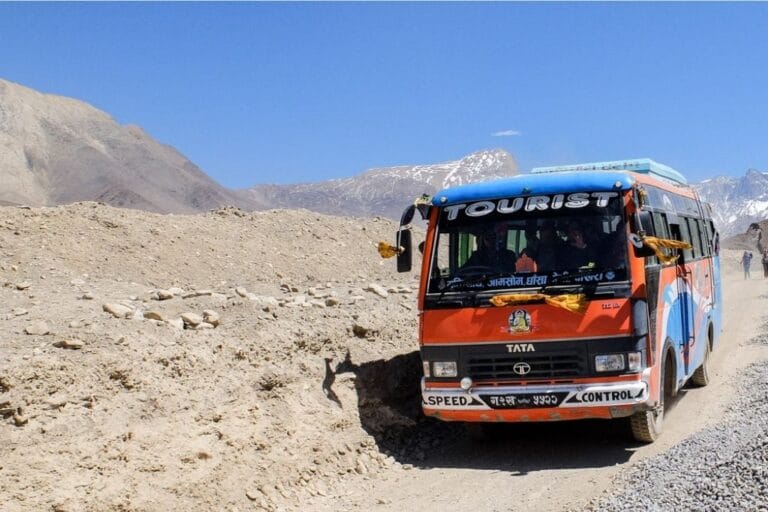
Distances look short on a map, but mountain roads are slow, and travel days often take longer than planned. Tourist buses link Kathmandu, Pokhara and Chitwan. Private cars with drivers are more flexible. Domestic flights save time but are often delayed by weather, so build a spare day into any itinerary that relies on a flight to Lukla, Jomsom or the far west.
Plan your Nepal trip
To trek, we run two fixed trips with licensed Nepali ground partners: the Everest Base Camp trek (16 days, from £1,295) and the Annapurna Base Camp trek (15 days, from £795). For anything else on this list, from a Mustang trek to a tailor-made trip combining Kathmandu, Pokhara and Chitwan, tell us what you have in mind on our plan your trip page.
Frequently asked questions
What is Nepal known for?
Nepal is best known for the Himalaya, including Mount Everest (8,849 m) and seven other of the world’s 14 peaks over 8,000 m. It is also known for world-class trekking, Lumbini (the birthplace of the Buddha), the temples and Durbar Squares of the Kathmandu Valley, rhino and tiger safaris in Chitwan, Sherpa mountain culture, and food such as dal bhat and momos.
What are the best places to visit in Nepal for first-timers?
For a first visit, combine the Kathmandu Valley (Kathmandu Durbar Square, Boudhanath, Pashupatinath, Swayambhunath, Patan and Bhaktapur) with Pokhara and Chitwan National Park. If you have two weeks or more and reasonable fitness, add a trek: Poon Hill for a short taste, or Annapurna Base Camp or Everest Base Camp for the full Himalayan experience.
How many days do you need in Nepal?
Five to seven days covers the Kathmandu Valley and Pokhara. Ten to twelve days lets you add Chitwan and a short trek such as Poon Hill. For Everest Base Camp or Annapurna Base Camp, allow about 14–16 days in total, and three weeks or more to combine a big trek with sightseeing and a safari.
What is the best time to visit Nepal?
October and November are the best months for clear mountain views and trekking. March to May is the second-best season, with rhododendrons and warmer weather but more haze. December to February suits the Kathmandu Valley, Chitwan and lower treks. The June–September monsoon is wet and cloudy almost everywhere except rain-shadow areas such as Mustang.
Can you see Mount Everest without trekking?
Yes. An Everest mountain flight from Kathmandu flies along the Himalaya for about an hour and costs roughly US$200–280 (about £150–210). On clear days you can also see the Everest group in the far distance from Nagarkot, but it is small. For a close view you need to trek, ideally to Kala Patthar above Gorak Shep.
Do I need a guide to travel in Nepal?
Not for cities, Pokhara, Chitwan or Lumbini. For trekking, since 1 April 2023 foreign trekkers in most areas, including Annapurna, must use a licensed guide arranged through a registered agency. The Khumbu (Everest) region did not adopt this rule, but a guide is still strongly recommended there. Restricted areas such as Upper Mustang and Manaslu always need a registered agency and a special permit.
Is Nepal safe to visit?
Nepal is generally safe and welcoming for travellers. The main risks are road accidents, weather-related flight disruption, monsoon floods and landslides, earthquakes and altitude sickness. Protests and strikes can also disrupt transport at short notice. Check your government’s current travel advice (in the UK, the FCDO), don’t trek alone, and buy insurance that covers your activities and the altitude you’ll reach.
What is the most beautiful place in Nepal?
It depends on what you like. For mountain scenery, the Annapurna Sanctuary at Annapurna Base Camp and the view from Kala Patthar near Everest are hard to beat. For lakes, Shey Phoksundo and Rara are among the most beautiful places in Nepal. Bhaktapur is the most atmospheric old town, and Pokhara’s Phewa Lake, with Machhapuchhre behind it, is the easiest of the beautiful places to reach.