
Kathmandu to Pokhara is about 200 km by road along the Prithvi Highway, which takes 6–8 hours by tourist bus or 5–6 hours by private car on a good day. Flying takes about 25 minutes and covers roughly 140 km in a straight line. For most travellers the 7am tourist bus is the best value, a flight is best if you are short on time, and a private car is the most flexible way to stop at Bandipur or the Manakamana cable car.
This guide covers every option in both directions: distances, current road conditions, where the buses leave from, typical fares, flights and baggage, the best stopovers and which option suits which kind of traveller.
Kathmandu to Pokhara at a glance
| Option | Typical time | Approx. cost (one way) | Best for |
|---|---|---|---|
| Tourist bus (standard/deluxe) | 7–9 hours | NPR 800–1,200 (about £4–£6) | Budget travellers, backpackers |
| VIP or sofa-seat tourist bus | 7–9 hours | NPR 1,600–2,500 (about £8–£12.50) | More legroom and air conditioning at a low price |
| Premium bus (e.g. Greenline) | 7–8 hours | Around US$25 (about £19), lunch usually included | Comfort on a budget, solo travellers |
| Local bus | 8–10+ hours | NPR 600–900 (about £3–£4.50) | Only the very budget-conscious |
| Private car or jeep | 5–7 hours driving | NPR 12,000–18,000 per vehicle (about £60–£90) | Families, groups, stopovers, trekkers on a schedule |
| Flight | About 25 minutes in the air | US$90–145 for foreign nationals (about £68–£109) | Short trips, travellers who get carsick, tight connections |
Fares are approximate and move with fuel prices and season, so treat them as a guide and confirm when you book.
Kathmandu to Pokhara distance
The question “how far is Kathmandu to Pokhara?” has three answers, depending on how you travel.
- By road: about 200–206 km. Sources quote anything from 200 km to 206 km depending on where in each city you start and finish. The route leaves the Kathmandu Valley west via Nagdhunga, drops to Naubise (roughly 26–29 km from central Kathmandu) and then follows the Prithvi Highway for its full 174 km to Pokhara.
- By air: about 140–145 km. The straight-line distance between Tribhuvan International Airport and Pokhara International Airport is roughly 143 km.
- From Thamel to Lakeside: door to door by road, allow for around 205 km, since both tourist districts sit a little beyond the official start and end points.
If you have seen “ktm to pokhara distance” listed as 200 km on one site and 206 km on another, both are reasonable. The time it takes matters far more than the exact figure, because this is a mountain highway with long stretches of slow, winding road.
Key points along the way
| Place | Approx. distance from Kathmandu | Why it matters |
|---|---|---|
| Nagdhunga | About 12 km | Pass out of the valley, notorious for traffic jams; new tunnel now open to cars |
| Naubise | About 26–29 km | Start of the Prithvi Highway; common toilet stop |
| Malekhu | About 70 km | Riverside town known for fried fish; usual breakfast stop |
| Kurintar | About 100 km | Base of the Manakamana cable car |
| Mugling | About 110 km | Junction for Chitwan; roughly 90 km from Pokhara |
| Abu Khaireni | About 120 km | Turn-off for Gorkha |
| Dumre | About 130 km | Turn-off for Bandipur |
| Damauli | About 150 km | District headquarters of Tanahun; frequent lunch stop |
Intermediate distances are approximate road distances and vary slightly between maps.
Road conditions on the Prithvi Highway (2026)
The Prithvi Highway has been under heavy reconstruction for several years, which is why older guides warn of 10–12 hour bus journeys. The picture in late 2026 is much better than it was.
- Mugling to Pokhara (about 90 km): this section has been widened and resurfaced. A June 2026 report in Republica said first-layer asphalt was complete on almost the whole western section, all bridges were built, and only a few hundred metres were still unpaved, with the Damauli bridge and guardrails outstanding. The same report said the Pokhara–Mugling stretch can now be driven in about two hours, against nearly double that during construction. Expect some remaining works and short single-lane sections until the project is formally finished.
- Nagdhunga tunnel: Nepal’s first highway tunnel, which bypasses the steep, congested Nagdhunga pass on the way out of Kathmandu, was inaugurated in July 2026. In August 2026 it opened on a trial basis to cars, jeeps and vans with up to nine seats. Buses and heavy vehicles were not yet allowed at the time of writing, so a private car benefits now, while tourist buses still use the old road.
- Naubise to Mugling: this stretch follows the Trishuli River gorge. It is narrower and busier with trucks, and it is the section most prone to landslides in the monsoon.
The monsoon (roughly June to September, sometimes into October) is the real variable. Landslides can block the road for hours, and occasionally longer. During Dashain and Tihar (usually October to November) traffic out of Kathmandu is very heavy as people travel home. Build slack into your plans in both periods.
Kathmandu to Pokhara by bus
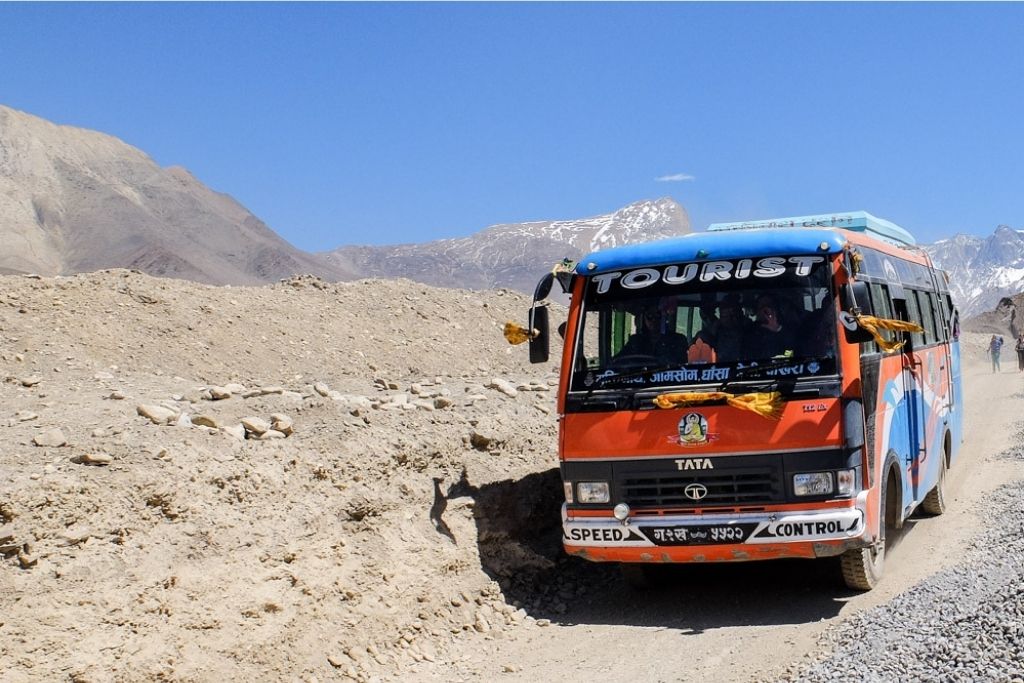
The bus is how most visitors make the trip. It is cheap, it runs every day, and the road follows river valleys with terraced hillsides that you miss entirely on a flight. The trade-off is a long day sitting down on a road that is still slow in places.
Tourist bus vs deluxe vs local bus
| Bus type | What you get | Approx. fare | Departs from (Kathmandu) |
|---|---|---|---|
| Standard/deluxe tourist bus | Reserved seat, luggage on the roof or in the hold, fixed meal and toilet stops; often no air conditioning | NPR 800–1,200 | Sorhakhutte tourist bus area, near Thamel |
| VIP/sofa bus | Two-plus-one or wider reclining seats, air conditioning, more legroom; some include lunch | NPR 1,600–2,500 | Sorhakhutte |
| Premium operator (e.g. Greenline) | Air conditioning, lunch included at a set restaurant, generally newer vehicles and fewer stops | Around US$25 | Its own office in Thamel (Tridevi Marg area) |
| Local bus | No reserved luggage space, frequent stops, often crowded | NPR 600–900 | Gongabu (New Bus Park), Balaju |
We recommend a tourist bus over a local bus for almost everyone. The UK Foreign, Commonwealth and Development Office (FCDO) specifically says tourist buses generally offer better comfort and safety, and local buses are often overcrowded and poorly maintained.
Where the tourist buses leave from
Tourist buses to Pokhara leave from the roadside at Sorhakhutte (also spelled Sorakhutte or Sora Khutte), on the north-west edge of Thamel, about a 10-minute walk or a short taxi ride from most Thamel hotels. They used to leave from Kantipath, so ignore older advice that sends you there.
Most buses depart at about 7am. Arrive by 6.30am: the area is a long line of near-identical buses, and finding yours takes a few minutes. Your ticket should show the bus company, number plate or bus number, and a seat number. Insist on a seat number when you buy, because unnumbered tickets are how people end up at the back over the rear axle.
If you are staying elsewhere in Kathmandu, such as Patan or Boudha, allow 30–45 minutes for an early taxi to Thamel.
Journey time and stops
Operators advertise 6–7 hours. In practice, plan on 7–9 hours, arriving in Pokhara in mid to late afternoon. Recent improvements on the Mugling–Pokhara section have cut travel times, but the exit from Kathmandu and the Trishuli section remain slow, and one landslide or accident can add hours.
A typical day looks like this:
- 7am: depart Sorhakhutte and crawl out of the valley through Kalanki and Nagdhunga.
- Around 8.30–9am: short toilet stop near Naubise.
- Around 9.30–10am: breakfast stop near Malekhu or along the Trishuli.
- Around 12.30–1.30pm: lunch at a highway restaurant, often between Kurintar and Damauli depending on the operator.
- Mid to late afternoon: arrive at Pokhara’s tourist bus park.
Food at stops is simple: dal bhat, noodles, snacks and tea. Bring water (at least 1.5–2 litres), snacks and something to do. Toilets at stops are basic, so carry tissue and hand sanitiser.
Arriving in Pokhara
Tourist buses terminate at the Tourist Bus Park on the northern side of Lakeside. It is a short taxi ride, or a 15–40 minute walk with a bag depending on where your hotel is. Taxi drivers meet every bus. Agree the fare before you get in, or use a ride-hailing app such as inDrive or Pathao. Greenline usually drops off at its own office closer to central Lakeside.
How to book a bus ticket
- Through your hotel or a Thamel travel agent: the easiest option. Agents add a small commission but can tell you which operator they rate.
- Online: booking platforms such as 12Go sell tourist bus seats, and some Nepali sites do too.
- When: book a day or two ahead in peak seasons (March to May and October to November) and around Dashain and Tihar. Outside those times, booking the afternoon before is usually fine.
Which side to sit on the bus
Between Galchhi and Mugling the highway runs along the south bank of the Trishuli River, so heading west to Pokhara the river and gorge views are on the right. The same side faces north towards the hills, and on clear days you get glimpses of the Himalaya after Mugling. On the Pokhara to Kathmandu bus, sit on the left. Choose a seat in the front half of the bus for a smoother ride. If you get travel sick, take your usual remedy before departure; the first two hours are the windiest.
Night buses
Night buses run between Kathmandu and Pokhara, usually leaving in the evening and arriving before dawn. We advise against them. The FCDO advises avoiding night travel by road in Nepal, you lose the scenery, and you arrive exhausted at an hour when nothing is open.
Kathmandu to Pokhara flight
A Kathmandu to Pokhara flight takes about 25 minutes in the air, and there are many departures a day, concentrated in the morning. Including travel to the airport, check-in and the transfer at the other end, budget around 3–4 hours door to door, compared with a full day by road.
Airlines on the route
Scheduled Kathmandu–Pokhara flights are operated by Nepali domestic carriers including Buddha Air, Yeti Airlines and Shree Airlines, with other domestic airlines also listed on the route. Buddha Air has the largest number of daily services. Schedules change often, so check current timetables with the airline or an agent.
Flight prices for foreigners
Nepal’s domestic airlines charge foreign nationals a separate US-dollar fare, which is considerably higher than the fare for Nepali citizens. For Kathmandu to Pokhara, expect roughly US$90–145 one way (about £68–£109) for an adult foreign national, with children’s fares lower. Fares vary with season, how far ahead you book and fuel surcharges. Indian nationals usually pay a different, lower fare.
You can book directly on the airlines’ websites, through international flight-search sites, or through a Nepali travel agent. Agents can sometimes find cheaper seats and can rebook you quickly if weather causes a cancellation.
Baggage allowance
The typical allowance on this route is 20 kg checked baggage plus about 5 kg hand luggage, though some fares and airlines allow up to 25 kg. Excess baggage is charged per kilo and depends on space on the aircraft. Trekking poles, gas canisters and lighters are restricted, so pack poles in your checked bag and buy fuel in Pokhara.
The much stricter limits you may have read about (often 10 kg checked plus 5 kg hand luggage) apply to small-aircraft mountain flights such as Kathmandu to Lukla or Pokhara to Jomsom, not to Kathmandu–Pokhara.
Which side to sit for mountain views
The Annapurna, Manaslu and Ganesh Himal ranges lie north of the flight path. On the flight from Kathmandu to Pokhara, sit on the right-hand side of the aircraft (looking forward), and on the return from Pokhara to Kathmandu sit on the left. Seats are often allocated at check-in, so check in early and ask. The view depends entirely on cloud: the clearest mornings are typically in October, November and the early spring, while monsoon flights often see nothing at all.
Some guides give the opposite advice. North is on the right when flying west from Kathmandu, so if you want the Himalaya, the right-hand side is the one to ask for.
Pokhara International Airport
Pokhara International Airport opened on 1 January 2023, about 3 km east of the old domestic airport. Despite its name it mainly handles domestic flights, and scheduled Kathmandu–Pokhara services now use the new airport. The old domestic airport is still used for small-aircraft flights to Jomsom in Mustang. Check your ticket for the terminal, especially if you are connecting to a Jomsom flight on the same day.
A taxi from Pokhara International Airport to Lakeside typically costs around NPR 400–600 (about £2–£3), or a little less through a ride-hailing app.
Delays and cancellations
Weather delays are common, especially during the monsoon (June to September) and on hazy or foggy winter mornings. Morning flights are more likely to depart on time and offer the clearest views. Do not book the Pokhara to Kathmandu flight on the same day as an international departure. Leave at least one full buffer day.
How safe are flights between Kathmandu and Pokhara?
Nepal’s aviation safety record is poor by international standards. In January 2023, Yeti Airlines Flight 691 crashed on approach to Pokhara, killing all on board. The FCDO notes that no Nepali airline currently meets the international safety standards needed to operate to the UK, and every Nepali carrier is on the UK Air Safety List as a result; the EU applies a similar ban. That ban relates to oversight standards rather than any single route, and thousands of travellers fly Kathmandu–Pokhara every day without incident. Read the current advice and make an informed choice. Nepal’s roads also carry real risks.
Kathmandu to Pokhara by private car or jeep
Hiring a private car with a driver costs roughly NPR 12,000–18,000 per vehicle (about £60–£90) one way for a standard car, more for an SUV, a large jeep or a van. Split between three or four people, it costs less than a flight per person and gives you control over timing and stops.
- Time: 5–7 hours of driving, more with stops. Private cars can now use the Nagdhunga tunnel out of Kathmandu, which avoids the worst of the traffic on the pass.
- Flexibility: leave when you like, stop for photos, and include Bandipur, Manakamana or Gorkha without dealing with local buses.
- Booking: through your hotel, a reputable travel agency or your trekking company. Confirm the price in writing, including fuel, the driver’s food and any overnight costs if you are stopping on the way.
- Self-drive: not recommended. Visitors need a 1968-convention international driving permit, and Nepali mountain roads, trucks and driving habits are hard work even for experienced drivers.
A private transfer is often the best choice if you are starting a trek from Pokhara on a fixed date. If you book the Annapurna Base Camp trek with us, our ground partners can arrange your transfer between Kathmandu and Pokhara. Check the trip page for exactly what is included.
Stopovers between Kathmandu and Pokhara
Breaking the journey turns a long bus day into one of the more enjoyable parts of a Nepal trip. These are the three stops most worth your time.
Bandipur
Bandipur is a hilltop Newar trading town with a car-free main bazaar, old brick houses and Himalayan views on clear mornings. It sits roughly 8 km up a winding road from Dumre on the highway. Tourist buses will drop you at Dumre, from where local jeeps and buses run up the hill, or a private car can take you straight there. One night is enough for most people; two allows time for short hikes to viewpoints and nearby caves.
Manakamana cable car
The Manakamana cable car runs from Cheres, near Kurintar on the highway, about 2.8 km up to Manakamana Temple, one of the most visited Hindu temples in Nepal. The ride takes about 10 minutes. The published fare for foreigners is about US$20 return (about £15) or US$11 one way, though this was last confirmed in 2023 and may have risen. It works as a half-day stop on a private car journey. On a bus, you need to get off at Kurintar and pick up another bus later. Saturdays and festival days are very busy with pilgrims.
Gorkha
Gorkha is the hill town where Prithvi Narayan Shah began the unification of Nepal in the 18th century. Its hilltop Gorkha Durbar, a palace and temple complex, has wide views on clear days. The turn-off is at Abu Khaireni, and Gorkha town is roughly 24 km north. It makes a worthwhile overnight stop for travellers interested in history, and it is also the road towards the Manaslu Circuit.
Other stops and detours
- Trishuli River rafting: one-day white-water rafting trips on the Trishuli start and finish along the highway, and some operators let you continue to Pokhara afterwards. Book through an established operator.
- Chitwan: at Mugling a road heads south to Narayangadh and Chitwan National Park. Many travellers do Kathmandu to Chitwan to Pokhara as a triangle rather than going direct.
Best option by type of traveller
| You are… | Our recommendation | Why |
|---|---|---|
| On a tight budget | Standard or VIP tourist bus | Under £13 one way, with a reserved seat and fixed stops |
| Short of time (one to two weeks in Nepal) | Fly | Saves most of a day; book a morning flight |
| A family or group of three to four | Private car | Similar total cost to flying, door to door, with stops |
| Prone to motion sickness | Fly, or private car with stops | The road is winding for hours |
| A solo traveller wanting comfort | Premium bus such as Greenline | Air conditioning and lunch included, still cheap |
| Starting a trek from Pokhara | Private transfer or fly | Avoids losing a day if the road is blocked |
| Travelling in the monsoon | Fly, with a buffer day | Landslides can close the road; flights can also be delayed, so allow slack either way |
| Interested in culture and villages | Bus or car with a night in Bandipur or Gorkha | Turns the transfer into part of the trip |
Pokhara to Kathmandu: the return trip
Everything above works in reverse, with a few differences worth knowing.
- Bus departures: tourist buses leave Pokhara’s Tourist Bus Park at around 7am. Greenline leaves from its Lakeside office. Fares are the same as on the way out.
- Arrival point: most tourist buses finish at or near Sorhakhutte, a short walk or taxi from Thamel. The final hour, crawling into the valley through Kalanki, is often the slowest part of the whole journey.
- Views: sit on the left side of both the bus and the plane: the river on the road and the mountains in the air.
- International flights: always leave at least one full day between returning from Pokhara and an international departure from Kathmandu. Weather delays and road closures happen in every season.
- After a trek: many trekkers finishing the Annapurna Base Camp or Poon Hill trek fly back to save tired legs a long day on the bus.
Safety tips for the journey
- Choose tourist buses or private vehicles over local buses, and avoid travelling by road at night, in line with FCDO advice.
- Check the road before you go in the monsoon. Ask your hotel or bus company whether the highway is open, and carry snacks, water and any medication in case of delays.
- Watch for strikes and protests. The FCDO notes that strikes (bandhs) and demonstrations are fairly common in Nepal and can halt road transport at short notice. Check local news the day before.
- Keep valuables with you, not in a bag on the roof or in the hold. Keep your passport, phone and cash on your body.
- Agree taxi fares in advance at both ends, or use a ride-hailing app.
- Get travel insurance that covers road and air travel in Nepal and any trekking you plan to do. See do I need travel insurance for trekking?
For more general advice, read our things to know before travelling to Nepal and our Nepal visa guide.
When to travel
The road is open all year, but conditions change with the season.
- October to November: clear skies and the best mountain views from the plane, but peak demand and Dashain and Tihar traffic. Book buses and flights early.
- December to February: dry and generally reliable road conditions. Early-morning fog sometimes delays flights.
- March to May: good travel conditions, with haze increasing towards May.
- June to September: monsoon. Landslides on the highway and weather delays on flights are both more likely, so allow extra time.
Our guide to the best season to travel in Nepal covers this month by month.
What to do once you reach Pokhara
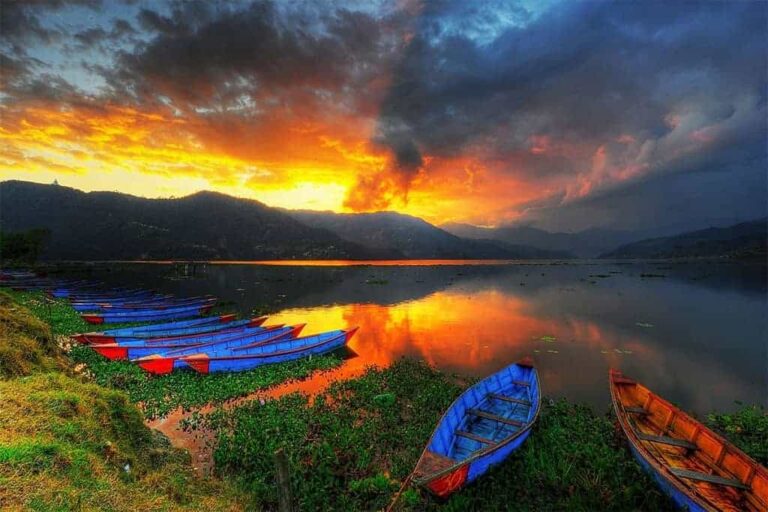
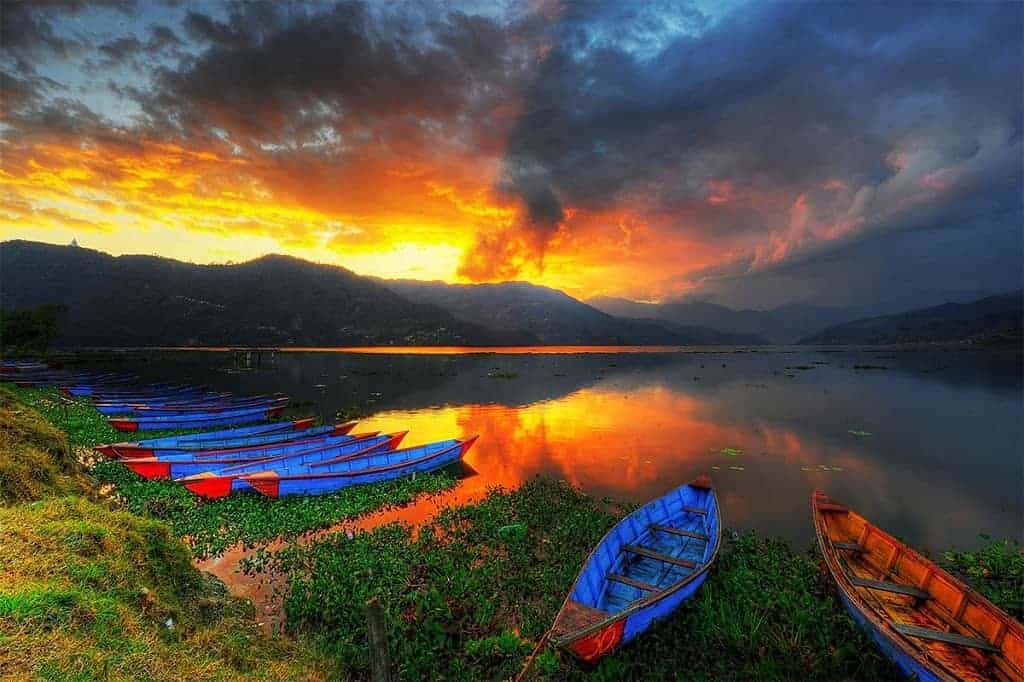
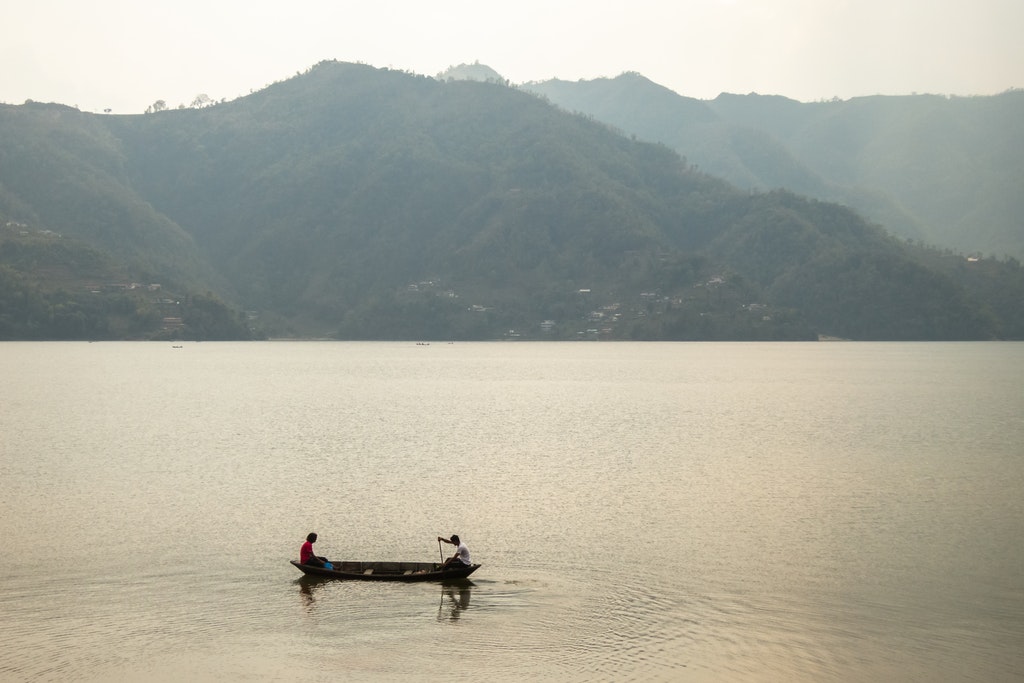
Pokhara is Nepal’s main base for the Annapurna region and a relaxed place to spend a few days on its own. Paddle out on Phewa Lake, go paragliding from Sarangkot, or start a trek such as Mardi Himal. Our guide to the best treks from Pokhara covers short and long options, and if you are still planning the shape of your trip, our Nepal itinerary guide shows how Kathmandu, Pokhara and Chitwan fit together.
If you would like transport, guides and a trek arranged together, plan your trip with us and our ground partners in Nepal will put together a tailor-made itinerary.
Frequently asked questions
How far is Kathmandu to Pokhara?
About 200–206 km by road via the Prithvi Highway, and roughly 140–145 km in a straight line by air. Different sources quote slightly different road distances depending on the start and end points used.
How long does the bus from Kathmandu to Pokhara take?
Tourist buses advertise 6–7 hours, but 7–9 hours is more realistic. Recent road upgrades between Mugling and Pokhara have shortened the trip, but traffic leaving Kathmandu, festivals and monsoon landslides can still add hours.
How much is a flight from Kathmandu to Pokhara?
Foreign nationals typically pay around US$90–145 one way (about £68–£109). Nepali domestic airlines charge foreigners a separate dollar fare, and prices vary with season and fuel surcharges. The flight itself takes about 25 minutes.
Is it better to fly or take the bus from Kathmandu to Pokhara?
Take the bus if you have time and want to save money. It costs a few pounds and shows you the countryside. Fly if you are short of time, get travel sick, or need to reach Pokhara on a fixed date for a trek. A private car is a good middle option for groups.
Where does the tourist bus to Pokhara leave from in Kathmandu?
Most tourist buses leave at about 7am from Sorhakhutte, on the north-west edge of Thamel. Premium operator Greenline uses its own office in Thamel, and local buses leave from Gongabu (New Bus Park).
Which side should I sit on the flight from Kathmandu to Pokhara?
Sit on the right-hand side flying to Pokhara and the left-hand side flying back to Kathmandu, as the Himalaya lie north of the route. Views depend on cloud, and October to November mornings are usually the clearest.
Is the Kathmandu to Pokhara road safe?
Tourist buses and private cars with experienced drivers make the trip every day, but road accidents are a significant risk in Nepal. Choose a tourist bus over a local bus, avoid night buses, and check the road is open during the monsoon, when landslides are most common. The UK FCDO gives similar advice.
Can I stop at Bandipur on the way from Kathmandu to Pokhara?
Yes. Get off the bus at Dumre and take a local jeep or bus about 8 km up to Bandipur, or book a private car and stop there. Most people stay one night and continue to Pokhara the next day.