
Climbing Mount Everest takes about six to nine weeks on a standard guided expedition, and most teams book around 55–60 days from arrival in Kathmandu to flying home. The time on the summit itself is brief: the final climb from the South Col takes roughly 8–12 hours up and several more down. The rest of the expedition is spent trekking in, acclimatising on rotations through the Khumbu Icefall, and waiting for a weather window in mid to late May.
How long does it take to climb Everest? Quick answers
| Question | Typical answer |
|---|---|
| Full standard expedition (Nepal, South Col) | About 6–9 weeks; many operators run 55–60 days |
| “Flash” or fast-track expedition with pre-acclimatisation at home | About 4–5 weeks; some programmes run 30–36 days |
| Trek from Lukla to Base Camp | About 8–10 days including acclimatisation days |
| Acclimatisation rotations from Base Camp | About 3–4 weeks |
| Summit push from Base Camp and back | About 5–7 days, weather permitting |
| Summit day from the South Col (Camp 4) | About 8–12 hours up, then about 3–7 hours back to the South Col |
| Fastest reported Base Camp to summit (with oxygen) | 9 hours 55 minutes, Tyler Andrews, May 2026 |
| Everest Base Camp trek only (no climbing) | About 12–14 days return from Lukla |

Why an Everest expedition takes around two months
The main reason is acclimatisation. Even with supplemental oxygen, the human body needs weeks at progressively higher altitudes to cope with the summit, where air pressure is about a third of that at sea level. Rushing this is the surest route to altitude illness.
The second reason is weather. The jet stream normally sits over the summit for much of the year, bringing winds strong enough to make climbing impossible. In most years it lifts away for a short period in May before the monsoon arrives, creating summit windows that may last only a few days.
The third reason is logistics. The Icefall Doctors, a specialist Sherpa team, must set the route through the Khumbu Icefall, and fixed ropes have to be installed all the way to the summit before commercial teams can make attempts. In 2026, for example, a large serac paused Icefall work for about two weeks and strong winds delayed rope fixing above Camp 2, so the first commercial summits did not come until 13 May.
A typical Everest expedition timeline (South Col route)
Expedition schedules vary by operator, but most standard Nepal-side itineraries follow the same phases. This example is based on published 2026–27 operator itineraries.
| Phase | Approx. dates | Days | What happens |
|---|---|---|---|
| Kathmandu | Late March to early April | 2–4 | Permits, briefings, gear checks |
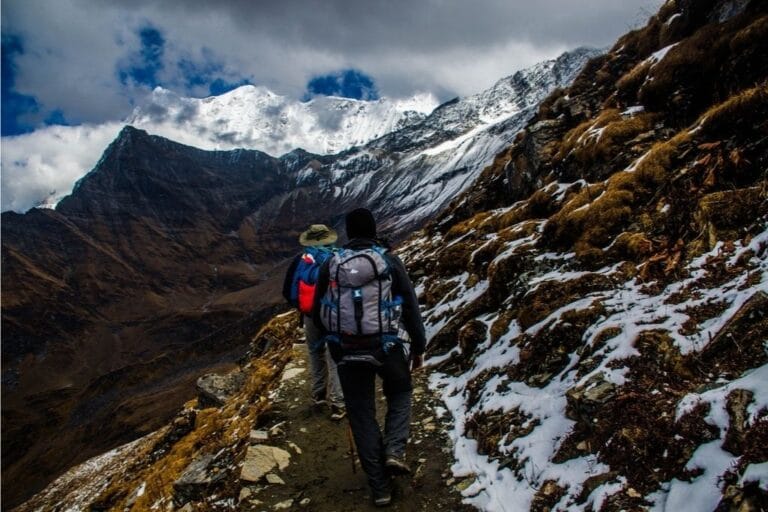
| Trek to Base Camp | Early to mid April | 8–10 | Fly to Lukla and trek via Namche Bazaar and Dingboche, often with an ascent of Lobuche East (6,119 m) for extra acclimatisation |
| Acclimatisation rotations | Mid April to early May | 20–28 | One or two trips up through the Icefall to Camps 1, 2 and sometimes 3, returning to Base Camp to recover |
| Rest and weather wait | Early to mid May | 4–14 | Recover at Base Camp or lower villages; wait for a forecast window |
| Summit push | Mid to late May | 5–7 | Base Camp to Camp 2, Camp 3, South Col, summit, then back down |
| Return | Late May | 3–6 | Helicopter or trek out to Lukla, fly to Kathmandu, fly home |
Mountain Madness, for example, publishes a 57-day itinerary running from 1 April to 27 May 2027, with phases for the Khumbu trek, Lobuche East, an Everest rotation, recovery and the summit rotation.
Everest camps and altitudes
On the Nepal side, climbers move through four camps above Base Camp. Altitudes vary slightly by source and by where tents are pitched each year.
| Camp | Approx. altitude | Typical time from previous camp |
|---|---|---|
| Everest Base Camp | 5,300–5,364 m | 8–10 days’ trek from Lukla |
| Camp 1 (top of the Khumbu Icefall) | About 6,000 m | Around 4–8 hours through the Icefall, faster once acclimatised |
| Camp 2 (Western Cwm) | About 6,400 m | 2–4 hours; many teams now go straight from Base Camp to Camp 2 |
| Camp 3 (Lhotse Face) | About 7,100–7,200 m | 4–7 hours up the Lhotse Face on fixed ropes |
| Camp 4 (South Col) | About 7,900–8,000 m | 5–6 hours via the Yellow Band and Geneva Spur |
| Summit | 8,848.86 m | About 8–12 hours from the South Col |
Acclimatisation rotations explained
A rotation is a trip up the mountain to sleep higher than before, followed by a return to Base Camp to recover. Climbers “climb high, sleep low”, which prompts the body to adapt while limiting the time spent in extreme conditions.
Traditionally, teams made two or three rotations: first to Camp 1 and Camp 2, then a night or two at Camp 2 with a touch of Camp 3. Many operators now reduce trips through the dangerous Icefall by acclimatising on nearby Lobuche East first, then making a single rotation on Everest itself.
Fast-track programmes go further. Clients sleep in hypoxic tents at home for several weeks before departure, so they arrive partly acclimatised. Adventure Consultants’ Fast Track runs 30 days from Kathmandu back to Kathmandu, flying by helicopter to Pheriche and making one rotation that tags Camp 3. Shorter expeditions mean less exposure to the Icefall and less weight loss, but they leave less margin if weather or illness disrupts the plan.
The summit push: how long from Camp 4 to the top?
The summit push begins when forecasters predict low winds over the summit for a day or two. From Base Camp it usually takes five to seven days to go up and come back.
- Base Camp to Camp 2: one long day through the Icefall and Western Cwm, often starting before dawn when the ice is most stable.
- Rest at Camp 2: usually one day.
- Camp 2 to Camp 3: up the Lhotse Face. Most climbers start using bottled oxygen here or at Camp 3.
- Camp 3 to the South Col: a five- to six-hour climb, arriving around midday to rest, eat and hydrate.
- Summit day: climbers usually leave the South Col between about 8 pm and midnight. The route climbs to the Balcony (about 8,400 m) in 4–5 hours, then up to the South Summit and along the summit ridge past the Hillary Step. Most reach the top between dawn and late morning.
- Descent: back to the South Col takes roughly 3–7 hours. Many climbers continue down to Camp 2 the next day and to Base Camp the day after.
Expeditions set a strict turnaround time, often late morning or early afternoon. If you have not reached the summit by then, you turn back, because most accidents happen on the descent when climbers are exhausted and oxygen supplies are running low. Summit day as a whole can last 12–18 hours.

Crowds and bottlenecks
When hundreds of climbers share a short window, queues at the Hillary Step and summit ridge can add hours. The record for a single day is 354 summits, on 23 May 2019. In 2026, Alan Arnette reported a record 1,008 summits in the spring season, with about 80% between 17 and 26 May and 274 on 20 May alone.
South Col vs North Ridge: does the route change the time?
| South Col (Nepal) | Northeast Ridge (Tibet) | |
|---|---|---|
| Start | Fly to Lukla and trek 8–10 days to Base Camp | Fly to Lhasa, drive to Base Camp (about 5,150 m) |
| Main hazards | Khumbu Icefall, Lhotse Face, crowding | Long exposure high on the ridge, colder and windier, the Second Step |
| High camp | South Col, about 7,900–8,000 m | Camp 3, about 8,300 m |
| Typical expedition length | About 6–9 weeks (shorter with pre-acclimatisation) | Similar; Alpenglow’s pre-acclimatised programme is 36 days |
| Status in 2026 | Open; record permit numbers | Closed to international expeditions in spring 2026 |
China closed the Tibetan side to international expeditions for spring 2026 while it investigated a controversial fireworks display near Shigatse. Check the current position before planning a north-side climb.
What can make the climb longer or shorter
- Weather: a late or short weather window can mean extra days waiting at Base Camp, or abandoning the attempt.
- Route conditions: delays to Icefall or rope fixing push the whole season back.
- Acclimatisation: illness, a cough or poor recovery can force extra rest or a lower rotation.
- Pre-acclimatisation: hypoxic tent programmes can cut the expedition to four or five weeks.
- Helicopters: many teams now fly out from Base Camp or Pheriche, saving several days of trekking.
- Experience: climbers who have been above 8,000 m before may adapt and move faster.
The fastest Everest ascents
- Tyler Andrews (US), May 2026: reported 9 hours 55 minutes from Base Camp to the summit using supplemental oxygen, beating the previous mark by just over an hour. The time had been reported but not independently confirmed at the time of writing.
- Lhakpa Gelu Sherpa, 2003: 10 hours 56 minutes from Base Camp to the summit, the long-standing record.
- Kilian Jornet (Spain), 2017: about 26 hours from the Rongbuk monastery near the north-side Base Camp to the summit without supplemental oxygen.
These were exceptional athletes, fully acclimatised, climbing on fixed ropes set by others. For a normal climber, the summit push alone takes five to seven days.
At the other end of the scale, Kami Rita Sherpa reached the summit for a record 32nd time in May 2026. Read more about him in our profile of Kami Rita Sherpa.

How long did the first ascent take?
The 1953 British expedition, led by John Hunt, spent roughly three months in Nepal, from the walk-in from Kathmandu in March to the summit on 29 May. There was no airstrip at Lukla then, so the team walked for more than two weeks just to reach the Khumbu. Edmund Hillary and Tenzing Norgay left their top camp at about 8,500 m early that morning and reached the summit around 11.30 am. For more history, see our guide to Mount Everest history, facts and gear.
Cost, permits and rules that affect your timeline
- Permit: Nepal raised the Everest climbing royalty for foreign climbers from US$11,000 to US$15,000 (about £11,250) from September 2025.
- Total cost: Alan Arnette estimates around US$45,000 with Nepali operators and roughly US$59,000–80,000 or more with Western-guided teams (about £34,000–60,000+), before flights, gear and personal oxygen extras.
- Age: Nepal sets a minimum age of 16 for Everest; China’s rules have applied an 18–70 age range on the north side.
- Experience: Nepal’s draft tourism bill proposes that Everest climbers must first have climbed a 7,000 m peak in Nepal. As of mid-2026 this had not become law.
Most climbers also spend one to three years building experience on lower peaks, so the true timeline from first deciding to summit can be much longer than the expedition itself.
Success and safety in brief
According to Alan Arnette’s analysis of Himalayan Database figures to December 2025, about 80% of summit attempts with supplemental oxygen succeed, against around 4% without it. The long-run death rate is about one per 100 summits, lower in the commercial era, with the most frequent causes including falls, altitude illness, exhaustion and avalanches. Read our Mount Everest facts for more numbers.

How long does the Everest Base Camp trek take?
If you want to see Everest without climbing it, the Everest Base Camp trek takes about 12–14 days return from Lukla, or 14–16 days in Nepal including Kathmandu. The walk covers roughly 130 km round trip, climbing from Lukla (2,860 m) through Namche Bazaar to Base Camp at 5,364 m. See Everest Base Camp trek distance for stage-by-stage figures and our guide to altitude sickness on Everest for how acclimatisation works on the trek.
Our 16-day Everest Base Camp trek follows the same valley as the climbers, with acclimatisation days at Namche and Dingboche. In spring you can walk among expedition tents at Base Camp while teams prepare for their rotations. To get started, read our guide to planning an Everest Base Camp trek.
Frequently asked questions
How many days does it take to climb Mount Everest?
Most standard expeditions last around 55–60 days from arrival in Kathmandu. Fast-track programmes using pre-acclimatisation at home can take 30–36 days.
How long does it take to climb from Base Camp to the summit?
On a normal expedition, the final push from Base Camp to the summit and back takes about five to seven days, after three to four weeks of acclimatisation rotations. The fastest reported time with oxygen is 9 hours 55 minutes.
How long is summit day on Everest?
Climbers usually leave the South Col between about 8 pm and midnight and spend 8–12 hours reaching the summit, then 3–7 hours descending to the South Col. The whole day can last 12–18 hours.
Why do Everest climbers start at night?
Starting at night gives climbers time to reach the summit and get back to the South Col before afternoon winds and weather build, and before oxygen runs low. Turnaround times enforce this.
When is the best time to climb Everest?
Mid to late May, when the jet stream usually lifts off the summit before the monsoon. Autumn ascents are possible but much rarer.
How long do climbers spend at Everest Base Camp?
Several weeks in total. Base Camp is home for most of April and May between rotations and while waiting for the weather.
Can you climb Everest in a week?
Not safely for ordinary climbers. Even with hypoxic-tent pre-acclimatisation, guided expeditions take around four to five weeks from Kathmandu.
How long does it take to trek to Everest Base Camp?
About eight to nine days up from Lukla and three to four days back down, so 12–14 days of trekking, or 14–16 days in Nepal including Kathmandu.