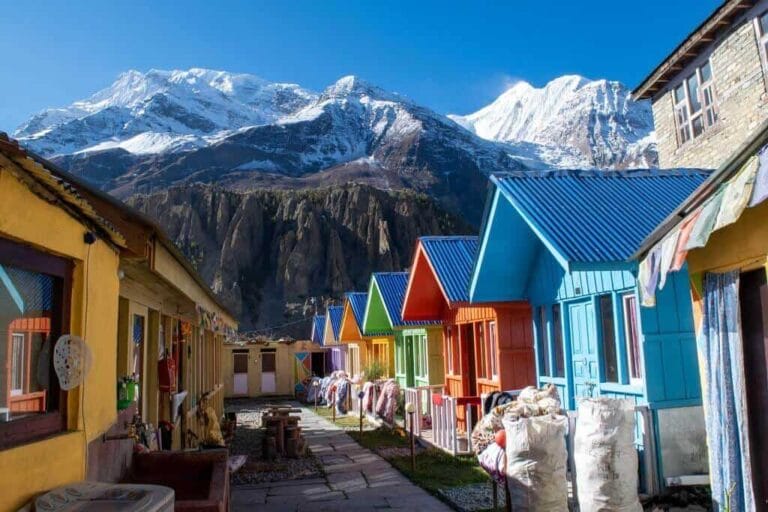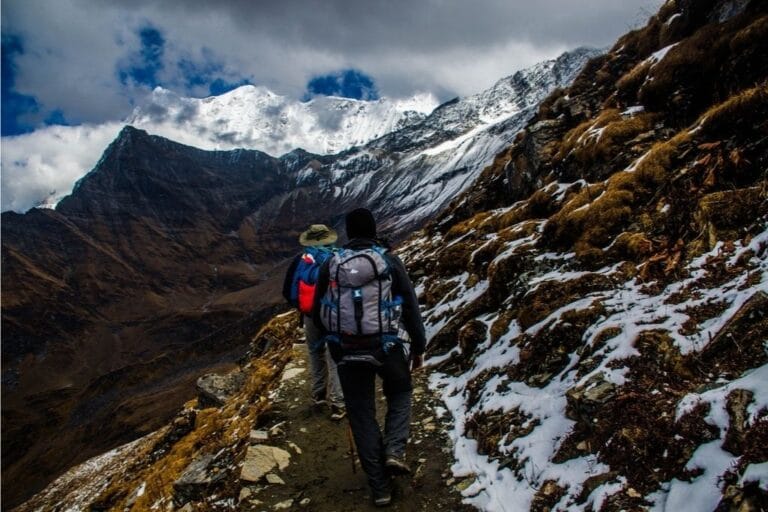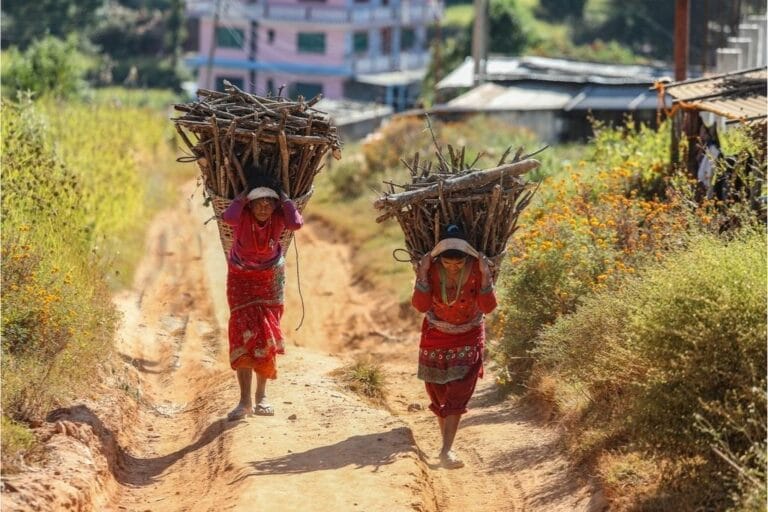


The best treks in the world combine big scenery, a real sense of journey and logistics you can actually manage. Our shortlist of 20 runs from Himalayan classics such as Everest Base Camp and Annapurna Base Camp to the Inca Trail, Torres del Paine, the Tour du Mont Blanc and Kilimanjaro, with gentler options like the Camino de Santiago and the Kumano Kodo for first-timers.
Below you will find a comparison table, then a section on each trek covering length, highest point, difficulty, best season and the booking or permit rules that catch people out. Distances and altitudes are rounded and vary by route variant, so treat them as planning figures.
The 20 best treks in the world at a glance
| Trek | Country | Typical length | Highest point | Difficulty | Best season |
|---|---|---|---|---|---|
| Everest Base Camp | Nepal | 12–16 days, about 130 km return | 5,364 m (Kala Patthar higher) | Challenging | Mar–May, late Sep–Nov |
| Annapurna Base Camp | Nepal | 7–12 days | 4,130 m | Moderate | Mar–May, Oct–Nov |
| Annapurna Circuit | Nepal | 12–18 days | 5,416 m (Thorong La) | Challenging | Mar–May, Oct–Nov |
| Inca Trail | Peru | 4 days, about 42 km | 4,215 m | Moderate | May–Sep (closed Feb) |
| Torres del Paine W Trek | Chile | 4–5 days, about 70–80 km | Under 1,200 m | Moderate | Nov–Mar |
| Kilimanjaro | Tanzania | 5–9 days | 5,895 m | Challenging (altitude) | Jan–Mar, Jun–Oct |
| Tour du Mont Blanc | France, Italy, Switzerland | 10–12 days, about 170 km | About 2,500–2,670 m | Moderate–challenging | Mid-Jun to mid-Sep |
| Snowman Trek | Bhutan | 25–30+ days | About 5,320 m | Very hard | Late Sep–Oct |
| K2 Base Camp | Pakistan | 14–21 days | About 5,000 m | Very hard | Mid-Jun to Aug |
| GR20 | France (Corsica) | 12–16 days, about 180 km | About 2,600 m | Very hard | Jun–Sep |
| Camino de Santiago (Francés) | France, Spain | 30–35 days, about 780 km | About 1,500 m | Easy–moderate | Apr–Jun, Sep–Oct |
| John Muir Trail | USA | 2–3 weeks, about 340 km | 4,421 m (Mount Whitney) | Hard | Late Jul–early Oct |
| Routeburn Track | New Zealand | 2–4 days, 32 km | 1,255 m | Moderate | Late Oct–Apr |
| Overland Track | Australia (Tasmania) | 6 days, 65 km | 1,617 m (Mt Ossa side trip) | Moderate | Dec–Apr |
| Kumano Kodo (Nakahechi) | Japan | 2–5 days | Under 1,000 m | Easy–moderate | Mar–May, Oct–Nov |
| Lycian Way | Türkiye | Sections of 3–7 days; full route several weeks | About 1,800 m | Moderate | Mar–May, Oct–Nov |
| Arctic Circle Trail | Greenland | 8–10 days, about 160 km | Low (under about 600 m) | Hard (remote) | Late Jun–Sep |
| Kailash Kora | Tibet (China) | 3 days, about 52 km | About 5,600 m (Dolma La) | Hard (altitude) | May–Sep |
| Cinque Terre (Sentiero Azzurro) | Italy | 1–2 days, about 12 km | Under 300 m | Easy–moderate | Apr–Jun, Sep–Oct |
| Kvalvika Beach | Norway (Lofoten) | Half day, about 3 km each way | 543 m (Ryten) | Easy–moderate | Jun–Sep |
How we chose these treks
We weighed four things: the quality and variety of the scenery, the sense of travelling through a place rather than just looking at it, how well the route is supported (huts, lodges, waymarking, rescue), and how achievable it is for a fit, prepared walker. We also included several famous routes that people regularly ask us about, even where they are short or very hard, so you can compare them honestly.
If you are new to multi-day walking, read our trekking for beginners guide first.
Himalayan classics
1. Everest Base Camp, Nepal
The walk to the foot of the world’s highest mountain is the trek most people have heard of, and it lives up to it. From Lukla you climb through Sherpa villages, monasteries and suspension bridges to Namche Bazaar, Tengboche and Dingboche, then past the Khumbu Glacier to base camp at about 5,364 m. The classic sunrise view of Everest comes from Kala Patthar above Gorak Shep, which is higher again.
- Length: usually 12–16 days return from Lukla, including acclimatisation days.
- Difficulty: challenging, mainly because of altitude rather than technical terrain.
- Best season: March to May and late September to November.
- Rules: you need the Sagarmatha National Park entry permit and the local Khumbu municipality permit. The Khumbu local government did not adopt Nepal’s 2023 mandatory-guide rule, but most trekkers still go with a licensed guide and porter for safety and logistics.
Our 16-day Everest Base Camp Trek includes proper acclimatisation stops. For more detail, see our guide to how hard the EBC trek is.
2. Annapurna Base Camp, Nepal
Annapurna Base Camp (ABC) packs an enormous amount into a shorter trip. You climb from rice terraces and Gurung villages such as Ghandruk and Chhomrong through rhododendron and bamboo forest into the Annapurna Sanctuary, a natural amphitheatre ringed by Annapurna I, Hiunchuli and Machhapuchhre. Base camp sits at about 4,130 m.
- Length: 7–12 days from Pokhara depending on the route.
- Difficulty: moderate; lots of stone steps, but lower altitude than Everest.
- Best season: March to May and October to November. Watch for avalanche warnings in the upper gorge after heavy snow.
- Rules: since 1 April 2023, foreign trekkers in the Annapurna Conservation Area must hire a licensed guide through a registered Nepali agency, and you need an ACAP permit.
Our 15-day Annapurna Base Camp Trek is a good first Himalayan trek. If you are choosing between the two, read ABC vs EBC.
3. Annapurna Circuit, Nepal
The Annapurna Circuit loops around the Annapurna massif, climbing from subtropical valleys through Manang to the Thorong La pass at 5,416 m before dropping to Muktinath and the Kali Gandaki gorge. Road building has changed parts of the lower route, but well-chosen trail alternatives keep it one of the world’s great long treks. It usually takes 12–18 days and needs a licensed guide, like ABC. See our Annapurna Circuit guide.
4. Snowman Trek, Bhutan
Often described as one of the hardest treks in the Himalaya, the Snowman crosses the remote Lunana region along Bhutan’s northern border. Itineraries run roughly 25 to 35 days with many passes above 4,500 m; the highest, Rinchen Zoe La, is about 5,320 m. Snow regularly closes passes, and a significant share of groups have to turn back or exit early, so build in spare days and flexible expectations.
Tourism in Bhutan is organised through licensed Bhutanese tour operators, and visitors pay a daily Sustainable Development Fee (set at US$100 per night at the time of writing, about £75), on top of trek costs. The main window is late September to October, with a shorter spring window.
5. K2 Base Camp, Pakistan
The trek up the Baltoro Glacier in the Karakoram is a true expedition. From Askole you walk for days on rock and ice past the Trango Towers and Masherbrum to Concordia, where K2, Broad Peak and the Gasherbrums come into view, then on to K2 Base Camp at roughly 5,000 m. Strong groups sometimes exit over the Gondogoro La, a technical pass that needs a certified guide and fixed ropes.
- Length: about 14–21 days from Skardu.
- Season: mid-June to the end of August; snow usually arrives in September.
- Rules: you need a Central Karakoram National Park permit and fee. Solo trekking is not allowed in the park’s core zone, and most people go with a registered Pakistani operator. Check current UK or your government’s travel advice for Gilgit-Baltistan before booking.
6. Kailash Kora, Tibet
The circuit of Mount Kailash is sacred to Hindus, Buddhists, Jains and followers of Bön, and pilgrims walk it as an act of devotion. The kora is about 52 km, usually walked in three days, and crosses the Dolma La at roughly 5,600 m. Foreigners need a Chinese visa plus Tibet travel permits, which are only issued for organised tours with a licensed agency; access rules can change at short notice. Saga Dawa (around May–June) brings huge crowds of pilgrims.
South America
7. Inca Trail, Peru
The classic Inca Trail follows original stone paths for about 42 km over four days, passing ruins such as Wiñay Wayna before arriving at Machu Picchu through the Sun Gate. The highest point is Dead Woman’s Pass (Warmiwañusca) at about 4,215 m, so spend a few days acclimatising in Cusco first.
Permits are the main hurdle. The government caps the trail at 500 permits a day, including guides and porters, which leaves roughly 200 for trekkers. Independent trekking is not allowed: you must book through a licensed operator with your passport details, and the trail closes every February for maintenance. Permits for the following season are released months in advance and the May to August dates sell out first, so book as early as you can. If permits have gone, alternatives such as the Salkantay or Lares treks still reach Machu Picchu.
8. Torres del Paine W Trek, Chile
The W Trek in Patagonia visits the three highlights of Torres del Paine National Park: the granite towers at Base Las Torres, the French Valley and Grey Glacier. Most people take four or five days. Altitude is not an issue, but wind is: Patagonian gusts can knock you off your feet.
Booking rules are strict. You may only camp or sleep in authorised campsites and refugios, and you must reserve them in advance with the private concessionaires (Vertice Patagonia and Las Torres) before arriving. Park entry tickets are bought online in advance. The longer O Circuit adds the remote back side of the massif, is walked anticlockwise only and is open roughly November to March. Outside the main season, from May to early September, the W can only be walked with an official guide.
Africa
9. Mount Kilimanjaro, Tanzania
Kilimanjaro is the highest mountain in Africa at 5,895 m and the world’s most popular high-altitude trek. It is a walk, not a climb, but summit night is long, cold and steep, and altitude sickness is the main reason people fail to reach the top. Routes range from the hut-based Marangu to the longer Lemosho and Northern Circuit, which give your body more time to adjust.
You cannot climb independently: every ascent must be with a licensed operator and registered guide. Park fees are substantial (a conservation fee of around US$70 per person per day plus camping or hut fees and VAT at the time of writing), which is why longer routes cost more. Our guide to the highest mountains in Africa covers Kilimanjaro’s routes in detail.
Europe
10. Tour du Mont Blanc, France, Italy and Switzerland
The TMB circles the Mont Blanc massif through three countries in about 170 km, with roughly 10,000 m of ascent. Most people take 10–12 days, sleeping in mountain refuges, gîtes and village hotels. The scenery of glaciers, high cols and alpine pastures is relentless, and you can resupply in towns such as Courmayeur and Champex.
The season runs from about mid-June to mid-September. Refuges now fill months ahead for July and August, so book accommodation before anything else.
11. GR20, Corsica, France
The GR20 crosses Corsica from Calenzana to Conca in about 180 km. It has a reputation as Europe’s toughest waymarked trail because of its steep granite slabs, chains and scrambling. Most walkers take 12–16 days, staying in refuges or camping beside them; wild camping on the route is not allowed. Book refuge places and tent pitches in advance in peak season, and consider walking the gentler southern half if you are unsure.
12. Camino de Santiago, Spain
The Camino is a network of pilgrim routes to Santiago de Compostela. The most famous, the Camino Francés, runs about 780 km from Saint-Jean-Pied-de-Port over the Pyrenees and across northern Spain, usually in 30–35 days. Its highest point, near the Cruz de Ferro, is about 1,500 m. Pilgrim hostels (albergues), cafés and waymarking make it one of the easiest long routes to organise.
To receive the Compostela certificate you must walk at least the last 100 km (or cycle the last 200 km) and collect stamps in a pilgrim passport (credencial). That is why Sarria, just over 100 km out, is the most popular starting point for a one-week Camino.
13. Lycian Way, Türkiye
Türkiye’s first waymarked long-distance trail runs along the Teke peninsula from near Fethiye to near Antalya. The original route is about 520 km and extensions have taken the network to over 700 km. It links ancient Lycian tombs, ruined cities, pine forest and coves, and climbs as high as about 1,800 m on the flanks of Tahtalı Dağı. Spring (March–May) and autumn (October–November) are best; summer is very hot. Most visitors walk a one- or two-week section, such as Ölüdeniz to Kaş.
14. Cinque Terre, Italy
The Sentiero Azzurro (Blue Path) links the five cliffside villages of the Cinque Terre in about 12 km. It is short, but the views over the Ligurian Sea and the vineyards are spectacular. The Corniglia–Vernazza–Monterosso section requires a Cinque Terre Trekking Card or Cinque Terre Card in season, and the restored Via dell’Amore between Riomaggiore and Manarola needs an extra ticket. Sections close after heavy rain, so check the national park website before you go, and walk early to avoid crowds.
15. Kvalvika Beach, Lofoten, Norway
Kvalvika is a wild, north-facing beach on Lofoten that you can only reach on foot. From Fredvang it is about 3 km to the beach (around 1.5 hours one way), with an optional climb to the summit of Ryten (543 m) for the famous view down onto the sand. It is a short, rocky hike rather than a trek, best from June to September when the midnight sun lights it up. Dogs must be on a lead in the national park in summer, and drones are not allowed.
16. Arctic Circle Trail, Greenland
The Arctic Circle Trail runs about 160 km from Kangerlussuaq, near the ice sheet, to Sisimiut on the west coast. There are no villages on the way: you pass through tundra, lakes and river valleys, sleeping in a handful of basic, free, unstaffed huts or your own tent. Most people take 8–10 days and carry all their food. The trail is faint in places, so it is only suitable for experienced hikers with strong navigation skills. The season is late June to September; mosquitoes are fierce in July.
Asia-Pacific and North America
17. Kumano Kodo, Japan
The Kumano Kodo is a network of ancient pilgrimage trails on the Kii Peninsula, listed by UNESCO as part of the Sacred Sites and Pilgrimage Routes in the Kii Mountain Range in 2004. The most popular route, the Nakahechi, takes two to five days through cedar forest to the Kumano Hongu Taisha shrine, with nights in family-run inns and hot springs. Altitude is modest, but the paths are steep and slippery in rain. Book guesthouses early for spring and autumn, as many are small.
18. Routeburn Track, New Zealand
One of New Zealand’s Great Walks, the Routeburn links Mount Aspiring and Fiordland national parks in 32 km. In two to four days you pass lakes, waterfalls and alpine gardens, with the Harris Saddle (1,255 m) as the high point. During the Great Walks season (roughly late October to late April) huts and campsites must be booked in advance through the Department of Conservation, and they sell out quickly.
19. Overland Track, Tasmania, Australia
The Overland Track runs 65 km from Cradle Mountain to Lake St Clair through glacial valleys, button grass plains and ancient rainforest. Most people take six days, using public huts or tent platforms, with an optional side trip up Mount Ossa (1,617 m), Tasmania’s highest peak. From 1 October to 31 May you must book a departure date and pay the Overland Track fee (A$312 for adults in the current season, roughly £155), and you walk north to south.
20. John Muir Trail, USA
The JMT runs about 340 km (211 miles) through California’s Sierra Nevada from Yosemite Valley to the summit of Mount Whitney (4,421 m), the highest point in the contiguous United States. Most people take about three weeks. The scenery of granite peaks, lakes and high passes is superb, but the permit is the hard part: Yosemite permits are allocated by lottery, there is a daily quota for exiting over Donohue Pass, and most applications are unsuccessful. You must carry an approved bear canister for the whole route.
Other famous treks worth knowing
- Upper Mustang, Nepal: a semi-desert trek to the walled town of Lo Manthang (about 3,840 m), with Tibetan-influenced culture. It is a restricted area: you need a special permit (US$500 for the first 10 days, about £375) and a licensed guide.
- Mount Fuji, Japan: a steep one- or two-day climb to 3,776 m in the official season (1 July to 10 September). The Yoshida Trail now charges a ¥4,000 fee, caps daily numbers and closes the gate in the afternoon unless you have a hut booking.
- Long Range Traverse, Canada: an unmarked 35 km route across Gros Morne National Park in Newfoundland. Parks Canada requires a backcountry permit and a pre-trip orientation, and you must be confident with map and compass.
- Mount Roraima, Venezuela: a spectacular tabletop mountain (about 2,810 m) on the Venezuela–Brazil–Guyana border. The UK FCDO currently advises against all travel within 40 km of these borders, so check official advice before considering it.
- Dogon Country, Mali: once a celebrated cultural trek along the Bandiagara escarpment. The UK FCDO advises against all travel to Mali, so this route is not currently an option.
- The Great Wall of China: unrestored sections such as Jiankou to Mutianyu make excellent day hikes from Beijing, though they are steep and crumbling in places.
How to choose the right trek for you
- Be honest about time. Most Himalayan treks need two to three weeks door to door. If you only have a week, look at the Inca Trail, the W Trek, the Routeburn or a section of the Camino.
- Decide how you feel about altitude. Routes above about 3,500 m (EBC, Kilimanjaro, the Inca Trail, Kailash) need acclimatisation and carry a real risk of altitude illness. Read our guide to altitude sickness and speak to your doctor if you have heart, lung or other medical conditions.
- Check the booking and permit rules first. Inca Trail permits, TMB refuges, Torres del Paine campsites, JMT permits and Great Walk huts can sell out months ahead.
- Choose your level of support. Teahouse treks in Nepal, refuges in the Alps and albergues on the Camino mean a light pack. Greenland or the JMT mean carrying everything.
- Train and insure. Start a training plan at least three months out using our trekking fitness guide, and make sure your policy covers the altitude you will reach and helicopter rescue. See do I need travel insurance for trekking?
Why Nepal tops our list
Nepal is the only country where you can walk for two weeks among the world’s highest mountains while sleeping and eating in village teahouses, without carrying a tent or stove. That makes high-altitude trekking accessible to fit walkers who are not mountaineers. Routes range from short lodge treks such as Poon Hill to remote circuits like Manaslu.
Our Nepal trekking guide compares the main routes. When you are ready, look at our Everest Base Camp and Annapurna Base Camp trips, or tell us what you have in mind and we will help you plan a different trek in Nepal with our licensed local partners.
Frequently asked questions
What is the most famous trek in the world?
The Everest Base Camp trek in Nepal is probably the most famous, followed closely by the Inca Trail to Machu Picchu and the Kilimanjaro climb. All three are popular because they lead to an iconic destination rather than just a beautiful route.
What is the hardest trek in the world?
Bhutan’s Snowman Trek is often called the hardest, because of its length (25 days or more), many high passes and frequent snow closures. The K2 Base Camp trek in Pakistan and Corsica’s GR20 are also among the toughest well-known routes.
Which famous trek is best for beginners?
The final 100 km of the Camino de Santiago, the Kumano Kodo and the Routeburn Track are good first multi-day treks. In the Himalaya, Annapurna Base Camp or Poon Hill are gentler than Everest Base Camp because they stay at lower altitude.
Do you need a permit for the Inca Trail?
Yes. Permits are limited to 500 a day including staff, must be booked through a licensed operator with your passport details, and the trail closes every February. Peak-season dates often sell out months in advance.
Can you climb Kilimanjaro without a guide?
No. All climbs must be organised through a licensed operator with registered guides, and you pay daily park fees. Longer routes such as Lemosho give better acclimatisation and a better chance of reaching the summit.
Do you need to book campsites in Torres del Paine?
Yes. You can only stay in authorised campsites and refugios, and you need reservations with the operators before you arrive. Rangers and campsite staff check bookings, and hikers without them can be turned back.
How fit do you need to be for the Everest Base Camp trek?
You need to be able to walk five to seven hours a day for many days in a row, often uphill. No climbing skills are required, but a few months of hill walking, stair work and cardio training will make the trek far more enjoyable. Altitude affects everyone differently, regardless of fitness.
When is the best time of year for trekking?
It depends on the hemisphere. The Himalaya is best in spring and autumn, the Alps and the Arctic in summer, and Patagonia and New Zealand from November to March. Check each trek’s season in the table above.