
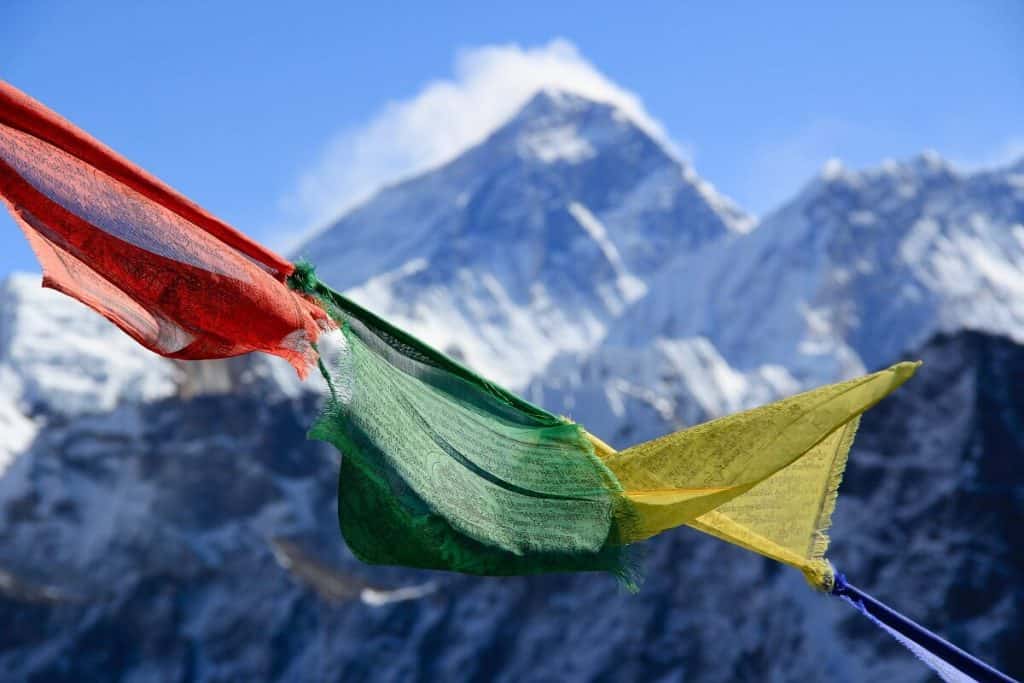
Mount Everest is the highest mountain on Earth above sea level, at 8,848.86 m (29,031.7 ft) according to the joint Nepal–China survey announced on 8 December 2020. It sits on the border between Nepal and Tibet (China), is built partly of 450-million-year-old seabed limestone, and by the end of 2025 had been climbed 13,737 times, with 339 recorded deaths.
Below are the Mount Everest facts that actually matter, checked against the Himalayan Database, Nepal’s Department of Tourism, peer-reviewed research and reputable mountaineering reporting, and updated after the spring 2026 season. Where figures are disputed or preliminary, we say so.
Mount Everest facts at a glance
| Fact | Figure |
|---|---|
| Height | 8,848.86 m (29,031.7 ft), Nepal–China survey, announced December 2020 |
| Location | Mahalangur Himal, on the Nepal–Tibet (China) border; Sagarmatha National Park on the Nepal side |
| Coordinates | About 27.99° N, 86.93° E |
| Local names | Sagarmatha (Nepali), Chomolungma or Qomolangma (Tibetan) |
| Summit rock | Ordovician marine limestone, about 450 million years old |
| Rising by | Up to about 2 mm a year (GPS measurements) |
| First ascent | Edmund Hillary and Tenzing Norgay, 29 May 1953 |
| Total summits | 13,737 by 7,563 different people (Himalayan Database, to December 2025) |
| Recorded deaths | 339 from 1921 to 2025 (Himalayan Database) |
| Most summits | Kami Rita Sherpa, 32 (17 May 2026) |
| Main routes | Southeast Ridge from Nepal; North/Northeast Ridge from Tibet |
| Nepal permit (spring) | US$15,000 per foreign climber from 1 September 2025 (about £11,250) |
| Typical expedition length | Around 6–9 weeks |
How tall is Mount Everest?
The official height is 8,848.86 m. Nepal and China announced it jointly on 8 December 2020 after separate survey teams (Nepal’s in 2019, China’s in spring 2020) placed GNSS receivers and ground-penetrating radar on the summit to measure the snow surface and the rock beneath it. Before that, Nepal used 8,848 m and China 8,844.43 m (a “rock height” that excluded the snow cap), so the agreed figure ended a long-running discrepancy.
The height has been revised several times since the first calculation.
| Year | Who measured | Height |
|---|---|---|
| 1856 | Great Trigonometrical Survey of India (announced) | 29,002 ft (about 8,840 m) |
| 1955 | Survey of India | 8,848 m (29,029 ft) |
| 1999 | US team using GPS (National Geographic) | 8,850 m (29,035 ft) |
| 2005 | Chinese survey (rock height) | 8,844.43 m |
| 2020 | Nepal and China jointly | 8,848.86 m |
Is Everest the tallest mountain in the world?
It is the highest above sea level, which is the usual definition. Two other measures give different answers. Mauna Kea in Hawaii rises about 10,200 m from its base on the ocean floor, although only around 4,207 m of that is above the sea. And because the Earth bulges at the equator, the summit of Chimborazo in Ecuador is the point on land farthest from the Earth’s centre, roughly 2 km further out than Everest’s summit.
Is Everest still growing?
Yes, slowly. GPS stations show the area rising by up to about 2 mm a year as the Indian plate keeps pushing north into Asia. A study by UCL and the China University of Geosciences, published in Nature Geoscience on 30 September 2024, found that the Arun river captured a neighbouring river system about 89,000 years ago. The extra erosion removed so much rock that the crust rebounded, making Everest roughly 15–50 m taller than it would otherwise be. Earthquakes can also nudge the height slightly up or down.
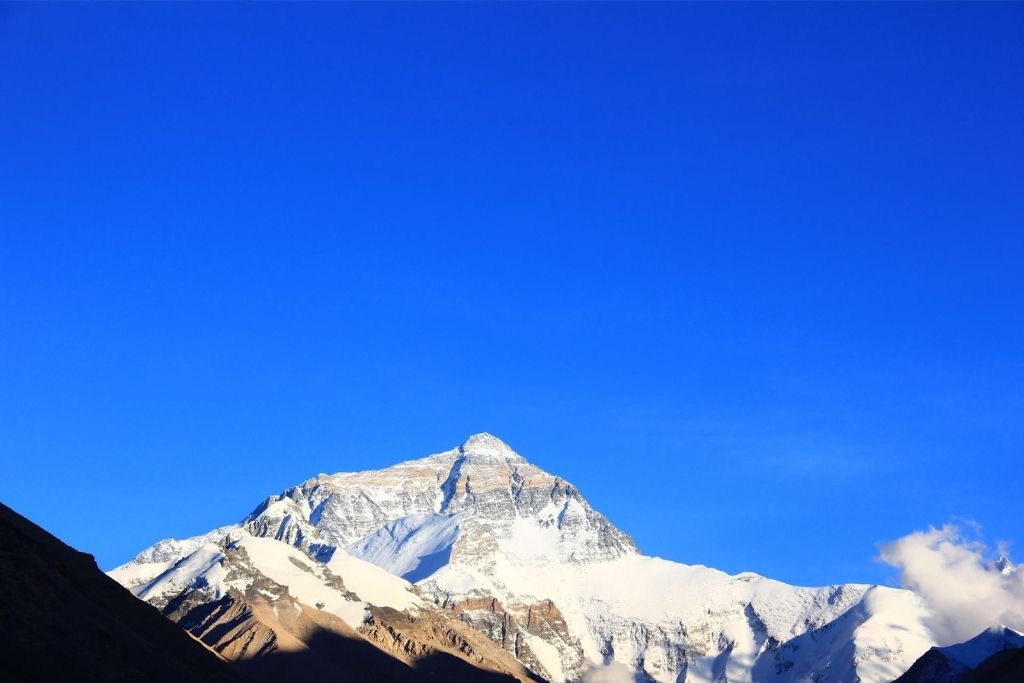
Names: Everest, Sagarmatha and Chomolungma
Survey of India staff first listed the mountain as Peak B and later as Peak XV. In 1852 the Bengali mathematician Radhanath Sikdar, working on the Great Trigonometrical Survey’s observations, is credited with computing that Peak XV was the highest known summit. The result was announced in 1856, and in 1865 the Royal Geographical Society adopted the name “Mount Everest” after Sir George Everest, the former Surveyor General of India, even though he had reportedly objected that local people could not pronounce it.
Everest himself pronounced his surname “Eve-rest”, not “Ever-est”, which is why some historians point out that almost everyone says the mountain’s name differently from the man’s.
- Chomolungma (Qomolangma) is the Tibetan name, usually translated as “Goddess Mother of the World” or “Holy Mother”. It is far older than the English name.
- Sagarmatha is the Nepali name, generally translated as “Forehead (or head) of the Sky”. It was adopted officially by the Nepali government in the 1960s.
- Zhumulangma Feng is the Chinese rendering of the Tibetan name, used on Chinese maps.
Geology: how a seabed ended up on top of the world
The top of Everest is made of grey limestone laid down in a warm, shallow sea during the Middle Ordovician period, around 450 million years ago. Climbers on the final ridge are walking on rock that contains fragments of trilobites, brachiopods, crinoids and other marine creatures.
That seabed was part of the Tethys Ocean. When the Indian plate collided with Eurasia, starting around 50–55 million years ago, the ocean closed and its sediments were folded, stacked and thrust upwards to form the Himalaya. The collision has not stopped, which is why the range is still rising and why Nepal is so prone to earthquakes.
The three main rock layers
| Layer | Where you see it | What it is |
|---|---|---|
| Qomolangma Formation | Summit pyramid, from roughly 8,600 m up | Ordovician limestone and dolomite with marine fossils |
| Yellow Band (part of the North Col Formation) | A distinctive tawny stripe crossed around 8,200–8,600 m | Marble, phyllite and schist; easy to spot in photos |
| Rongbuk Formation and older rocks | Lower flanks | Schist, gneiss and granite formed deep in the crust |
Everest weather and the “death zone”
Everest makes its own weather and sits in the path of the subtropical jet stream for much of the year. Hurricane-force winds can blast the summit in winter; commonly cited figures put winds above 160 km/h (100 mph) during the coldest months. Summit temperatures are often quoted as averaging around −36 °C in January and around −19 °C in July, with wind chill making it feel far colder. Since 2019 a weather station on the Balcony at about 8,430 m, installed by a team supported by National Geographic, has been recording conditions near the summit.
Why climbers go in May
Most summits happen in a short window in the second half of May. Before the summer monsoon arrives, the jet stream usually lifts north of the Himalaya for a few days, dropping summit winds to a climbable level. A smaller number of climbs take place in autumn. In 2026, about 80% of the season’s summits were reported between 17 and 26 May.
What is the death zone?
“Death zone” is the term for altitudes above about 8,000 m, where the air pressure is so low that the body cannot acclimatise and slowly deteriorates. At the summit, air pressure is roughly one-third of sea level, so each breath carries about a third of the oxygen. Most climbers use bottled oxygen above Camp 2 or Camp 3 and try to spend as little time as possible above the South Col (about 7,900 m) on the Nepal side.
The main dangers up there are high-altitude cerebral and pulmonary oedema, frostbite, exhaustion and poor decisions caused by hypoxia. If you are heading to the Khumbu as a trekker rather than a climber, the same physiology applies at a gentler scale; see our guide to altitude sickness on the Everest trek, and speak to your doctor or a travel clinic before you go.
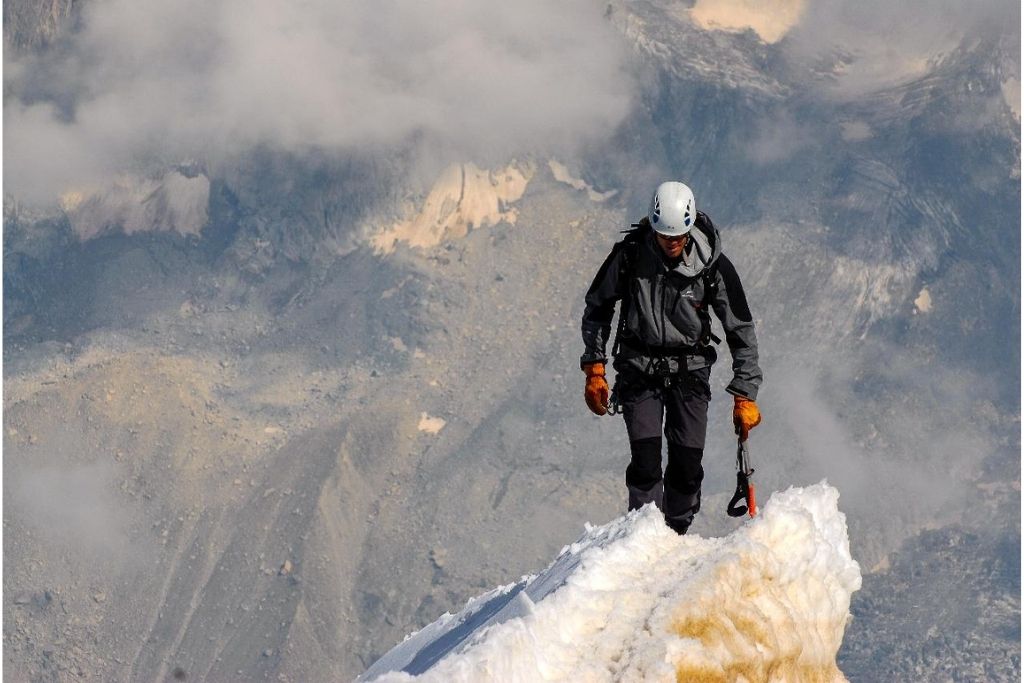
Climbing records and famous firsts
| Record | Who | When |
|---|---|---|
| First ascent | Edmund Hillary (New Zealand) and Tenzing Norgay (Nepal/India) | 29 May 1953 |
| First woman | Junko Tabei (Japan) | 16 May 1975 |
| First without bottled oxygen | Reinhold Messner and Peter Habeler | 8 May 1978 |
| First solo, without oxygen | Reinhold Messner (north side) | 20 August 1980 |
| First winter ascent | Krzysztof Wielicki and Leszek Cichy (Poland) | 17 February 1980 |
| Most summits | Kami Rita Sherpa, 32 | 32nd on 17 May 2026 |
| Most summits by a woman | Lhakpa Sherpa, 11 | 11th on 17 May 2026 |
| Most summits by a non-Sherpa | Kenton Cool (UK), 20 | 2026 |
| Oldest | Yuichiro Miura (Japan), aged 80 | 23 May 2013 |
| Youngest | Jordan Romero (US), aged 13 | 22 May 2010 (from Tibet) |
| Youngest woman | Malavath Purna (India), aged 13 years 11 months | 25 May 2014 |
| First blind climber | Erik Weihenmayer (US) | 25 May 2001 |
| Fastest ascent (recognised by Nepal) | Lakpa Gelu Sherpa, 10 h 56 min from Base Camp | 26 May 2003 |
A few of these need context. Pemba Dorje Sherpa’s claimed 8 h 10 min ascent in 2004 is still quoted online, but Nepal’s Supreme Court ruled in November 2017 that the claim could not be verified, and Lakpa Gelu Sherpa is now recognised as the record holder. In spring 2026 American runner Tyler Andrews reported a faster time with oxygen from Base Camp; it has been reported as a new record but has also been questioned, so treat it as provisional. Minimum ages have also changed: Nepal does not issue permits to climbers under 16 and China’s minimum is 18, so Romero’s and Purna’s records are unlikely to be broken.
You can read more about some of these climbers in our profiles of Tenzing Norgay, Kami Rita Sherpa, Lhakpa Sherpa, Jordan Romero and Malavath Purna. Ang Rita Sherpa, known as the “snow leopard”, made ten ascents without bottled oxygen between 1983 and 1996; see our Ang Rita Sherpa biography.
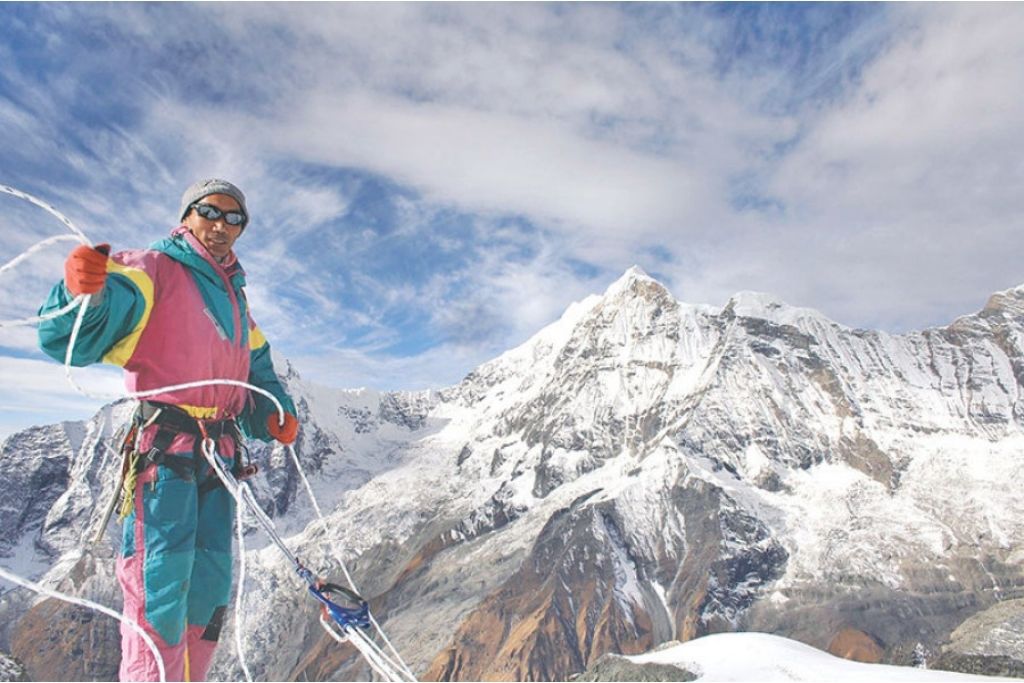
How many people have climbed Everest, and how many have died?
According to the Himalayan Database (figures summarised by Alan Arnette’s annual Everest by the numbers), which has recorded Himalayan expeditions since the work of Elizabeth Hawley in Kathmandu, there were 13,737 summits of Everest by the end of 2025. They were made by 7,563 different people, because many guides and repeat climbers have summited more than once. Hired staff, mostly Sherpa and other Nepali guides, account for slightly more than half of all summits.
| Statistic (to December 2025) | Figure |
|---|---|
| Total summits | 13,737 (6,656 by members, 7,081 by hired staff) |
| Summits from Nepal / Tibet | 9,887 (69%) / 3,850 (31%) |
| Summits by women members | 1,047 |
| Summits without bottled oxygen | 232 (about 1.7%) |
| Total deaths, 1921–2025 | 339 (229 on the Nepal side, 110 on the Tibet side) |
| Deaths per 100 summits | About 1.06 |
| Average deaths a year, 2010–2025 | About 7 |
Avalanches and falls are the leading causes of death, followed by altitude illness, exhaustion and exposure. The deadliest years were 2014, when an ice avalanche in the Khumbu Icefall killed 16 Nepali workers, and 2015, when the Gorkha earthquake of 25 April triggered an avalanche that killed around 22 people at Base Camp (counts vary slightly). The deadliest recent season was 2023, with 18 deaths. In spring 2026, at least four people died while climbing, and preliminary counts suggest around 1,000 summits, which would make it the busiest season on record once confirmed.
Are there still bodies on Everest?
Yes. Recovering bodies from the death zone is extremely dangerous and expensive, so many climbers who died high on the mountain remain there. Estimates of more than 200 are widely quoted, but there is no official count. Melting snow and ice are exposing more remains, and Nepal Army clean-up campaigns have brought several bodies down in recent years. Upper parts of the routes where old gear and bodies lie are sometimes nicknamed “Rainbow Valley” because of the colourful clothing and tents.
For the full story of how the mountain was explored and climbed, see our Mount Everest history timeline and the account of the 1921 British reconnaissance expedition.
Routes to the summit
More than a dozen routes and variations have been climbed, but almost every summit (about 98.6%) uses one of the two standard lines.
| Southeast Ridge (Nepal) | North/Northeast Ridge (Tibet) | |
|---|---|---|
| Base camp | About 5,364 m, on the Khumbu Glacier | About 5,150 m, below the Rongbuk Glacier (with an Advanced Base Camp at about 6,400 m) |
| Key sections | Khumbu Icefall, Western Cwm, Lhotse Face, South Col, Balcony, South Summit, Hillary Step | North Col, North Ridge, First, Second and Third Steps |
| Main hazards | Icefall collapse, crowding, avalanche | Wind and cold, longer time in the death zone, the Second Step |
| First climbed | 1953 (Hillary and Tenzing) | 1960 (Chinese team) |
| Access | Fly to Lukla and trek about a week to Base Camp | Drive across the Tibetan plateau; opening depends on Chinese permits |
The Hillary Step, a rock step of about 12 m just below the summit on the Nepal side, changed shape around the time of the 2015 earthquake; since 2017 climbers have described it as a steeper snow slope with exposed rock rather than the vertical obstacle of earlier decades. The summit itself is a small snow dome with room for only a handful of people at a time.
Everest permits, fees and new rules
Nepal increased its Everest royalty for the first time since 2015 with effect from 1 September 2025. These fees are per foreign climber on the standard Southeast Ridge route.
| Season | Old royalty | Royalty from 1 Sept 2025 | Approx. GBP |
|---|---|---|---|
| Spring (March–May) | US$11,000 | US$15,000 | about £11,250 |
| Autumn (September–November) | US$5,500 | US$7,500 | about £5,600 |
| Winter and monsoon (December–February, June–August) | US$2,750 | US$3,750 | about £2,800 |
Nepali climbers pay far less (the spring fee doubled to NPR 150,000, about £750). On top of the royalty, expeditions pay for a government liaison officer, environmental and garbage fees, Icefall route maintenance, insurance, guides, oxygen and logistics. Nepal also requires at least one guide for every two foreign climbers on peaks over 8,000 m, and solo climbing on 8,000 m peaks is not permitted.
Climbers have long paid a refundable garbage deposit (US$4,000 per climber on Everest), returned only if they bring their waste back down; Nepal’s draft tourism bill proposes replacing it with a non-refundable fee. Since 2024 the local Khumbu Pasang Lhamu Rural Municipality has required climbers to carry and bring back human-waste bags above Base Camp. A tourism bill that would require climbers to have summited a 7,000 m peak in Nepal before getting an Everest permit, among other changes, had passed Nepal’s upper house but not the lower house by mid-2026, so it is not yet law.
How much does it cost to climb Everest?
All-in costs vary hugely. Budget packages from Nepali operators start at roughly US$45,000 (about £34,000), while western-guided expeditions commonly cost US$70,000–100,000 or more (about £52,000–75,000), and private, highly supported climbs cost more still. The royalty is only part of the bill; oxygen, Sherpa support and insurance make up much of the rest. Our guide to how long it takes to climb Mount Everest explains the acclimatisation rotations that make an expedition last six to nine weeks.
Rubbish, crowds and the mountain’s future
Everest’s rubbish problem is real but improving. In the 2024 spring season the Nepal Army’s clean-up campaign removed 11 tonnes of waste from Base Camp and the higher camps, while the Sagarmatha Pollution Control Committee, which manages waste in the region, handled tens of tonnes more, including human waste. Old oxygen bottles are now mostly carried down because they have resale value, but tents, ropes and food packaging still get abandoned at the South Col, and reports from 2026 suggest new rules on carrying waste down were widely ignored there.
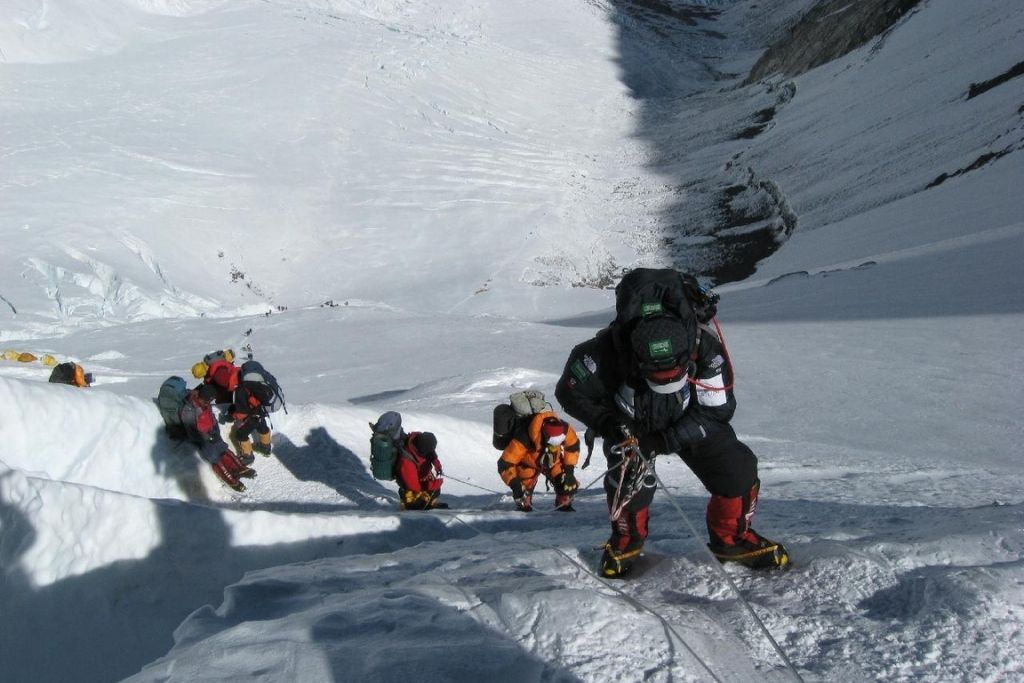
Crowding is the other big issue. Because summit windows are short, hundreds of people can set off on the same night, creating long queues above the South Col. A widely shared photograph from 22 May 2019 showed a line of climbers waiting on the summit ridge. Nepal’s government and operators are discussing caps tied to carrying capacity, but no hard limit was in force in 2026.
Climate change is also visible. The Khumbu Glacier is thinning, running water has been reported at the base of the Icefall and at Camp 2 during recent seasons, and a 2022 study found that the South Col Glacier, just below the summit, has thinned by tens of metres since the 1990s.
More surprising facts about Mount Everest
- The summit sits on an international border. The Nepal–China boundary runs over the top, so climbers from either side stand on the same point.
- Life survives very high. Himalayan jumping spiders have been recorded at around 6,700 m, and bar-headed geese are known to migrate over the Himalaya at extreme altitude.
- Latitude helps a little. Air pressure at high altitude is lower nearer the poles, so Everest at 28° N is slightly “easier” to breathe on than a peak of the same height further north would be.
- Climbers burn huge amounts of energy. Estimates of several thousand calories a day on summit day are common, and most climbers lose weight during an expedition because appetite falls at altitude.
- The first deaths were in 1921 and 1922. Alexander Kellas died of illness on the approach march in 1921, and seven porters were killed by an avalanche below the North Col in 1922.
- Base Camp is not on the mountain. Nepal’s Everest Base Camp sits on the Khumbu Glacier at about 5,364 m and you cannot see the summit from it; trekkers usually climb Kala Patthar (about 5,545 m) for the classic view.
- Mallory’s body was found 75 years later. George Mallory disappeared with Andrew Irvine in June 1924; his body was found on the north face in 1999. Whether they reached the summit is still unknown.
See Everest for yourself
You do not need a climbing permit to stand beneath Everest. The Everest Base Camp trek (16 days, from £1,295, land only) follows the 1953 expedition’s approach through Namche Bazaar and Tengboche to Base Camp and Kala Patthar. Unlike most of Nepal, the Khumbu did not adopt the 2023 rule requiring trekkers to hire a licensed guide, but we still recommend one for safety and acclimatisation. If you would rather trek somewhere else in Nepal, plan a different trek with us.
Frequently asked questions
How tall is Mount Everest in feet and metres?
Mount Everest is 8,848.86 m, or about 29,031.7 ft, above sea level. Nepal and China announced this figure jointly on 8 December 2020 after separate summit surveys in 2019 and 2020.
How many people have climbed Mount Everest?
By the end of 2025 the Himalayan Database recorded 13,737 summits made by 7,563 different people. Many guides have summited several times, which is why summits outnumber climbers. Spring 2026 added roughly 1,000 more, according to preliminary counts.
How many people have died on Mount Everest?
The Himalayan Database records 339 deaths from 1921 to the end of 2025, about 1 death for every 100 summits. At least four more climbers died during the spring 2026 season.
Who climbed Mount Everest first?
Edmund Hillary of New Zealand and Tenzing Norgay, a Sherpa from Nepal who lived in Darjeeling, reached the summit at about 11.30am on 29 May 1953, as part of a British expedition led by John Hunt. Whether George Mallory and Andrew Irvine reached the top in 1924 before they died remains unknown.
How old is Mount Everest?
The Himalaya began forming when India collided with Asia around 50 to 55 million years ago, so the mountain as a landform is tens of millions of years old. The limestone at the summit is much older, about 450 million years, laid down on an ancient seabed.
What does Sagarmatha mean?
Sagarmatha is Nepal’s official name for Everest and is usually translated as “forehead of the sky” or “head of the sky”. The Tibetan name, Chomolungma, is commonly translated as “Goddess Mother of the World”.
How much is an Everest climbing permit in 2026?
Nepal’s royalty for a foreign climber on the standard route is US$15,000 (about £11,250) in spring, US$7,500 in autumn and US$3,750 in winter and the monsoon, rates that took effect on 1 September 2025. A full guided expedition usually costs US$45,000 to over US$100,000.
Can you see Everest without climbing it?
Yes. Trekkers see Everest from viewpoints such as Kala Patthar, Everest View Hotel near Namche Bazaar and Gokyo Ri. The Everest Base Camp trek takes most people around 12 to 16 days return from Lukla and needs no climbing skills, just good fitness and careful acclimatisation.