 Plan my trek
Kathmandu
Nepali
NPR (Rupees)
7-14 days
Mar-May, Sep-Nov
GMT +5:45
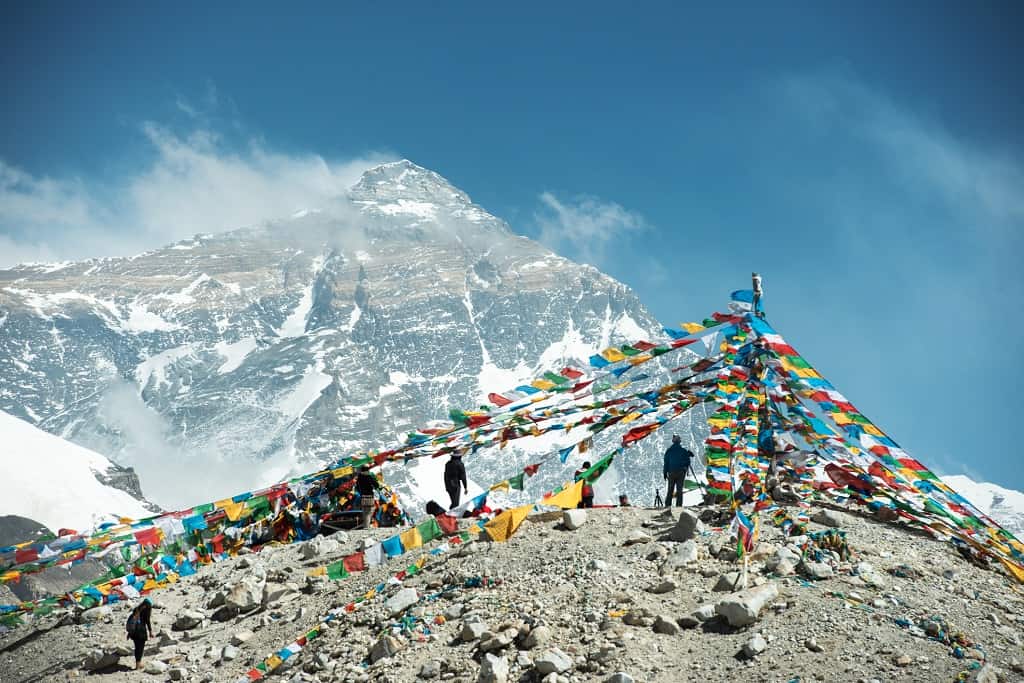
Nepal packs more change of scenery into a short distance than almost anywhere on earth. In roughly 150 to 250 km, travelling north from the Indian border, the land climbs from steamy jungle at under 100 m to the highest ground on the planet. It is a country of mountains, but also of medieval Newar cities, rhinos in riverside grassland, terraced hills, Tibetan Buddhist monasteries and Hindu temples where worship has carried on for centuries.
It is also one of the most welcoming places to travel. English is widely spoken in the main hubs, and the teahouse system lets you walk for two weeks through the Himalaya with a bed and hot meals every night. It is not polished: roads are slow, flights are delayed and Kathmandu is busy and dusty.
Nepal in three bands
Four places in Nepal are UNESCO World Heritage Sites: the Kathmandu Valley (seven monument zones), Sagarmatha (Everest) National Park, Chitwan National Park and Lumbini. The population of about 29 million speaks more than 120 languages, with Nepali as the common tongue.
Who Nepal suits
It suits people less well if they want guaranteed schedules or luxury at every stop.
How to use this guide
This page answers the big planning questions: which regions to visit, sample itineraries, how to get there and around, visas, the best time to go, costs, safety, culture and connectivity. Each section links to a deeper guide. For the mountains, start with our region guides to the Everest Region and the Annapurna Region, then the Nepal trekking guide, which compares the main treks, permits and the guide rule. For adventure days, see our guides to rafting, bungee jumping, canyoning and mountain biking. If you are new to all of this, our things to know before travelling to Nepal is a good first read, and the best experiences in Nepal will help you build a wish list. When you are ready, you can plan your trip with us.
Nepal is consistently rated among top travel destination for value for money.
Trekking, river rafting, paragliding, bungee jumping, and more.
Rafting · Paragliding · Bungee
Nepal is home to some of the exotic tropical endangered and rare species.
Travel vloggers state warmth and hospitality is their favourite.
With a unique blend of traditions, spirituality, and diverse cultures
Most trips to Nepal combine two or three kinds of experience: a trek or mountain view, some time in the old cities of the Kathmandu Valley, and either a safari or an adrenaline day in Pokhara. The ten below are the ones people come for. Each has its own guide on this site, with locations, costs, seasons and safety advice, so use these cards to decide what belongs on your list.
Teahouse treks with a bed and hot meals every night, from the four-day Poon Hill loop to Everest Base Camp and the Annapurna Circuit.
Explore trekking →
Look for one-horned rhinos, gharial crocodiles and, with luck, a Bengal tiger on jeep, canoe and walking safaris in Chitwan and Bardia.
Explore jungle safari →
Seven World Heritage monument zones in the Kathmandu Valley, Tibetan Buddhist villages, Tharu homestays and festivals that fill the streets.
Explore culture and heritage →
Lumbini, birthplace of the Buddha, plus Pashupatinath and Muktinath: sacred sites that welcome visitors of every faith.
Explore pilgrimage →
Snow-fed rivers for every level, from gentle family day trips to multi-day white-water expeditions on the Sun Koshi and Karnali.
Explore white-water rafting →
Tandem flights from Sarangkot over Phewa Lake with the Annapurnas behind. No experience needed: a licensed pilot does the flying.
Explore paragliding →
Leap into deep river gorges on the Bhote Koshi near the Tibetan border or at Kushma near Pokhara, or try a canyon swing.
Explore bungee jumping →
Race down one of the world’s steepest zip lines from the hills above Pokhara, with mountain views on clear days. No fitness needed.
Explore zip-lining →
Abseil down waterfalls, slide down rock chutes and jump into pools in side canyons near the Bhote Koshi and Pokhara.
Explore canyoning →
Ride the Kathmandu Valley rim, the hills above Pokhara or the high desert of Mustang, on day rides or supported multi-day tours.
Explore mountain biking →
Most trips to Nepal combine one mountain region with a city or two and the lowlands. The two big trekking regions are the Everest Region (Khumbu), part of Solukhumbu district, with Sherpa villages such as Namche Bazaar and the walk to Everest Base Camp, and the Annapurna Region, reached easily from Pokhara and offering everything from short hill walks to the Annapurna Circuit. Kathmandu is where almost every trip begins and ends, and its valley towns of Bhaktapur, Patan and Nagarkot are destinations in their own right.
Further afield, Mustang is a dry, Tibetan-style kingdom behind the Annapurnas, Langtang is the closest major trekking valley to Kathmandu, and Dolpo is a remote, restricted area for experienced trekkers. On the road between Kathmandu and Pokhara, the hill town of Bandipur makes an easy stop. In the lowlands, Chitwan is the classic safari park and Lumbini the birthplace of the Buddha. Choose one mountain region and one or two lowland or city stops for a well-balanced first trip.
Use this table to match regions to your interests and the time you have. Altitudes are approximate and days needed assume a typical visit or trek, not including travel to and from Kathmandu.
| Region | Best for | Access | Altitude range | Days needed | Guide |
|---|---|---|---|---|---|
| Kathmandu Valley | Temples, stupas, old Newar cities, food | International flights to Kathmandu | About 1,300–1,400 m | 2–4 | Kathmandu guide |
| Everest Region (Khumbu) | Everest Base Camp, Sherpa culture, the highest peaks | Flight to Lukla (often via Manthali in peak seasons) | About 2,800 m to 5,500 m+ | 12–16 | Everest Region guide |
| Annapurna Region | Treks of every length, Pokhara, adventure sports | Flight or road to Pokhara, then road | About 800 m to 5,416 m (Thorong La) | 4–18 | Annapurna Region guide |
| Mustang | Desert landscapes, Tibetan culture, Lo Manthang | Road from Pokhara; Jomsom flights when operating | About 2,700 m to 4,000 m+ | 7–14 | Mustang guide |
| Langtang | A shorter trek close to Kathmandu, Tamang villages | Road from Kathmandu (disrupted in 2026) | About 1,500 m to 4,000 m+ | 7–10 | Langtang guide |
| Manaslu | A quieter, remote circuit; restricted area | Long road from Kathmandu | About 700 m to 5,100 m+ (Larkya La) | 13–17 | Manaslu Circuit trek guide |
| Dolpo | Wilderness, Phoksundo Lake, Bon and Buddhist culture | Flights via Nepalgunj to Juphal | About 2,000 m to 5,000 m+ | 10–28 | Dolpo guide |
| Chitwan | Rhinos, birdlife, jungle safaris, Tharu culture | Road (5–7 hours) or flight to Bharatpur | About 150 m | 2–3 | Chitwan guide |
| Lumbini | Birthplace of the Buddha, monasteries | Flight to Bhairahawa or road | About 100 m | 1–2 | Lumbini guide |
Combining regions
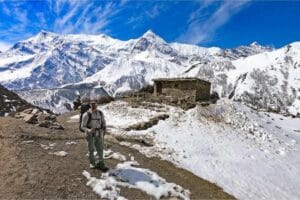
Trekking is the reason most people come to Nepal, and it is far more accessible than the mountains suggest. On the main routes you walk between villages and sleep in teahouses (simple lodges), so you carry only a daypack if you hire a porter. Treks range from four days to four weeks, and most reach their high point between 3,000 m and 5,500 m, so altitude rather than technical difficulty is the main challenge.
Our complete guide to trekking in Nepal compares the main routes, permits, the licensed-guide rule and costs. For specific routes, see the Poon Hill trek, the Annapurna Circuit, the Manaslu Circuit and the Gokyo Lakes trek. If you would like a small-group trip with everything arranged, our Everest Base Camp Trek and Annapurna Base Camp Trek are the two classics, and trekking for beginners explains how to prepare.
These plans are realistic on the ground, with travel times that allow for Nepal’s roads and weather. Day 1 is arrival in Kathmandu. Add at least one spare day to any plan that includes a mountain flight, and avoid booking your international departure on the same day as a domestic flight.
A first taste of Nepal without a trek: heritage, wildlife and mountain views.
The best short combination of a real Himalayan trek with culture and wildlife.
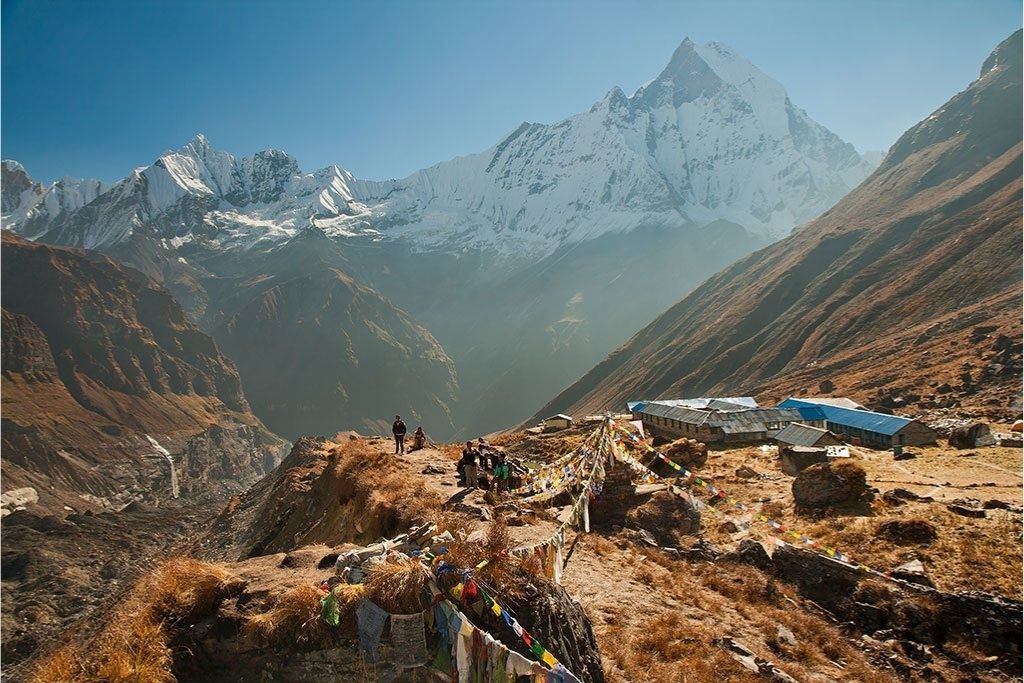
A classic two-week trek into the Annapurna Sanctuary, with time in Kathmandu and Pokhara.
Our Annapurna Base Camp Trek follows a similar shape, and the guide to Annapurna Base Camp covers the route in depth.
The big one: a properly acclimatised Everest trek followed by a week of recovery and variety.
Our Everest Base Camp Trek covers days 1–16 in a small group with everything arranged. See also the best time to trek to Everest Base Camp.
Want a different shape, a longer trek or a festival in the plan? Our team can tailor an itinerary around your dates and fitness.
Almost every visitor arrives at Tribhuvan International Airport (TIA) in Kathmandu, then moves around the country by domestic flight, tourist bus or private car. Distances look short on a map, but mountain roads are slow, so a 200 km journey can take most of a day.
| Route | Option | Time | Approx. cost (one way) |
|---|---|---|---|
| Kathmandu–Pokhara | Flight | 25–30 min | Around US$100–150 (£75–115) foreigner fare |
| Kathmandu–Pokhara | Tourist bus | 7–9 hours, often more in 2026 | Around NPR 1,000–2,800 (£6–16) |
| Kathmandu–Pokhara | Private car | 6–8 hours | Around US$150–250 (£115–190) per vehicle |
| Kathmandu–Chitwan (Sauraha) | Tourist bus | 5–7 hours | Around NPR 800–1,600 (£5–9) |
| Kathmandu–Bharatpur (for Chitwan) | Flight | About 25 min | Around US$80–170 (£60–130) |
| Pokhara–Chitwan | Tourist bus | 5–6 hours | Around NPR 700–1,600 (£4–9) |
| Kathmandu–Bhairahawa (for Lumbini) | Flight, then 30–40 min taxi | About 35 min | Around US$120–150 (£90–115) |
| Kathmandu–Lumbini | Tourist bus | 8–10 hours | Around NPR 1,600–2,000 (£9–11) |
| Kathmandu–Lukla | Flight (from Manthali in peak seasons, after a 4–7 hour drive) | About 35 min from Kathmandu; 20 min from Manthali | Around US$220–240 (£170–185) |
| Pokhara–Jomsom | Flight when operating; bus or jeep | 20 min; 7–10 hours by road | Flight around US$120–140; road NPR 1,500–3,000 a seat |
Fares are typical 2025–2026 foreigner ranges and change often.
There are no direct flights between the UK and Nepal. Most travellers connect through Doha, Dubai, Abu Dhabi, Istanbul or Delhi, taking roughly 14 to 20 hours from London. TIA is small and busy, with long immigration queues in October and November.
In 2026, conflict in the Middle East has closed airspace and cancelled Gulf flights at times, and the FCDO still warns of disruption. Check your transit country and make sure your insurance covers delays.
Neither of Nepal’s newer international airports is yet a reliable gateway from Europe. Pokhara International Airport (opened 2023) gained daily flydubai flights to Dubai in late September 2026. Gautam Buddha International Airport at Bhairahawa, near Lumbini, has seen Gulf, Malaysian and Thai services start and stop since 2022. Check current schedules before relying on either.
Visas on arrival are issued at the main land borders with India: Sunauli/Belahiya (for Lumbini and Pokhara, from Varanasi or Gorakhpur), Raxaul/Birgunj (for Kathmandu and Chitwan) and Panitanki/Kakarbhitta in the far east (for Darjeeling and Sikkim). Avoid night buses on the Nepal side. The Tibet crossing at Rasuwagadhi was closed after the August 2026 flood.
Flights save long road days and are essential for Lukla and remote areas such as Dolpo. Buddha Air and Yeti Airlines fly most trunk routes. The FCDO notes that no Nepali airline currently meets international safety standards, and all are on the UK Air Safety List; most visitors still use them. Book morning flights and build in spare days. In peak seasons most Lukla flights leave from Manthali in Ramechhap, and Pokhara–Jomsom flights were suspended again in October 2026.
Tourist buses run daily between Kathmandu, Pokhara, Chitwan and Lumbini, leaving around 7am. They are cheap, safer than local buses and stop for meals. The August 2026 floods closed the Prithvi Highway (Kathmandu–Pokhara) at Krishnabhir for around 18 days; it reopened on a temporary track in mid-September with slow single-lane sections, so expect delays.
A private car with driver is the most comfortable road option and splits well between two to four people; jeeps reach trailheads in Annapurna, Manaslu, Langtang and Mustang. Self-driving is not practical for visitors. In towns, agree taxi fares first, or use ride-hailing apps such as Pathao and inDrive in Kathmandu and Pokhara.
For route detail, see the getting-there sections of our city and region guides linked above.
UK citizens and most other nationalities need a visa for Nepal, and can get a tourist visa on arrival at Kathmandu airport and the main land borders. You can also get one in advance from a Nepal embassy, which may speed up the airport queue. Fees below are those published by the Department of Immigration and Nepal’s embassies at the time of writing; they have not changed since 2019, but confirm before you fly.
| Tourist visa | Fee | Approx. GBP |
|---|---|---|
| 15 days (multiple entry) | US$30 | about £23 |
| 30 days (multiple entry) | US$50 | about £38 |
| 90 days (multiple entry) | US$125 | about £95 |
Your passport must be valid for at least six months from the date you enter Nepal. Having at least one blank page for the visa sticker is sensible.
Citizens of Nigeria, Ghana, Zimbabwe, Eswatini, Cameroon, Somalia, Liberia, Ethiopia, Iraq, Palestine, Afghanistan and Syria cannot get a visa on arrival and must apply at a Nepal embassy. Indian citizens do not need a visa. Nationals of other SAARC countries get a free visa for up to 30 days, and children under 10 are generally exempt from the fee (some sources exclude US citizens). Rules for these groups change, so check with an embassy.
Tourist visas can be extended at the Department of Immigration in Kathmandu or the immigration office in Pokhara, after an online application. A 15-day extension has cost US$45, with US$3 for each extra day. You can stay a maximum of 150 days in one visa year. Extend before your visa expires: overstaying is treated seriously, with daily fines and possible detention.
Government offices moved to a two-day weekend in April 2026 to save fuel, so check opening days before you go to the office. If your visa expires because flights are cancelled, the FCDO reports that a free extension until your flight is rescheduled can be arranged at the airport.
Entry rules are set by the Nepali authorities and change from time to time. Check the entry requirements section of the UK FCDO travel advice for Nepal and the Department of Immigration before you travel.
Nepal is a tropical country with heavy rainfalls dunring monsoon brining in chaos and landslides. However it also brings opportunities.
October and November are the busiest months. Hotels are often fully booked, prices are higher and the trekking routes are crowded. It is best to plan your trip ahead.
From June till August is the monsoon bringing heavy rainfall, cloudy mountain, muddy trails, landslides, flight delays and difficult road conditions in remote areas.
March till May offers balance between weather, price, and trekking conditions. The prices are moderate, weather is warm, flowers are blooming, but the views might be hazy.
Nepal has two main travel seasons: autumn (late September to November) and spring (March to May). Autumn brings the clearest skies after the monsoon and the big festivals; spring brings warmer days and rhododendrons, with more haze. Winter is clear and quiet but cold at altitude, and the summer monsoon is wet, though it suits the rain-shadow valleys of Mustang and Dolpo.
| Month | Weather | Trekking | Crowds and prices |
|---|---|---|---|
| January | Clear, dry; cold nights; Kathmandu around 2–18°C | Good at lower altitude; high passes may close with snow | Quiet, low prices |
| February | Clear, slowly warming | Lower and mid-altitude treks good; cold high up | Quiet |
| March | Warming, some haze; spring flowers begin | Season opens; passes usually clear later in the month | Building |
| April | Warm; rhododendrons in bloom; haze and afternoon cloud | Very good; Everest expedition season | Busy, especially Everest |
| May | Hot in the lowlands (Terai often above 35°C); pre-monsoon storms | Good high up; Tiji in Mustang | Busy early, quieter late |
| June | Monsoon arrives, usually mid-month | Mustang and Dolpo only | Low |
| July | Heavy rain, leeches, landslides | Rain-shadow treks only | Lowest |
| August | Heavy rain; flooding risk | Rain-shadow treks only | Low |
| September | Rain easing in the second half | Season opens late in the month | Building |
| October | Clear, dry, warm days; Dashain and Tihar | Excellent everywhere | Peak; book flights and lodges early |
| November | Clear and stable, colder nights | Excellent; cold at high camps by late month | Busy |
| December | Clear, cold, short days | Good; snow can close high passes | Quieter, good value |
The FCDO describes monsoon travel (normally June to October) as potentially hazardous because of floods and landslides, as 2026 showed. For more detail see our best season to travel in Nepal.
Nepal’s biggest festival, a two-week Hindu celebration of the goddess Durga’s victory over evil, when elders give tika (a red forehead mark) and blessings. In 2026 it began with Ghatasthapana on 11 October, with the main tika day on 20 or 21 October (sources differ). In 2027 it is expected around late September to early October. Offices close and transport is packed.
The five-day festival of lights, honouring crows, dogs, cows and Laxmi, goddess of wealth, and ending with Bhai Tika. The 2026 public holiday runs from 8 to 12 November. In 2027 it is expected in late October or early November; confirm when the official calendar is published.
The spring festival of colours, when coloured powder and water are thrown in the streets, most enthusiastically in Kathmandu’s Basantapur and Thamel and in Pokhara. In 2027 Holi is on 21 March in the hills and Kathmandu, and 22 March in the Terai. Wear clothes you can throw away and protect your phone and eyes.
The full-moon celebration of the Buddha’s birth, enlightenment and death, marked at Lumbini, Boudhanath and Swayambhunath with butter lamps, processions and prayers. It fell on 1 May in 2026 and is listed for 20 May in 2027.
Kathmandu’s great street festival for Indra, god of rain, with masked dances and the chariot procession of the Kumari, the living goddess. It falls in September (25 September in 2026); the 2027 date was not yet published at the time of writing.
A Sherpa Buddhist festival of masked dances, prayers and blessings at Tengboche Monastery in the Everest region, held in October or November. Agency sources give the public days as 26 to 28 October 2026. It is a superb reason to time an autumn Tengboche stay, but lodges fill fast.
A three-day masked dance festival in Lo Manthang, the walled capital of Upper Mustang, re-enacting a deity’s victory over a demon. It follows the Tibetan lunar calendar and usually falls in May (mid-May in 2026). No official 2027 dates were published at the time of writing; one operator lists early June, so wait for confirmation before booking.
Tamu Lhosar (Gurung New Year) falls on 30 December 2026, Sonam Lhosar (Tamang New Year) on 7 February 2027, Maha Shivaratri at Pashupatinath on 6 March 2027 and Gyalpo Losar (Sherpa and Tibetan New Year) on 9 March 2027, according to Nepal’s published 2083 BS holiday list. Nepal uses its own calendar, so dates move every year.
Festival dates follow lunar calendars and are confirmed late. Treat the 2027 dates above as a guide, and check again before you book.
Nepal is good value, though prices in Thamel, Lakeside Pokhara and the Everest region have risen in recent years. Your biggest costs are usually international flights, domestic flights, a guided trek and permits. These daily budgets are per person, sharing a room, and exclude international flights and trek packages.
| Style | What you get | Kathmandu or Pokhara, per day | Independent teahouse days |
|---|---|---|---|
| Backpacker | Guesthouse, local food, tourist buses | Around NPR 4,000–7,000 (£23–40) | Around US$30–45 (£23–35), plus guide |
| Mid-range | Comfortable hotel, restaurant meals, some taxis and a flight | Around NPR 10,000–20,000 (£55–115) | Around US$45–70 (£35–55), plus guide |
| Comfort | Boutique or upscale hotel, private car and guide | Around NPR 25,000+ (£140+) | Fully guided packages, often US$80–150 (£60–115) a day |
| Item | Approx. price |
|---|---|
| Dal bhat in a local restaurant | NPR 300–600 (£2–3.50) |
| Main course in a tourist restaurant | NPR 600–1,200 (£3.50–7) |
| Plate of momos | NPR 200–500 (£1–3) |
| Budget guesthouse room, Kathmandu or Pokhara | NPR 1,500–3,500 (£8–20) |
| Mid-range hotel room | Around US$40–90 (£30–70) |
| Teahouse room on a trek | NPR 500–2,000 (£3–11); more in peak season and at altitude |
| Dal bhat on a trek | NPR 600 low down to NPR 1,500+ near Everest Base Camp |
| Airport taxi to Thamel | Around NPR 800–1,000 (£5–6) |
| Tourist SIM with data, 7 days | From around NPR 600 (£3.50) |
| National park or ACAP entry | NPR 3,000 (about £17) |
| TIMS card (most non-Everest treks) | Around NPR 2,000 (about £11) |
| Licensed trekking guide | Around US$25–35 (£19–27) a day |
| Porter | Around US$20–25 (£15–19) a day |
Most restaurants and hotels add 13% VAT and often a 10% service charge to the menu price. Trek prices are typical ranges from 2025–2026 operator sources.
Treks in national parks and conservation areas need an entry permit, typically NPR 3,000, and a licensed guide arranged through a registered agency. The Everest region charges a park fee and a local municipality fee instead of a TIMS card. Restricted areas such as Manaslu, Upper Mustang and Dolpo add a special permit charged in US dollars, which is why they cost more. Our trekking guide (linked above) has a full permit table, and Everest Base Camp trek cost breaks down a typical Everest budget.
Tipping is customary. Around 10% is appreciated in restaurants without a service charge. For trekking crews, a common guideline is 10–15% of the guide’s and porters’ wages, given to each person at the end. Drivers, safari guides and rafting crews also expect a tip.
Bargaining is normal in markets and for taxis, but not in restaurants or fixed-price shops.
Check Nepal’s latest visa rules before you travel. Certain countries have Visa on Arrival.
The country only has one international airport (KTM) but several domestic ones.
In big cities, you can take taxis, buses, or rent vehicles. For long trips, you can fly between cities.
While Ncell has the strongest network but NTC is best for remote villages
Nepal is one of the countries with exceptional value for money for budget and comfort.
ATMs are available in cities but in remote areas you might struggle to find one.
Many trekking permit forbids you traveling alone and require a guide along with permit.
Generally very safe for tourists, known for its warm hospitality and low rates of violent crime.
Nepal is generally a safe and friendly country for visitors, with a low rate of serious crime. The main risks are natural and practical: altitude, roads, weather, earthquakes and, occasionally, protests. As of October 2026, the UK Foreign, Commonwealth and Development Office (FCDO) does not advise against travel to any part of Nepal. Read the current UK FCDO travel advice for Nepal before you book and again before you fly.
In September 2025, youth-led protests in Kathmandu against a social media ban and corruption turned deadly; parliament was set on fire, curfews were imposed and the prime minister resigned. An interim government held elections on 5 March 2026 and a new government took office later that month. Daily life and tourism have resumed, but the FCDO notes that protests and strikes can start at short notice and may turn violent. Avoid demonstrations and follow local news.
On 26 August 2026 a flash flood down the Bhote Koshi and Trishuli valleys caused major loss of life in Rasuwa, Nuwakot and Dhading, cutting the road to Langtang. A further flood in Gorkha in October 2026 damaged trails and bridges on the Manaslu side. Everest, Annapurna, Pokhara, Chitwan and the Kathmandu Valley are operating normally; for Langtang, Manaslu or the Tsum Valley, check current status with your agency. The FCDO warns that affected areas may remain unstable and that earth tremors are common across Nepal.
Altitude sickness can affect anyone above about 2,500 m, whatever their fitness. Official UK guidance from TravelHealthPro is to spend a few days below 3,000 m first, increase your sleeping altitude by no more than 500 m a day above that, and take a rest day every three or four days. Never go higher with symptoms, and descend at once if they worsen. Kathmandu and Pokhara are too low to be a problem. Read our guide to altitude sickness on Everest treks before any high trek.
The UK’s TravelHealthPro recommends hepatitis A, tetanus and typhoid for most travellers, with hepatitis B, rabies and Japanese encephalitis considered for some. Malaria risk is low and limited to areas below 1,500 m, mainly the Terai, so bite avoidance is usually enough. Dengue is present, especially in towns. NHS Scotland’s fitfortravel site has similar advice and a malaria map. See a travel nurse or GP six to eight weeks before you go.
Do not drink tap water. Use a filter bottle, purification tablets or refill stations in hotels and teahouses. Choose busy restaurants and freshly cooked food, and carry oral rehydration salts for stomach upsets. Kathmandu’s air quality is often poor in spring.
Take out insurance that covers every activity you plan and your maximum altitude, including helicopter rescue and medical evacuation. Many standard policies stop at 4,000 m or exclude rafting and paragliding. The FCDO warns about guides who call in unnecessary helicopter evacuations to take a commission, which is one more reason to book with a reputable agency. Our guide answers do I need travel insurance for trekking?
Roads are poor, especially in the monsoon and the mountains, and bus accidents are common. Use tourist buses or a private car with an experienced driver, and avoid night travel. Build spare days around mountain flights so delays never push you into a rushed ascent.
Nepal is a popular solo destination. Petty theft happens in crowded areas. The FCDO reports that women have been sexually assaulted in tourist areas such as Thamel and Sanepa in Kathmandu, and advises caution, especially alone after dark. Use ride-hailing apps at night and trek with a licensed guide from a registered agency. Our safety tips for trekking in Nepal go into more detail.
Nepalis are famously hospitable, and a little cultural awareness goes a long way. The country is a mix of peoples, languages and faiths, from Newar city dwellers and Brahmin and Chhetri farmers in the hills to Sherpa, Gurung, Tamang and Thakali communities in the mountains and Tharu villages in the Terai. For a deeper look, read our guide to culture in Nepal.
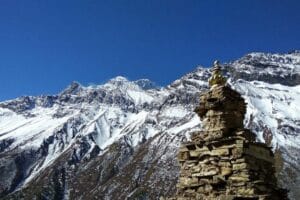
About 81% of Nepalis are Hindu and around 8% Buddhist, according to the 2021 census, with Muslim, Kirat and Christian minorities. The two faiths blend, sharing shrines and festivals. In the high mountains Tibetan Buddhism dominates, with prayer flags, chortens and mani walls.
Greet people with namaste, palms together at the chest. Use your right hand, or both hands, to give or receive anything, especially money. The head is considered sacred and the feet impure, so do not touch anyone’s head, point your feet at people or shrines, or step over someone sitting on the floor. Public displays of affection are frowned upon.
Remove your shoes before entering temples and homes, and leather items in some Hindu shrines. Walk clockwise around stupas, chortens and mani walls. Some Hindu temples, including the main shrine at Pashupatinath, are closed to non-Hindus; respect the signs. At cremation ghats, do not photograph grieving families.
Cover shoulders and knees in towns, villages and religious sites, for both men and women. Shorts are fine on the trail, but not in temples or homes, and wear something modest at rivers and hot springs.
Ask before photographing people, particularly monks, women and elders. Photography is banned inside many shrines. Flying a drone needs permission from the Nepali authorities, and is restricted at heritage sites and in national parks.
Dal bhat (lentils, rice, vegetable curry and pickles) is the national meal, with refills offered. Also try momos, Newari dishes such as bara and choila, Thakali sets and Tibetan thukpa. Eat with your right hand if you go local. Food or drink touched by someone’s lips is considered jutho (ritually impure), so do not offer food from your plate or share a bottle by mouth.
Visitors are welcome at most festivals, but follow local lead, keep out of processions and dancers’ space, and ask before entering temple courtyards during rituals. If invited into a home, remove your shoes, accept tea, and bring a small gift such as fruit or sweets.
A few words of Nepali, such as dhanyabad (thank you), bring smiles everywhere.
Staying connected in Nepal is cheap and easy in towns, and patchier in the mountains. Most visitors buy a local SIM or eSIM on arrival and use teahouse Wi-Fi on treks.
The two networks are Ncell and Nepal Telecom (NTC). Both have counters in the arrivals hall at Kathmandu airport and shops in Thamel and Pokhara. Bring your passport; registration takes a few minutes. Ncell’s 2026 tourist packs start at NPR 595 (about £3.40) for 7 days with 10 GB of high-speed data, rising to NPR 1,995 (about £11) for 28 days. Ncell is often stronger in cities and on the main trails; NTC generally reaches further into remote valleys, so some trekkers carry both.
Ncell sells tourist eSIMs online, and international eSIM providers also cover Nepal using the local networks. An eSIM is convenient if your phone is unlocked and compatible, and lets you land connected. Local SIMs are usually cheaper for longer stays.
Hotels, cafés and restaurants in Kathmandu, Pokhara and Chitwan offer free Wi-Fi, though speeds vary and power cuts interrupt it. On treks, most teahouses offer Wi-Fi for a small fee, and in the Khumbu paid Wi-Fi cards cover many villages. Signal and Wi-Fi drop in deep gorges and above about 4,000 m. Tell family you may be offline for a day or two.
Nepal uses 230 V, 50 Hz power with Type C, D and M sockets, so UK visitors need an adaptor. The long daily power cuts of the past have largely ended, but short outages still happen; many hotels have back-up. On treks, charging is often paid and gets more expensive with altitude, so bring a power bank and keep batteries warm at night.
WhatsApp and Viber are widely used, including by guides and hotels. Pathao and inDrive offer ride-hailing in Kathmandu and Pokhara. Download offline maps before trekking, and a currency converter. Hamro Patro is a popular Nepali calendar app that shows festival dates. The social media ban that triggered the September 2025 protests was lifted, and the main platforms work normally.
Tourism supports hundreds of thousands of Nepali jobs, from guides and porters to lodge owners and drivers. How you travel makes a real difference to the people and places you visit. These are the choices that matter most.
Porters do the hardest work on any trek. Choose an operator that limits loads (around 20–25 kg, often shared between two trekkers), provides proper clothing, boots, sunglasses and shelter at altitude, insures its staff and pays fair wages. The International Porter Protection Group publishes good guidelines, and a very cheap quote usually means savings on wages or kit.
Since April 2023, foreign trekkers in most national parks and conservation areas have been required to use a government-licensed guide through a registered agency, and restricted areas have always required one. Ask to see a guide’s licence, and book with an agency registered with the Nepali authorities and the Trekking Agencies’ Association of Nepal.
Plastic bottles are a major problem on trekking routes, where rubbish has to be carried out or burned. Bring a filter or purifying bottle and refill it, carry batteries and other waste back to town, and use lodge toilets. The Khumbu has restricted single-use plastics since 2020.
Do not ride elephants. Rides are banned inside Chitwan National Park and continue only in buffer zones; in December 2025 Nepal’s Supreme Court told the authorities to reconsider them on welfare grounds. Watch wildlife from a distance on foot, by jeep or canoe instead. Never buy products made from wild animals, such as fur, horn, ivory or shells, and do not feed the monkeys at temples.
Stay in family-run teahouses and homestays, eat local food, buy crafts from the people who make them and hire local guides at heritage sites. Community homestays, such as Tharu homestays near Chitwan, keep more of your money in the area.
Do not give money, sweets or pens to children who ask; it encourages begging and missing school. Give instead to established charities, schools or health posts, ideally through your agency. Avoid orphanage visits and short-term volunteering with children, which can do more harm than good. After disasters such as the 2026 floods, give through recognised channels such as the Nepal Red Cross Society.
Travelling responsibly in Nepal is easier with a team on the ground who already does these things. When you are ready, plan your trip with Get Lost Forever or send us a booking enquiry.
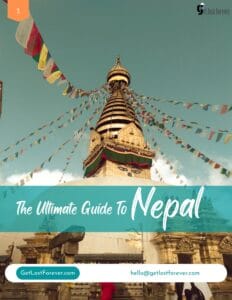
The Ultimate Guide to Nepal
Regions, treks, seasons, permits, costs and packing in one free PDF, sent straight to your inbox.
Culture, seasons, safety and practical advice for planning your trip to Nepal.
Related guides to read next.
Find quick answers to the commonly asked questions travelers asks before visiting Nepal.
Yes, getting a visa on arrival in Nepal is very easy and quick. During busy travel months, you may have to wait in a line for a little while. If you want to avoid waiting, you can get your visa from a Nepal Embassy or Consulate in your home country before your trip. Both choices are fine.
If you already got your visa from a Nepal Embassy, you must enter Nepal within six months from the date the visa was issued. Your stay in Nepal will start counting from the day you arrive in the country.
Gratis Visa
If you did not get a visa before your flight, you can get one when you arrive at Tribhuvan International Airport in Kathmandu. Just follow these simple steps.
1. Fill out the Arrival Card when you land. You also need to complete the Tourist Visa form online. You can do this before your trip on the official Nepal Immigration website or at the airport using the special machines. (If you fill out the form online, you will get a receipt with a barcode.)
2. Print it and bring it with you. The barcode is valid for fifteen days. If it expires, you will need to fill out the form again.
3. Go to the payment counter at the airport. Multiple payment methods is acceptable but the department advises to carry cash to be on the safer side. Pay the visa fee based on how long you want to stay.
4. Take your receipt, passport, and form to the Immigration desk. The officer will check your documents, ask a few simple questions, and then place the visa sticker in your passport. After this, you are ready to collect your bags and start your adventure in Nepal.
Visa Extension Fee
Seven to ten days is enough for Kathmandu, Pokhara and Chitwan, or a short trek such as Poon Hill. For Annapurna Base Camp allow about two weeks, and for Everest Base Camp 16 to 18 days including Kathmandu and spare days for flights. Three weeks lets you add a safari and Pokhara to a big trek.
Excluding international flights, budget travellers manage on around £25–40 a day in the cities and mid-range travellers around £55–115. Guided treks run from around £350 for Poon Hill to £1,100–2,200 for Everest Base Camp, land only.
No. There are no direct flights between the UK and Nepal, and Nepali airlines are not allowed to fly to the UK. Most people connect in the Gulf, Istanbul or Delhi, with a total journey of around 14 to 20 hours from London.
Nepal is on UTC+5:45, one of the few time zones offset by 45 minutes. That makes it 5 hours 45 minutes ahead of the UK in winter, and 4 hours 45 minutes ahead during British Summer Time.
In most cases, no. Since April 2023 foreign trekkers in national parks and conservation areas have been required to use a licensed guide through a registered agency, and the FCDO repeats this. The Everest (Khumbu) area has not applied the rule locally, and enforcement elsewhere is inconsistent, but it can tighten without notice. Restricted areas always need a guide. Our trekking guide explains the details.
Yes. Short treks such as Poon Hill need no experience, only fitness for five to six hours of walking a day. Everest Base Camp is achievable for fit beginners who train and acclimatise properly.
Generally, yes, but petty crimes can occur, especially in crowded areas. Trekking with guides and avoiding risky areas at night is advised.
Nepalese Rupee (NPR) is the currency. Credit/debit cards are accepted in cities and tourist areas, but cash is advisable in remote regions.
October is the best all-round month, with clear skies, dry trails and the Dashain and Tihar festivals, though it is also the busiest. November is nearly as good; April is the best spring month, with rhododendrons but more haze.
Yes, on a clear day. Scenic mountain flights from Kathmandu fly along the Himalaya at dawn, and Everest can sometimes be seen from viewpoints on the Kathmandu Valley rim such as Nagarkot. For the full experience, the trek to Everest Base Camp is unbeatable.
No. Drink filtered, purified or boiled water. Refill stations in many hotels and teahouses are cheaper than bottled water.
Not for Kathmandu, Pokhara or Chitwan. For high treks, some doctors prescribe acetazolamide (Diamox) to help acclimatisation, but it does not replace a slow ascent. Discuss it with your GP or a travel clinic before you go, and follow the acclimatisation plan on your trek.
The August and October 2026 floods mainly hit Rasuwa, Nuwakot, Dhading and Gorkha, affecting Langtang and parts of the Manaslu area, and slowed the Kathmandu–Pokhara highway. Everest, Annapurna, Pokhara, Chitwan and the Kathmandu Valley are operating normally. Check the latest FCDO advice and trail reports before booking affected areas.
For October, November and April, yes: book international and Lukla flights, guides and popular lodges several months ahead, especially for festivals such as Mani Rimdu or Tiji. Outside peak season you can arrange a lot locally, but restricted-area treks always need a registered agency and some days for permits.
 By Govind Rai · Updated 28 October 2026
Everything you need to plan your first trip, in one free download.
Enter your name and email and we'll send it straight to your inbox.
Ready to talk dates? Plan my trip with an expert